

-
 How small can a transistor get?
Life's Little Mysteries How small can a transistor actually get? And is smaller even still the goal?
Life's Little Mysteries -
 How did the Romans build their towering aqueducts?
Life's Little Mysteries The ancient Romans are well known for their aqueducts. But how did they build these impressive structures?
4 CommentsLife's Little Mysteries -
 How many cosmic particles are passing through your body at any moment?
Life's Little Mysteries While Earth's atmosphere protects us from harmful cosmic rays, other cosmic particles are passing through us every second.
Life's Little Mysteries -
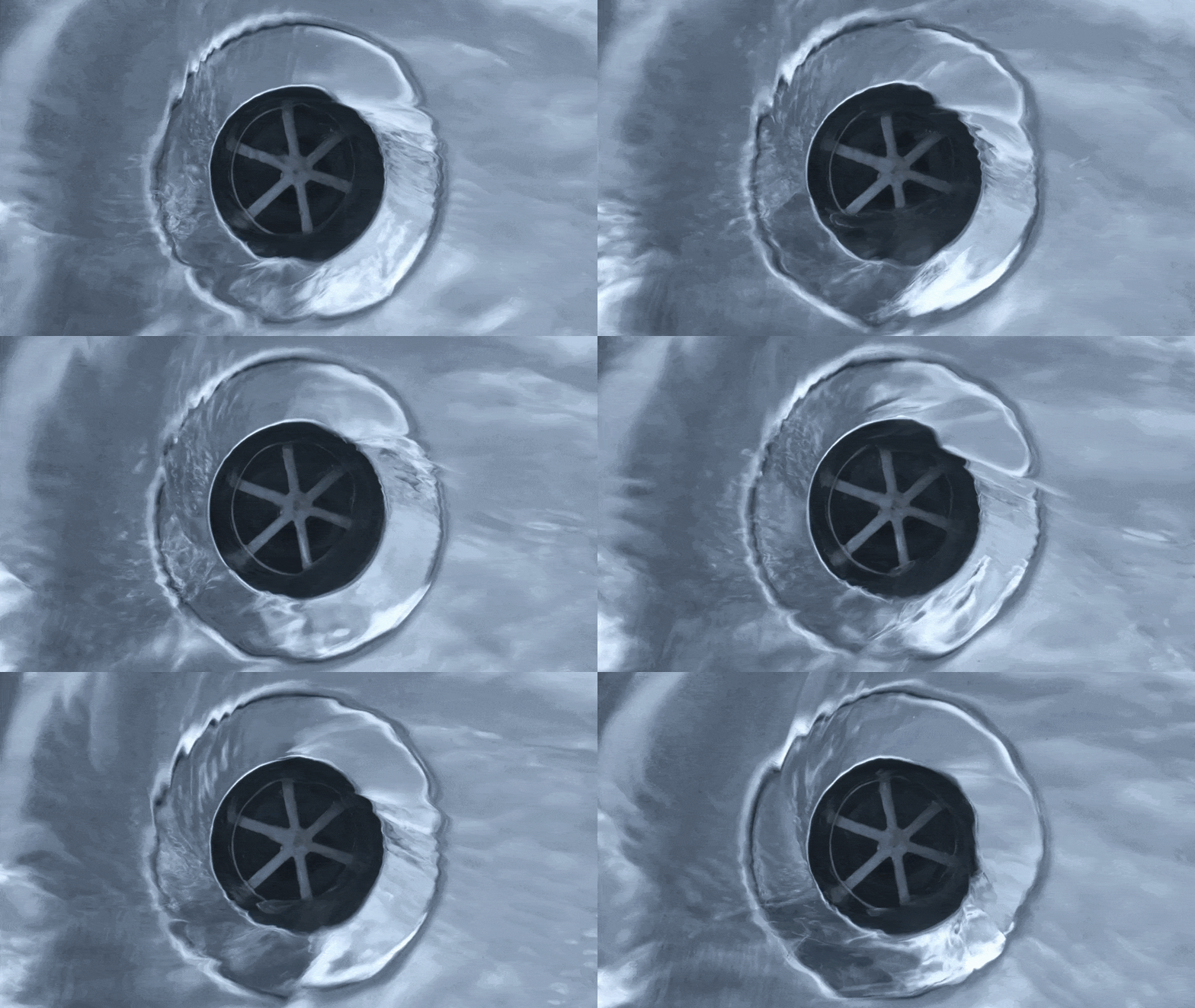 Does water drain in different directions in the Northern and Southern hemispheres?
Life's Little Mysteries Earth's rotation can influence a draining vortex. So does that mean water in a drain spirals in opposite directions in different parts of the world?
5 CommentsLife's Little Mysteries -
 Do other animals call each other by name?
Life's Little Mysteries Research in dolphins, elephants, parrots and primates suggests animals may call each other by name, but scientists are divided on how to define the behavior.
Life's Little Mysteries -
 Does tapping on a soda can really stop it from exploding?
Life's Little Mysteries Many people tap their soda cans to prevent them from fizzing over, but does this technique actually work?
Life's Little Mysteries -
 Which building blocks of life have been found in space, and which haven't?
Life's Little Mysteries So far, researchers have found many signs of the building blocks of life in space, but what exactly have they discovered, and what remains to be found?
Life's Little Mysteries -
 Why do cats yowl?
Life's Little Mysteries Understanding a cat's yowl requires looking beyond the noise to the behavior and emotions behind it.
3 CommentsLife's Little Mysteries -
 Who are the least-contacted people on Earth?
Life's Little Mysteries "Uncontacted" and "isolated" peoples live in roughly 10 countries around the world, including one group that erases their footprints so they cannot easily be found.
Life's Little Mysteries


