

-
 Why does lithium work against bipolar disorder?
Life's Little Mysteries Lithium remains the gold standard for one of the most complex psychiatric conditions. Scientists are still getting to grips with why.
2 CommentsLife's Little Mysteries -
 Did the Vikings really shoot fiery arrows at funeral boats?
Life's Little Mysteries The idea of Vikings using fire arrows to set funeral boats ablaze is seen frequently in popular culture. But did it really happen?
Life's Little Mysteries -
 Why does blond hair tend to darken with age?
Life's Little Mysteries Some children have blond hair that darkens as they grow up. What causes this change?
Life's Little Mysteries -
 Why do cats lick each other?
Life's Little Mysteries Cats lick each other for multiple reasons, and some are more mysterious than others.
3 CommentsLife's Little Mysteries -
 Why is Venus hotter than Mercury, when Mercury is closer to the sun?
Despite being farther from the sun, Venus is the hottest planet in the solar system, and the reason has little to do with proximity to a star.
2 Commentsvenus -
 How small can a transistor get?
Life's Little Mysteries How small can a transistor actually get? And is smaller even still the goal?
Life's Little Mysteries -
 How did the Romans build their towering aqueducts?
Life's Little Mysteries The ancient Romans are well known for their aqueducts. But how did they build these impressive structures?
4 CommentsLife's Little Mysteries -
 How many cosmic particles are passing through your body at any moment?
Life's Little Mysteries While Earth's atmosphere protects us from harmful cosmic rays, other cosmic particles are passing through us every second.
Life's Little Mysteries -
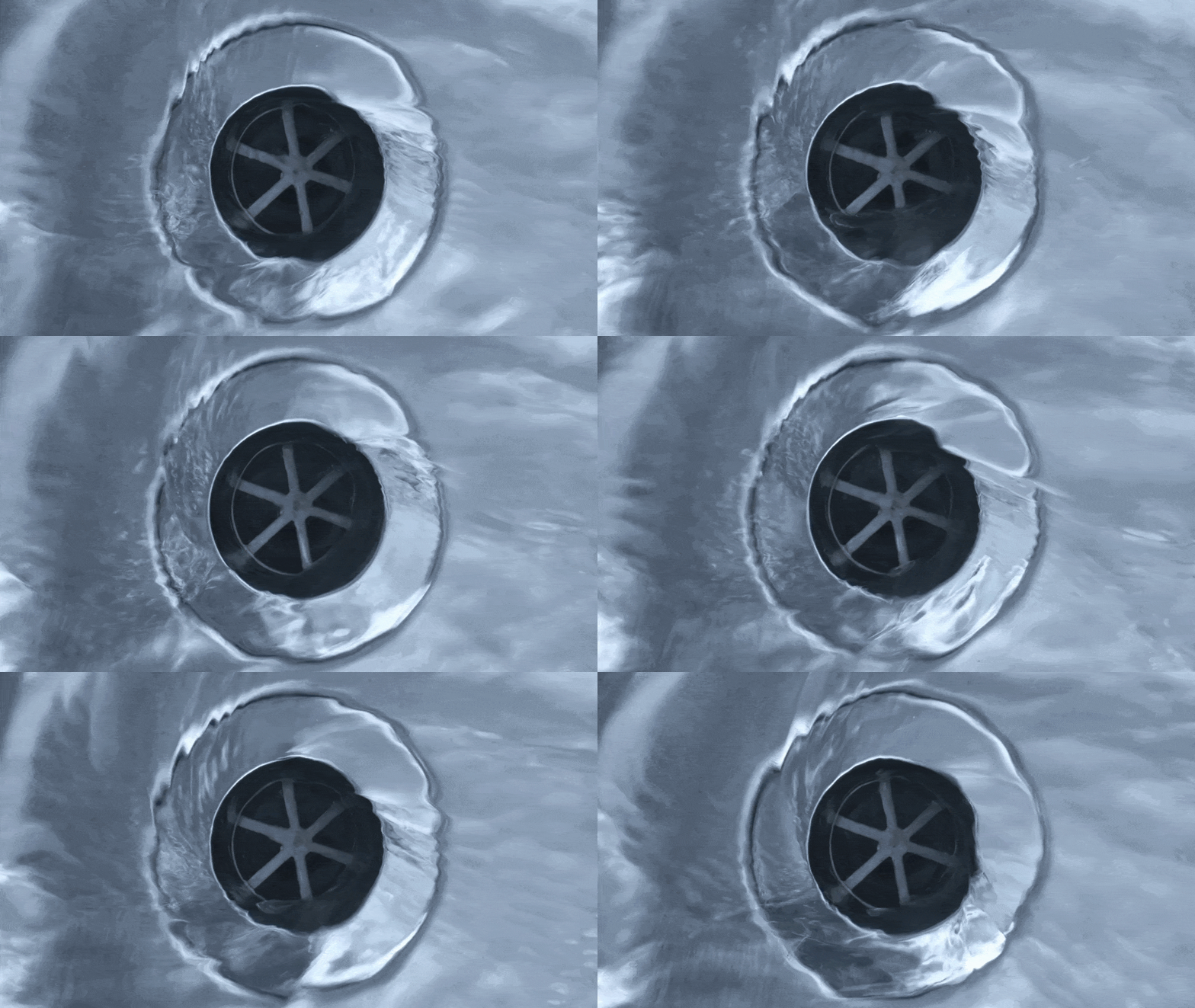 Does water drain in different directions in the Northern and Southern hemispheres?
Life's Little Mysteries Earth's rotation can influence a draining vortex. So does that mean water in a drain spirals in opposite directions in different parts of the world?
5 CommentsLife's Little Mysteries


