













Neanderthals and Humans First Mated 50,000 Years Ago, DNA Reveals

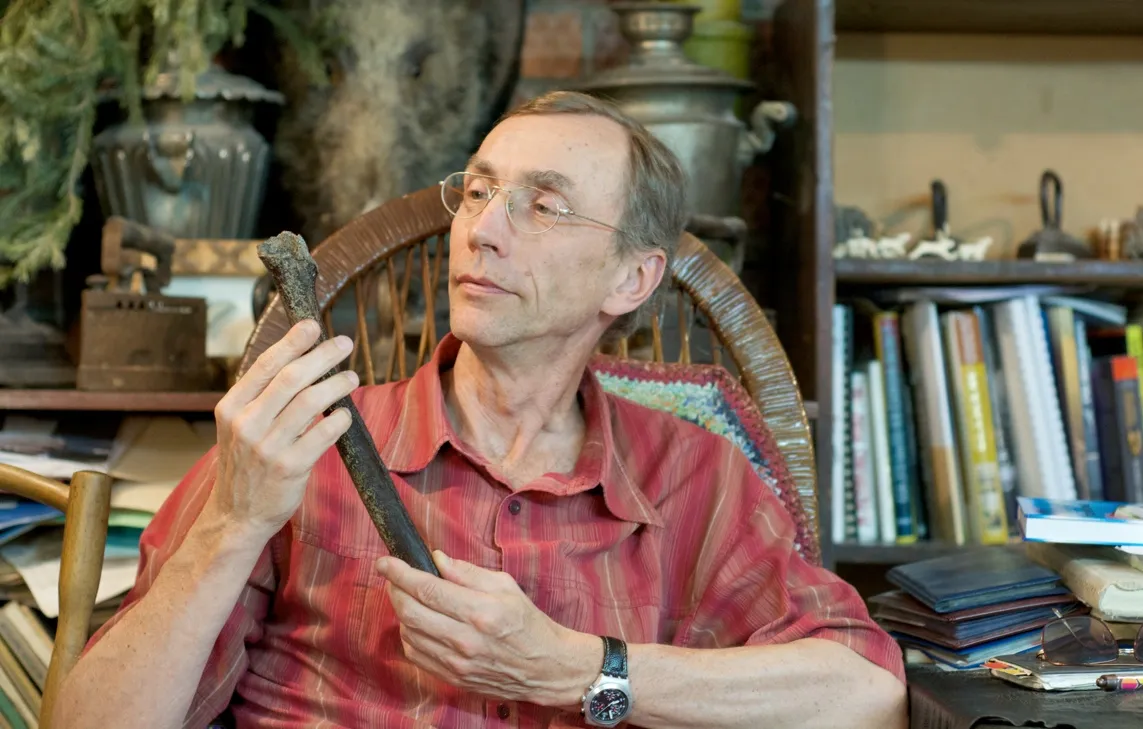
The DNA from the 45,000-year-old bone of a man from Siberia is helping to pinpoint when modern humans and Neanderthals first interbred, researchers say.
Although modern humans are the only surviving human lineage, others once lived on Earth. The closest extinct relatives of modern humans were the Neanderthals, who lived in Europe and Asia until they went extinct about 40,000 years ago. Recent findings revealed that Neanderthals interbred with ancestors of modern humans when modern humans began spreading out of Africa — 1.5 to 2.1 percent of the DNA of anyone living outside Africa today is Neanderthal in origin.
It remains uncertain when interbreeding between modern humans and Neanderthals occurred. Previous estimates of these events ranged from 37,000 to 86,000 years ago. [See Photos of Humanity's Closest Relative]
To help solve this mystery, scientists analyzed the shaft of a thighbone found by an artist and mammoth ivory collector, Nikolai Peristov, on the left bank of the river Irtysh near the settlement of Ust'-Ishim in western Siberia in 2008. They calculated the age of the man's bone to be about 45,000 years old.
"This is the earliest directly dated modern human outside of Africa and the Middle East, and the oldest modern human [genome] to have been sequenced," study co-author Janet Kelso, a computational biologist at the Max Planck Institute for Evolutionary Anthropology in Leipzig, Germany, told Live Science.
Previously, scientists had suggested modern humans colonized Asia first by traveling a more southern, coastal route that gave rise to the present-day people of Oceania, while a later, more northern migration, gave rise to mainland Asians. The fact the researchers find direct evidence for the presence of a modern human in Siberia 45,000 years ago "indicates that early modern human migrations into Eurasia were not solely via a southern route as has been previously suggested," Kelso said.
Analysis of the carbon and nitrogen isotopes in his bones suggest the man ate so-called C3 plants that dominate cooler, wetter, cloudier regions — examples of which include garlic, eggplants, pears, beans and wheat — as well as animals that also dined on C3 plants. However, this analysis also revealed he may have eaten aquatic foods, probably freshwater fish, something seen in other humans from Europe of about the same time.
Get the world’s most fascinating discoveries delivered straight to your inbox.
Genetic analysis of DNA from the bone revealed this man was equally closely related to present-day Asians and to early Europeans. "From this we conclude that the population to which the Ust'-Ishim individual belonged diverged from the ancestors of present-day Europeans and Asians before, or at around the same time as, these groups diverged from one another," Kelso said.
The scientists also found this man carried a similar level of Neanderthal ancestry as present-day Eurasians. Their research suggests Neanderthal genes flowed into the ancestors of this man 7,000 to 13,000 years before he lived.
These findings suggest modern humans and Neanderthals interbred approximately 50,000 to 60,000 years ago, "which is close to the time of the major expansion of modern humans out of Africa and the Middle East," Kelso said.
Future research may strive to sequence the genomes "from even older human remains," Kelso said. "We are also really interested in what functional implications the Neanderthal DNA in present-day people might have had in the adaptation of present-day humans to their new environments."
The scientists detailed their findings in the Oct. 23 issue of the journal Nature.
Follow us @livescience, Facebook & Google+. Original article on Live Science.
