













Winds Contribute to Arctic Sea Ice Loss, Study Finds

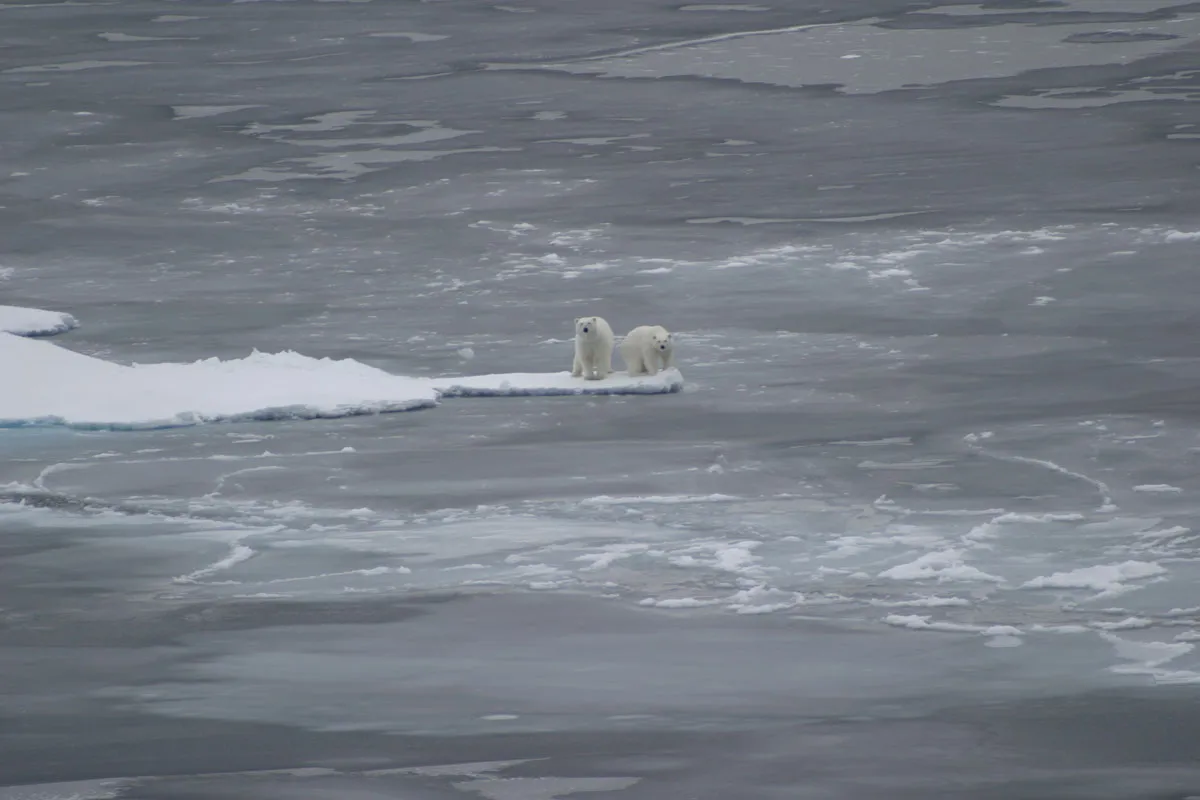
Arctic sea ice melted to a record low level this past summer — surpassing a 2007 minimum — and a new study suggests that changes in wind patterns over the planet's northernmost region could be partially to blame.
"Our research reveals a change in the summer Arctic wind pattern over the past six years," James Overland, an oceanographer with the National Oceanic and Atmospheric Administration (NOAA), said in a statement. "This shift demonstrates a physical connection between reduced Arctic sea ice in the summer, loss of Greenland ice, and potentially, weather in North American and Europe."
The study, published Oct. 10 in the journal Geophysical Research Letters, looked at early summer wind patterns in the subarctic between 2007 and 2012, compared with the average from 1981 to 2010.
Before 2007, winds typically flowed west to east across the Arctic. But that flow recently has been replaced by a more wave-like wind pattern moving warmer air from the south up north into the Arctic and pushing sea ice across the Arctic and out into the Atlantic Ocean, the study found. These changes are likely driven by higher pressure over the North American continent and Greenland, the researchers said.
The loss of sea ice will cause more solar energy going into the Arctic Ocean, the scientists said, which could produce more extreme weather, including heavy snowfall, heat waves, and flooding in parts of North America and Europe.
"What we're seeing is stark evidence that the gradual temperature increase is not the important story related to climate change; it's the rapid regional changes and increased frequency of extreme weather that global warming is causing," researcher Jennifer Francis, of Rutgers, said in a statement. "As the Arctic warms at twice the global rate, we expect an increased probability of extreme weather events across the temperate latitudes of the northern hemisphere, where billions of people live."
Follow LiveScience on Twitter @livescience. We're also on Facebook & Google+.
Get the world’s most fascinating discoveries delivered straight to your inbox.
