













Best beginner cameras for wildlife photography 2025: Nature photography for newbies
Start photographing wildlife with ease. The best beginner's wildlife cameras make nature and wildlife photography simple and rewarding.


A good wildlife camera needs to keep up with moving subjects. While there are many ingredients that make up the best wildlife cameras, the two main things beginners should focus on are burst rate and autofocus. A good burst rate gives you more chance of nailing the timing of your shot — for example, when a bird comes in to land — and accurate autofocus ensures your subject is pin-sharp.
Spring is a great time to start learning wildlife photography, too, with more wildlife emerging in your backyard, local parks and in nature reserves.
We’ve chosen these models as good entry-level wildlife cameras, while also keeping in mind that most beginners don’t want to spend thousands on the very best models right off the bat. It's definitely possible to find a good starter camera on a budget, and there are also some great wildlife lenses under $1,000 to pair with them.
If, however, you do have a healthy budget and are in the mood to splurge, the best cameras for wildlife photography make no sacrifices on speed, resolution or efficiency out in the field.
These cameras will serve you well while you're learning the basics of wildlife photography, and as long as you avoid the common mistakes beginners often make, you'll get some fantastic shots and progress your skills.
The quick list

Best Canon
With a speedy 30 FPS burst rate, beautiful 32.5 MP resolution and accurate animal autofocus, the R7 is a dream for beginner wildlife photography.

Best OM System
With insanely fast burst speeds and subject detection, this Micro Four Thirds model isn't to be underestimated.

Best Sony
Excellent animal autofocus and intuitive controls for wildlife photography, but it doesn't have the fastest burst rate.

Best Nikon
The Nikon Z50 II has excellent autofocus for animals and birds, with accurate eye tracking and beautiful image quality.
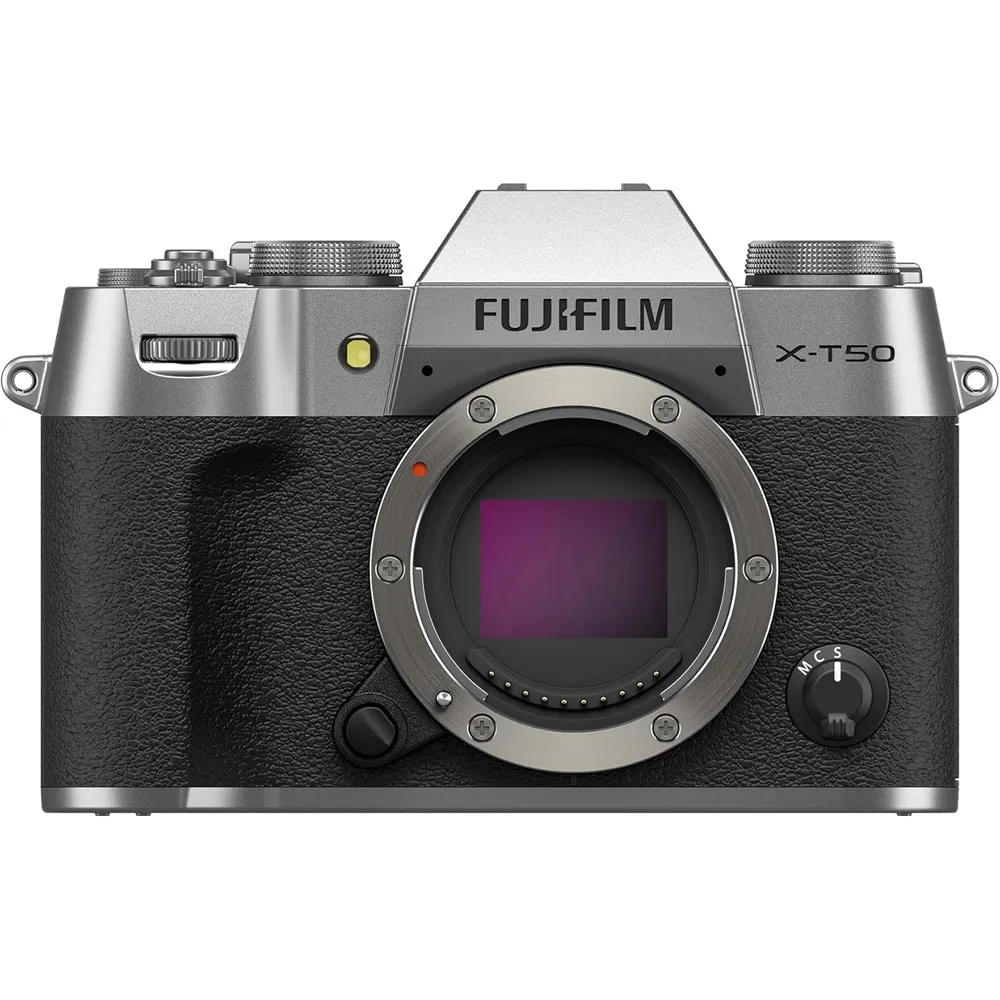
Best Fuji
Impressive speeds of up to 20 FPS with an equally impressive 40 MP resolution.

Best DSLR
An incredible DSLR for wildlife photography, full stop. Ideal for newcomers who want to perfect the basics without AI getting in the way.
The best beginner cameras for wildlife photography we recommend in 2025
Best Canon


Specifications
Reasons to buy
Reasons to avoid
Design: With its sleek, lightweight body, the Canon EOS R7 is a breeze when paired with larger lenses, and its weather sealing protects it against the elements. The rear control dial is located to the right of the EVF, making it slightly less accessible than if it were positioned lower on the body. Not a dealbreaker if you shoot in auto or one of the priority modes, but it could become annoying for manual shooting.
Performance: We were incredibly impressed with the autofocus during our Canon EOS R7 review, noting that it was able to recognise the head, face and eyes of any animal we pointed it at. It rattles off shots at a very impressive 30 FPS, but you are somewhat limited by the buffer depth of only 46 RAWs or 184 JPEGs. We definitely appreciated the 32.5 MP resolution over its 24 MP rivals.
Functionality: In body image stabilization keeps things steady with up to five steps of stabilization, which can be boosted to eight steps when paired with an image-stabilized lens. The APS-C lens lineup from Canon is very limited, but we'd recommend investing in a full-frame telephoto lens to take advantage of the 1.6x crop the camera affords you. This way, a 100-400mm lens becomes an effective 160-640mm lens.
- Read our full Canon EOS R7 review

View Original

| Header Cell - Column 0 | Header Cell - Column 1 | Header Cell - Column 2 |
|---|---|---|
Upgrade option |
We adored the Canon EOS R6 II for wildife photography, despite its lower 24.2 MP resolution. Completely worth it if you can stretch your budget. |
|
Downgrade option |
Slower burst rate of 15 FPS, and it lacks weather sealing and IBIS, but it's cheaper than the R7 and would still work for beginner wildlife photographers. |
|
Don't buy |
While it looks good on paper, the shallow buffer depth and limited on-body controls quickly annoyed us. It's better for other styles. |
Best OM System


View Original

View Original

Specifications
Reasons to buy
Reasons to avoid
Design: The OM-1 is clean, sleek and compact, with a satisfyingly chunky grip that gives you a good hold of the body when it's paired with a long lens. The body is weather sealed to an IP53 standard, meaning it can still operate even with three minutes of continuous water being sprayed on it from a 60° angle — a fantastic feature for a wildlife camera, as we noted in our full OM System OM-1 review.
Something to note — the power switch is on the left side of the top plate, and we found when using the identical Mark II that we were slower off the mark than when using a camera where the power switch surrounded the shutter button. A small detail, but in wildlife photography, every second counts.
Performance: The OM-1 is technically capable of blistering burst speeds of up to 120 FPS, but not with autofocus. It can still reach 50 FPS with autofocus when using specific lenses, though, which is very impressive. Plus, Pro-Capture records up to 70 frames before you press the shutter, which is an advantage for wildlife if you're not quite quick enough off the mark. The autofocus and subject detection are also amazingly accurate, which is the main reason we chose the OM-1 over the OM-5 Mark II for beginner wildlife photography.
Functionality: It has a bunch of extra functionality with its Computational Photography mode, but there aren't many that are useful for wildlife specifically. Starry Sky AF makes timelapses effortless, and Live ND mode enables you to shoot flowing waterfalls. If you want more than just the 20 MP resolution, the Pro Res mode can achieve 50 MP or 80 MP images, but the caveat is that your subject has to be completely motion-free, which, wildlife generally is not.
- Read our full OM System OM-1 review
| Header Cell - Column 0 | Header Cell - Column 1 | Header Cell - Column 2 |
|---|---|---|
Upgrade option |
There aren't many differences if you already own the OM-1, but if you can stretch your budget, the OM-1 Mark II is the better camera. |
|
Downgrade option |
This model has been discontinued, but it's a great option if you can find a used one for a good price. |
|
Don't buy |
While it's a great all-round beginner's camera, you can only achieve 5 FPS with continuous AF, which you'd outgrow very quickly. |
Best Nikon

View Original

Nikon Z50 II
Our expert review:
Specifications
Reasons to buy
Reasons to avoid
Design: The Nikon Z50 II is Nikon's newest APS-C model, and this camera delivers a great quality build for a camera at this price point. The grip is nice and deep, making it comfortable to handle when paired with longer lenses, although its small and compact nature could throw the balance off with some heavier lenses. That said, by the time you get round to using really big and heavy lenses, you may have already upgraded to a bigger body.
It features a dedicated ISO button so you can easily adjust this setting alongside the two other dials, which is useful for manual shooting out in the field. The Z50 II is weather-sealed: not as robustly as the more premium models like the Nikon Z8 or Z9, but it will be able to handle light rain.
Performance: If you want speedy, accurate autofocus — you got it. There have been big upgrades on the autofocus compared to the original Z50, thanks to the new Expeed 7 processor. You have both animal and bird modes with excellent subject detection and eye autofocus. As long as you have a clear shot of your animal, the autofocus latches onto the eye straight away and stays locked on as the animal moves. As expected, it switched to track the head or body if the animal turns away, but then it snaps right back on when the eye is visible again. We haven't reviewed this camera ourselves yet, but some of the images we've seen taken with the Z50 II are stunning.
Functionality: It doesn't have the fastest burst rate compared to others in this list, but 11 FPS is perfectly fine for beginners. Plus, the Pre-Release Capture can provide a safety net for any missed shots. It can shoot up to 30 FPS using the electronic shutter, but you're limited to JPEGs, which don't have as much editing potential.
It doesn't feature IBIS, which is a shame, so you'll need to ensure your wildlife lens is stabilized to help with both image sharpness and a steady view when composing your shot. Still, it's an excellent beginner wildlife camera for the money, despite its drawbacks.
| Header Cell - Column 0 | Header Cell - Column 1 | Header Cell - Column 2 |
|---|---|---|
Upgrade option |
The Z6 III has a partially stacked sensor and excellent high ISO performance for low-light wildlife photography, although it doesn't have a dedicated bird mode. If you're ready to go pro, consider the Nikon Z8. |
|
Downgrade option |
Not really a downgrade as such, as the D500 is still a phenomenal wildlife camera. As it's a DSLR, there won't be any future upgrades and the AF won't be as reliable as newer mirrorless models – but you could pick up a used model at a great price. |
|
Don't buy |
The older autofocus system isn't well suited for fast-moving subjects. |
Best Sony

View Original

Sony A6700
Our expert review:
Specifications
Reasons to buy
Reasons to avoid
Design: The Sony A6700's small and compact body keeps things lightweight, with a fully articulating screen and a generously sized grip to ensure a secure hold when paired with a long lens. One downside is that the 2.36-million-dot EVF is quite small and situated in an odd location, which makes it awkward to look through.
There are three dials on the body, which is a rare feature for crop-sensor cameras — most only have two. This means you can adjust all three exposure settings independently and intuitively without taking your eyes off your subject to access the menu. Beginners will likely start in aperture or shutter priority, but this makes life a lot easier if you later switch to manual as your skills progress.
Performance: The hero here is Sony's best-in-class autofocus, particularly this newer AI-powered generation with bird and animal modes and real-time face and eye tracking. When our optics writer reviewed the Sony A6700 over at our sister site, Space.com, it even kept track of our subject's eyes when it looked away from the camera.
The burst rate of 11 FPS is decent for a beginner camera, but it may struggle when capturing particularly fast-moving or unpredictable subjects.
Functionality: As a result of the powerful autofocus, the battery life is a lot lower than its predecessor. Sony claims it can capture around 550 shots with the EVF or 570 shots with the LCD screen. In practice, we shot a lot more images than this, but it's a good idea to stock up on spare batteries to keep in your bag.
The A6700 has up to five steps of image stabilization, which is exceptionally handy for wildlife photography, if only to keep your view steady when composing your shot. Plus, you can even do focus bracketing, which you could sink your teeth into if you want to learn the basics of macro photography.
- Read the full Sony A6700 review on our sister site, Space.com
| Header Cell - Column 0 | Header Cell - Column 1 | Header Cell - Column 2 |
|---|---|---|
Upgrade option |
If you can afford to spend more, the Sony A7 IV has more power and higher resolution, but the slow burst rate is still an issue. |
|
Downgrade option |
If you have a tighter budget, the Sony A6400 has real-time eye tracking, but you'll need to pair it with a stabilized lens due to the lack of IBIS. A used A6600 would also be a good buy. |
|
Don't buy |
While it's a very capable camera, the A7 III and earlier models don't have Sony's upgraded autofocus, so it will struggle if you specialize in wildlife photography. It's much better for astro shooters. |
Best Fuji

View Original

Fuji X-T50
Our expert review:
Specifications
Reasons to buy
Reasons to avoid
This was a hard toss-up between the X-T50 and X-T30 II, and although we've gone for the X-T50 due to it outperforming the X-T30 II in almost every metric, the X-T30 II is exceptional value for money for budget-conscious beginners.
Design: The Fuji X-T50 is the younger sibling to the X-T5, with which it shares a lot of the same features. It's small and compact due to its APS-C nature, and has the classic retro styling we've come to expect from Fuji. The new film simulation dial is great fun to get creative, but it doesn't add anything for wildlife photography specifically.
Performance: The Fuji X-T50 features face and eye detection for a range of subjects and has separate animal and bird modes. With its 40 MP sensor, it produces stunning images that allow for extra cropping without losing as much detail. Additionally, when using the electronic shutter, you can achieve speeds of up to 20 FPS, which is impressive considering the file size.
Functionality: Image stabilization helps to keep things steady, although the X-T50 isn't weather sealed, so you'll need to be careful when taking it out into the wild — particularly to wet or dusty locations.
| Header Cell - Column 0 | Header Cell - Column 1 | Header Cell - Column 2 |
|---|---|---|
Upgrade option |
With advanced AI autofocus and a stacked 26.1 MP sensor, the X-H2S delivers powerful performance for pros. |
|
Downgrade option |
Although it doesn't have quite the same features and specs as the X-T50, it's excellent value for money. |
|
Don't buy |
Lacks the speed and autofocus needed for wildlife action. |
Best DSLR

View Original

Specifications
Reasons to buy
Reasons to avoid
Design: If your priority is a rugged and durable camera that can hold its own out in the field and won't mind a bump or two, a DSLR is the way to go. The Nikon D500 has a robust build and weather sealing to protect it against the elements, although it's not fully waterproof. Plus, the buttons on the body illuminate in the dark, which is useful when you're shooting at dawn or dusk.
Performance: During our full Nikon D500 review, we thought it was an absolute workhorse. For a DSLR, the autofocus is excellent, and although it doesn't have subject detection like newer mirrorless models, it does have 3D tracking mode to help lock on to moving subjects. We found it even kept focus when the animal was in dense foliage, which is impressive. It's worth noting that the autofocus doesn't carry over into video, so keep that in mind if you want a hybrid wildlife camera.
Functionality: The 10 FPS burst rate may not seem like much to shout about compared to other wildlife cameras, but for a DSLR, that's very impressive. Especially considering the buffer can hold up to 200 uncompressed RAW images, ensuring you don't miss a second of the action. Although it doesn't have a silent shooting mode, it does have a quiet shutter release mode. This mode doesn't silence the shutter altogether, but it reduces the sound of the mechanical shutter to avoid scaring your subject off.


View Original

View Original

View Original

View Original

View Original

View Original

View Original

- Read our full Nikon D500 review
| Header Cell - Column 0 | Header Cell - Column 1 | Header Cell - Column 2 |
|---|---|---|
Upgrade option |
This full-frame camera produces excellent images, has fast and accurate autofocus and can shoot up to 12 FPS in Silent Live View mode. |
|
Downgrade option |
Still an excellent DSLR for beginner wildlife photography, and a cheaper alternative to the Nikon D500. |
|
Don't buy |
Older, entry-level DSLRs have a very basic autofocus system, and a burst rate that is much too slow for wildlife photography. |
Best beginner wildlife cameras: Comparison
Name |
Sensor size |
Resolution |
Autofocus |
Burst rate |
Image stabilization |
Weather sealing |
Weight |
Sony A6700 |
APS-C |
26 megapixels |
Face and eye AF, Animal and Bird modes |
11 FPS |
Yes, up to five steps |
Yes |
1.1 lbs / 493 g |
Canon EOS R7 |
APS-C |
32.5 megapixels |
Face and eye AF, Animal mode |
Up to 30 FPS |
Yes, up to eight steps |
Yes |
1.35 lbs / 612 g |
Nikon Z50 II |
APS-C |
20.9 megapixels |
Face and eye AF, Animal and Bird modes |
Up to 11 FPS (RAW) / Up to 30 FPS (JPEG) |
No |
Yes |
1.21 lbs / 550 g |
Fuji X-T50 |
APS-C |
40.2 megapixels |
Face and eye AF, Animal and Bird modes |
8 FPS (mechanical) / 20 FPS (electronic) |
Yes, up to seven steps |
No |
0.96 lbs / 438 g |
OM System OM-1 |
Micro Four Thirds |
20 megapixels |
Face and eye AF, Animal and Bird modes |
Up to 50 FPS (with AF) / Up to 120 FPS (without AF) |
Yes, up to seven steps with compatible lenses |
Yes, IP53 |
1.32 lbs / 599 g |
Nikon D500 |
APS-C |
20.9 megapixels |
153 autofocus points, 3D tracking mode |
10 FPS |
No |
Yes |
1.90 lbs / 860 g |
Best beginner cameras for wildlife photography: Frequently Asked Questions
Is mirrorless or DSLR better for wildlife photography?
If we're talking on-paper specs, then mirrorless cameras have newer and more accurate real-time tracking and autofocus, faster burst rates, silent shooting and are typically more compact than DSLRs. Plus, there are more upgrade options available in the mirrorless system.
However, don't discount a camera's overall feel and handling. Many seasoned photographers will still choose a DSLR over a mirrorless for the love of the photography experience, rather than having the camera do everything for you. But for beginners, we'd usually recommend a mirrorless.
Do you need a full-frame camera for wildlife photography?
Not to start out with, no. If you can afford one, great, but opting for a crop sensor (APS-C) model could actually benefit you. If you use a full-frame lens on a crop sensor camera, the camera's crop factor (around 1.5x) will give you more reach, so a 100-400mm full-frame lens would become an effective 150-600mm lens.
How important is burst rate for wildlife photography?
Burst rate is very important in wildlife photography. The burst rate refers to the number of shots the camera can capture in one second, and is measured in frames per second (FPS). The more frames your camera can shoot, the more chance you have of capturing those blink-and-you'll-miss-it wildlife moments, like when a bird comes in to land or a wild animal pounces on its prey.
How important is autofocus in wildlife photography?
If you don't have accurate autofocus, your animal won't be in focus. Many newer mirrorless cameras have AI-powered autofocus that can detect a whole bunch of different animals and track them in real time, and they can even detect the animal's eyes. Autofocus is arguably the most important feature of a good camera for wildlife photography.
Is weather sealing important in a wildlife camera?
Weather sealing is important, as you don't always have the luxury of shooting from an open window or from a hide. As you're going to be out in the field at the mercy of rain, snow and dust, having a weather-sealed camera is going to put your mind at ease.
What's the best lens for beginner wildlife photography?
It depends what system you use, but there are plenty of good wildlife lenses under $1,000 for beginners, or indeed for anyone on a budget. Try to get a balance of a long focal length with a wide aperture.
What are some common mistakes beginners make when choosing a wildlife photography camera?
Focusing too much on the camera and not enough on the lens, which is arguably going to be what gets you better shots.
It's important to have good autofocus and a fast burst rate, but we'd recommend spending your money on one of the best lenses for wildlife photography rather than blowing it all on the best wildlife camera straight away.
Latest updates
Future updates to this guide will be detailed here.
How we tested the best beginner wildlife cameras
Related articles
We test these cameras by taking them into real-world field conditions, including parks, coastal areas, zoos and nature reserves, to see how they perform when tracking unpredictable subjects such as birds or small mammals.
We evaluate the autofocus speed and accuracy, especially with fast-moving subjects, and test the burst shooting speed to assess how reliably the camera keeps focus over multiple frames.
Low-light performance is measured at dawn and dusk, when animals are most active, as well as in shaded forest areas. We assess the image quality straight out of the camera, dynamic range and color accuracy alongside battery life and lens compatibility.
We also consider the price point for each model, as beginners typically don't want to invest a huge amount into their first camera.
Get the world’s most fascinating discoveries delivered straight to your inbox.

Kimberley Lane, E-commerce writer for Live Science, has tested a wide range of optical equipment, reviewing camera gear from Sony, Canon, OM System and more. With over 6 years of photography experience, her skills span across landscape and seascape photography, wildlife, astrophotography and portrait work. Her photos have been featured in a number of national magazines, including Digital Camera World and Cosmopolitan. She has also contributed to our sister site Space.com and Tech Radar, and she regularly uses binoculars and telescopes to stargaze in the dark skies of South Wales.