Cities make summer thunderstorms more intense than they would be in the countryside, a new study suggests.
Scientists have noted before that urban environments seem to alter the behavior of storms, but had not made observations of specific storms.
Researchers at Princeton University consulted models and observations of an extreme thunderstorm that hit Baltimore in July 2004 and found that about 30 percent more rainfall occurred in the city than would have if there were no buildings where the city now sits.
Latest Videos FromLive Science
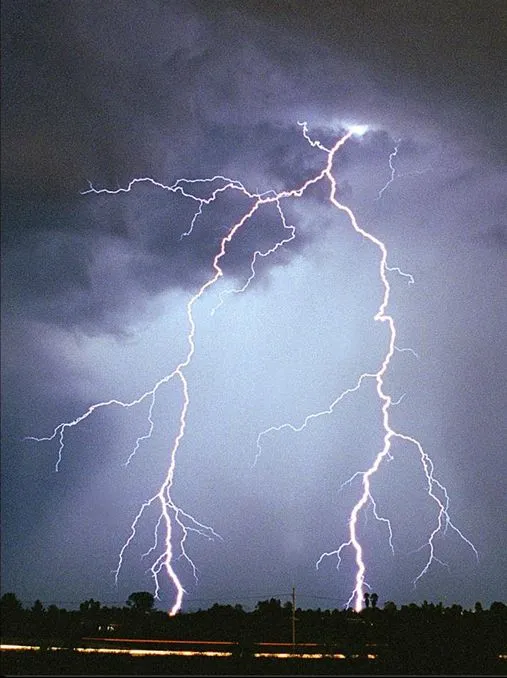
During the storm, Baltimore experienced as many lightning strikes in the space of two hours as the city normally sees in a whole year, with much of the lightning striking the western edges of the city.
"It's as if all of a sudden the lightning can 'feel' the city," said Princeton graduate student and study author Alexandros Ntelekos.
Three mechanisms
The researchers described three mechanisms that might explain exactly how a city intensifies a thunderstorm:
"Heat island" effect: Cities produce heat, often making them anywhere from 2 to 5 degrees Fahrenheit hotter than the surrounding land. This extra heat could provide fuel to a storm, though it appears to have had little effect in the 2004 storm because high winds leveled off temperatures, Ntelekos and Smith said.
Buildings: Tall buildings that jut up into the atmosphere can cause wind drag, which can create a sort of boiling action of upward-moving air than can increase rainfall. This had a large effect on the 2004 storm, the researchers said.
Aerosols: These tiny particles suspended in the air tend to be higher over cities where they are emitted by vehicles and industry. Though aerosols have been thought to suppress rainfall, Ntelekos and Smith found that they may have increased rainfall in the Baltimore storm.
More intense storms
This apparent interaction between storm and city has critical consequences for city dwellers and policymakers, especially in light of the likelihood of such fierce storms becoming more common with the influence of global warming (as warmer air holds more water, which means more intense rainfall in any given storm).
"This means that warm-season thunderstorm systems will probably increasingly lead to more flash flooding, which can be very dangerous," said study co-author James Smith, also of Princeton.
The crippling effects of a severe thunderstorm in an urban area were felt in New York City this week as 2.5 inches of rain fell in three hours, flooding subway tunnels and causing major disruptions to the morning commute. A tornado also formed in Brooklyn, causing significant damage to property.
"The storm that occurred [Wednesday] in New York City is an example of the sort of event that we expect more of in the future," said Princeton climatologist Michael Oppenheimer, who was not involved in the study. "The disruptive effect was quite obvious."