It's quick and easy to access Live Science Plus, simply enter your email below. We'll send you a confirmation and sign you up for our daily newsletter, keeping you up to date with the latest science news.
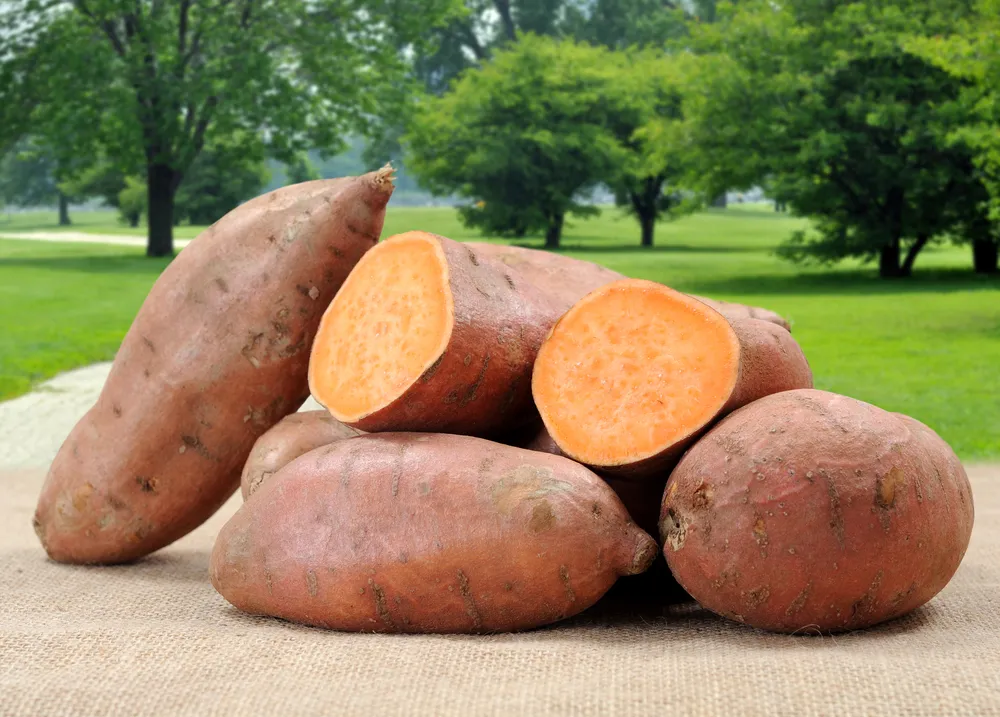
Sweet potatoes (Ipomoea batatas) truly match the description "delicious and nutritious." These tasty veggies are packed with vitamins and nutrients and are sweet to eat.
Despite their name, sweet potatoes are not closely related to white potatoes. White potatoes are part of the nightshade family, which includes tomatoes, eggplant and hot peppers, according to the University of Wisconsin. Sweet potatoes, on the other hand, are part of the morning glory family of flowering plants. Sweet potatoes are root vegetables — meaning that the part you eat is the root — while white potatoes are considered tubers, according to the Harvard T.H. Chan School of Public Health (HSPH).
Although the orange variety is the most common in the United States, sweet potatoes also come in white, yellow, pink and purple varieties, according to the Library of Congress. While the orange and yellow types contain the most vitamin A, the purple variety contains high levels of antioxidants, the Cleveland Clinic reports.
Latest Videos From
Nutrient profile
Here are the nutrition facts for sweet potatoes, according to the U.S. Food and Drug Administration, which regulates food labeling through the National Labeling and Education Act:
Swipe to scroll horizontally
Nutrition Facts Serving size: 1 medium (4.6 oz / 130 g) Calories 100 Calories from Fat 0 *Percent Daily Values (%DV) are based on a 2,000 calorie diet.
Amt per Serving
%DV*
Row 0 - Cell 3
Amt per Serving
%DV*
Row 0 - Cell 6
Total Fat0g
0%
Row 1 - Cell 2
Total Carbohydrate23g
8%
Cholesterol0mg
0%
Row 2 - Cell 2
Dietary Fiber 4g
16%
Sodium70mg
3%
Row 3 - Cell 2
Sugars 7g
Row 3 - Cell 4
Potassium440mg
13%
Row 4 - Cell 2
Protein 2g
Row 4 - Cell 4
Vitamin A
120%
Row 5 - Cell 2
Calcium
4%
Vitamin C
30%
Row 6 - Cell 2
Iron
4%
Sweet potatoes are one of the best sources of vitamin A; a medium one contains more than 100 percent of the daily recommended intake, according to the USDA.
Boiling sweet potatoes retains more beta-carotene, and makes this nutrient easier for the body to absorb, HSPS says. Cooking sweet potatoes with the skin on also helps prevent the loss of nutrients, including vitamin C and beta-carotene.
Health effects of sweet potatoes
Sweet potatoes are packed with vitamins: They "are high in vitamin A [in the form of beta-carotene], vitamin B5, B6, thiamin, niacin, riboflavin, and, due to their orange color, are high in carotenoids," said San Diego-based nutritionist Laura Flores.
Sign up for the Live Science daily newsletter now
Get the world’s most fascinating discoveries delivered straight to your inbox.
They also contain no fat, are relatively low in sodium and have fewer calories than white potatoes — although they do contain sugar. Sweet potatoes are also high in vitamin C, potassium and fiber, according to HSPH.
Two "phytochemicals" in sweet potatoes are responsible for their bright color: Beta-carotene (a pre-cursor to vitamin A) gives orange sweet potatoes their orange flesh, and anthocyanins give purple sweet potatoes their purple hue, according to HSPH. Scientists are studying both of these compounds for their role in human health and disease preventions, HSPH says.
Sweet potatoes are considered a medium glycemic index food, according to HSPH, with a glycemic index of 63. (The glycemic index (GI) refers to how quickly and how much a food raises a person's blood sugar after eating.) White potatoes, on the other hand, are a high-GI food, with a GI of 78. Previous research has shown a link between a high-GI diet and type 2 diabetes.
"While there aren't any severe health problems associated with sweet potatoes, they are high in vitamin A, which the body stores," Flores said. "When levels get too high, you may notice your skin and nails looking a little orange."
This side effect should decrease if you cut down on sweet potato consumption.
According to the Mayo Clinic, people with a history of kidney stones may want to avoid eating too many sweet potatoes, as the vegetable contains oxalate, which contributes to the forming of calcium-oxalate kidney stones.
Yams vs. sweet potatoes
Sweet potatoes and yams are often used interchangeably in recipes, but in fact the two vegetables are not even related. Sweet potatoes are members of the morning glory family, while yams are closely related to lilies and grasses, according the Harvard T.H. Chan School of Public Health (HSPH). Yams are native to Africa and Asia, and there are more than 600 varieties. They are also starchier and drier than sweet potatoes.
Why the confusion? According to the Library of Congress website Everyday Mysteries, sweet potato varieties are classified as either "firm" or "soft." In the United States, the firm varieties came first. When soft varieties were first grown commercially, there was a need to differentiate the two kinds. African slaves began calling the soft sweet potatoes "yams" because they resembled the yams they knew in Africa. Today, the U.S. Department of Agriculture requires labels with the term "yam" to be accompanied by the term "sweet potato." Unless you are specifically searching for yams, which can be found in international markets, you are probably eating sweet potatoes.
Sweet potatoes are more nutritious than yams. Sweet potatoes and yams are both healthy foods, and they look similar. Sweet potatoes, however, have higher concentrations of most nutrients and more fiber.
Jessie Szalay is a contributing writer to FSR Magazine. Prior to writing for Live Science, she was an editor at Living Social. She holds an MFA in nonfiction writing from George Mason University and a bachelor's degree in sociology from Kenyon College.

 Live Science Plus