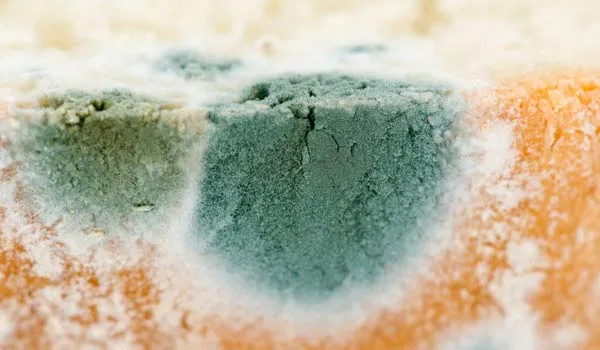
There's more to mold than that green, possibly furry patch on the surface of your bread, or the velvety dots found on old fruit. It turns out that the colorful patches visible to the naked eye are the spores , or tiny particles that give mold its color. The rest of the mold its branches and roots are difficult to see and sometimes burrow deep within your food.
Because the colorful spores on the surface of your food are just part of the mold, scraping or cutting this part off of your bread or bagel won't save you from eating a mouthful of fungus .
"Most molds are harmless but some are dangerous," said Nadine Shaw, technical information specialist at the U.S. Department of Agriculture, in a podcast. Some molds contain mycotoxins, which are poisonous substances that can cause allergic reactions or respiratory problems. One in particular, called aflatoxin, has been known to cause cancer, Shaw said.
Latest Videos From
Mycotoxins are found primarily in molds that grow on grains and nuts , but can also be found in grape juice, celery, apples and other produce , according to the USDA. The notorious aflatoxin is most prevalent in corn and peanut crops, and is monitored by the U.S. Food and Drug Administration and the USDA.
To keep mold from invading your food, Shaw gives the following recommendations.
- Cover food to keep out airborne mold spores.
- Use covered storage containers for perishable foods and refrigerate them properly.
- Use leftovers within three to four days.
Got a question? Email it to Life's Little Mysteries and we'll try to answer it. Due to the volume of questions, we unfortunately can't reply individually, but we will publish answers to the most intriguing questions, so check back soon.

 Live Science Plus