Read the latest science news and recent scientific discoveries on Live Science, where we've been reporting on groundbreaking advances for over 20 years. Our expert editors, writers and contributors are ready to guide you through today's most important breakthroughs in science with expert analysis, in-depth explainers and interesting articles, covering everything from space, technology, health, animals, planet Earth, and much more.


-
 Artificial turf contains 400 chemicals tied to cancer and hormone disruption. But is it unsafe?
Analysis A recent, 10-year study from California identified many known or suspected carcinogens in artificial turf. Does it pose a danger?
Analysis -
 Scientists were excited about a blood test for many cancers — but it failed a big trial. Here's what to know.
ANALYSIS Emerging tests promise to screen for many cancers at once, but one just failed in a big trial. Will these diagnostics deliver on their promise someday?
ANALYSIS -
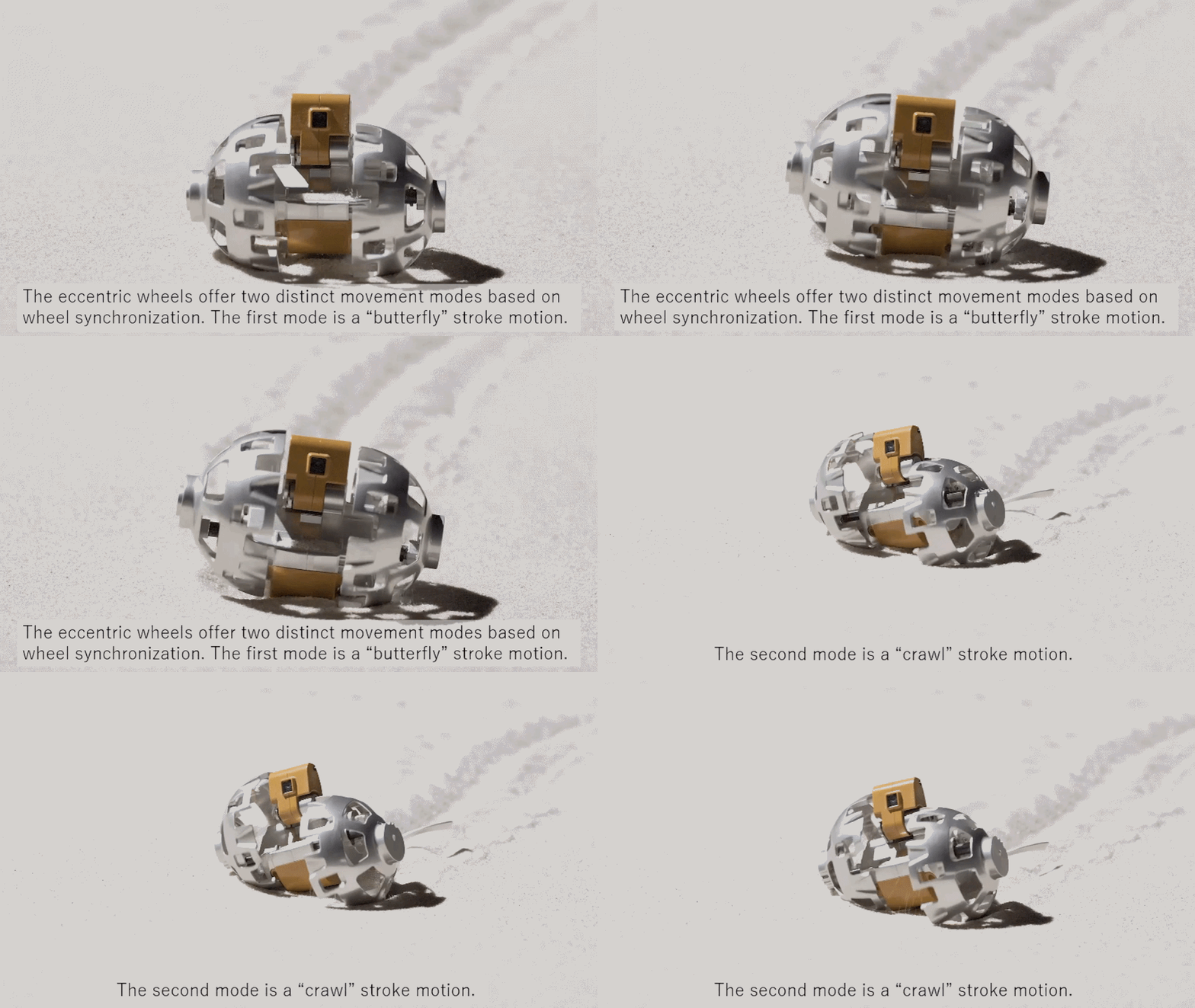 This 'crawling' robot rolled around the moon and took a historic photo
A morphable moon robot operated for 100 minutes in 2024, allowing investigators to get images of an upside-down spacecraft on the lunar surface.
-
 In a first, scientists translated an entire viral genome so a quantum computer could read and analyze it
Scientists have uploaded a viral genome to a quantum computer, marking an important step for the future of quantum-enabled advancements in biology.
-
 Genetically modified worms can now produce and deliver drugs inside a living body, scientists say
In a proof-of-concept lab experiment, scientists demonstrated that intestinal parasites could make and release therapeutic agents inside a living host.
-
 Mysterious 'cold blob' in the Atlantic is a sign of the Gulf Stream weakening — and that's bad news for the US East Coast
The Atlantic's enigmatic "cold blob" has once again been linked to a weakening of key ocean currents and a devastating climate tipping point.
-
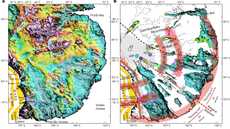 Scientists discover giant, fan-shaped structure deep beneath the East Antarctic Ice Sheet
A mysterious geological structure that resembles a human hand with outstretched fingers has been revealed beneath East Antarctica. The discovery shows the frozen continent still hides many geological secrets.
-
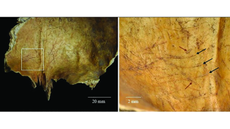 2,000 years ago in Scotland, people removed a corpse's brain and fashioned the arm bones into tools
A new analysis of 2,000-year-old skeletons found in northern Scotland has revealed an unusual funeral ritual involving the manipulation of dead bodies.
-
 Flesh-eating screwworm found in Texas cows and dog. Are humans at risk?
Explainer USDA has detected New World screwworm infections in Texas animals, marking the state's first confirmed cases in decades.
Explainer -
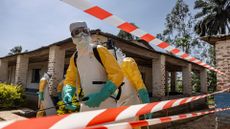 3 new Ebola vaccines are being fast-tracked amid the current outbreak — when could they be ready?
The Bundibugyo virus driving the current Ebola outbreak has no approved vaccine, but researchers are leveraging decades of vaccine innovation in an effort to change that.
-
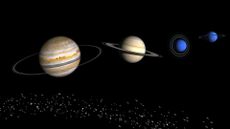 2 vanished 'super Earths' once orbited near Uranus and Neptune, new study hints
Our solar system may have hosted up to six giant planets in its first hundred million years, a new study suggests. The findings paint a more crowded picture of the early outer solar system than previously thought.
-
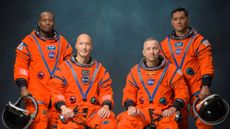 Artemis III crew revealed: NASA announces astronauts for 'one of history's most complex missions'
NASA's Artemis III crew has been revealed. The astronauts will launch into low Earth orbit next year to test docking with commercial lunar landers being developed by SpaceX and Blue Origin.
-
 China unveils first-of-its-kind 'dual-core' quantum computer — its makers say it improves stability and efficiency
A new Chinese quantum computing system pairs two independent neutral-atom arrays in one processor, aiming to boost stability, efficiency and scalability.
-
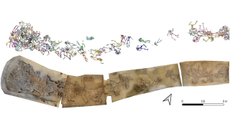 Ditch full of 7,000-year-old headless human skeletons discovered in Slovakia, baffling archaeologists
Archaeologists are unsure why people in Stone Age Slovakia removed corpses' heads before burying them in a neighborhood ditch.
-
 Richard Feynman's forgotten notes on 'the restaurant problem' finally deciphered
Researchers cracked a 50-year-old math problem scribbled by Richard Feynman over lunch. The equations show that humans are better decision-makers than scientists once thought.
2 Comments -
 Thanks to natural selection, Indigenous Andeans may digest potatoes better than anyone else in the world, study finds
After domesticating potatoes 10,000 years ago, the ancient people of the Andes evolved to have more copies of a key gene involved in digesting starch.
3 Comments -
 'A disease anywhere can be a disease everywhere tomorrow morning': Public health expert on Ebola and the threat of future outbreaks
INTERVIEW Live Science spoke with Dr. Ali S. Khan, an epidemiologist and former assistant surgeon general of the U.S. Public Health Service, about the ongoing Ebola epidemic and the U.S.'s preparedness for future outbreaks.
INTERVIEW -
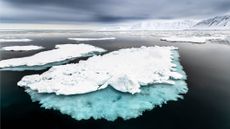 Sea ice loss in the Arctic has triggered a critical tipping point that's destroying the food chain
Researchers say the Arctic Ocean crossed a biological tipping point in 2009, when nitrate levels in the water suddenly started dropping due to a drastic reduction in sea ice extent.
4 Comments -
 Jupiter and Venus conjunction: See two bright planets at the same time this weekend
A close conjunction of the two brightest planets in the night sky will take place over several evenings, with the best time to look being June 8-11.
2 Comments


