 Live Science Plus




You are now subscribed
Your newsletter sign-up was successful
Want to add more newsletters?

Delivered Daily
Daily Newsletter
Sign up for the latest discoveries, groundbreaking research and fascinating breakthroughs that impact you and the wider world direct to your inbox.

Once a week
Life's Little Mysteries
Feed your curiosity with an exclusive mystery every week, solved with science and delivered direct to your inbox before it's seen anywhere else.

Once a week
How It Works
Sign up to our free science & technology newsletter for your weekly fix of fascinating articles, quick quizzes, amazing images, and more

Delivered daily
Space.com Newsletter
Breaking space news, the latest updates on rocket launches, skywatching events and more!

Once a month
Watch This Space
Sign up to our monthly entertainment newsletter to keep up with all our coverage of the latest sci-fi and space movies, tv shows, games and books.

Once a week
Night Sky This Week
Discover this week's must-see night sky events, moon phases, and stunning astrophotos. Sign up for our skywatching newsletter and explore the universe with us!
Join the club
Get full access to premium articles, exclusive features and a growing list of member rewards.
The pituitary gland is called the master gland of the endocrine system. This is because it controls many other hormone glands in the body. According to The Pituitary Foundation, without it, the body wouldn't reproduce, wouldn't grow properly and many other bodily functions just wouldn't function.
Size & location
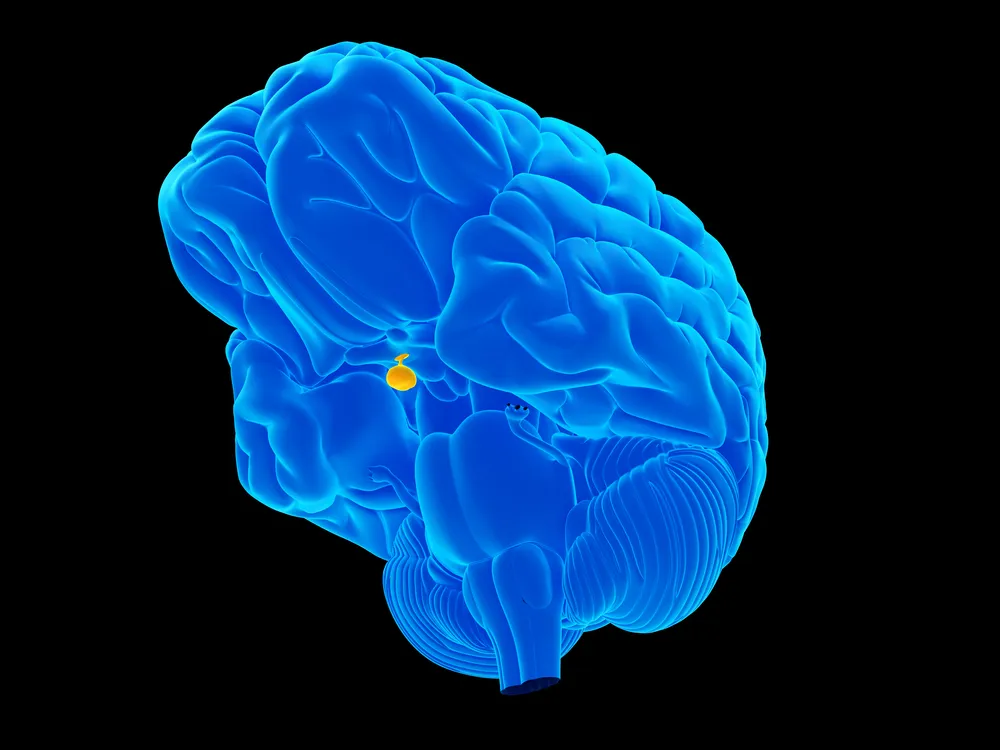
The pituitary gland is located in the brain, between the hypothalamus and the pineal gland, just behind the bridge of the nose. It is about the size of a pea and is attached to the brain by a thin stem of blood vessels and nerve cell projections. The frontal lobe is the biggest part of the pituitary. It makes up 80 percent of the gland's overall weight, according to the Merck Manual.
Function
The master gland controls the thyroid gland, adrenal gland, ovaries and testicles. While it may be in charge of these glands, it gets it orders from its neighbor, the hypothalamus.
Basically, glands and hormones are a long communication chain in the body. The hypothalamus sends signals in the form of hormones to the pituitary gland, telling it just how much hormones are needed to send to the other glands. Then, the pituitary secretes hormones that signal to the glands how much hormones they need to secrete.
The pituitary gland also produces hormones for organs in the body, as well. It creates:
- Oxytocin for the uterus and mammary glands to stimulate contractions that aid in birth and milk production
- Vasopressin, an antidiuretic hormone, for the kidneys
- Beta-melanocyte-stimulating hormone that darkens the skin
- Endorphins for the brain and immune system to help inhibit pain sensations and regulate the immune system
- Growth hormones for muscles and bones
- Enkephalins that help inhibit pain sensations in the brain
- Prolactin, which stimulates milk production in the mammary glands
Most hormones are released every one to three hours and run in conjunction with the body's circadian rhythm. This means that hormone production is at its peak during the day hours and level off as night falls. Other hormones rely on certain factors, such as the menstrual cycle, to determine production levels.
Diseases & conditions
Most conditions of the pituitary gland are caused by cancerous or benign tumors and cysts. These growths are fairly common. "One-sixth of people have a tumor or cyst of the pituitary," said Dr. Melanie Goldfarb, an endocrine surgeon and director of the Endocrine Tumor Program at Providence Saint John's Health Center and assistant professor of surgery at the John Wayne Cancer Institute in Santa Monica, California.
Most of these tumors are benign and don't spread, though, according to the Mayo Clinic. A tumor can cause the pituitary gland to not produce enough hormones, a condition called hypopituitarism, or to produce too much hormones, or both at the same time. When hormone production is thrown off, other glands can malfunction and produce too much or too little of their hormones. Organs that rely on pituitary hormones can also be affected. This can cause a wide range of disorders, such as gigantism, galactorrhea, erectile dysfunction and central diabetes insipidus.
Computed tomography (CT) or magnetic resonance imaging (MRI) may be used to track the growth of a tumor, and simple blood tests can be used to diagnose a pituitary gland problem.
In some instances, a tumor and some of the gland around it may need to be removed surgically. Luckily, this usually isn't a major problem. "You can remove up to 95 percent [of the pituitary gland] and still have complete function," said Goldfarb.
Other than surgery, a doctor may treat tumors with hormone regulation through medication. Sometimes, nothing needs to be done to the growth because it isn't harming the patient. In these cases, medical professionals often wait and monitor the situation before taking action.
Additional Resources

