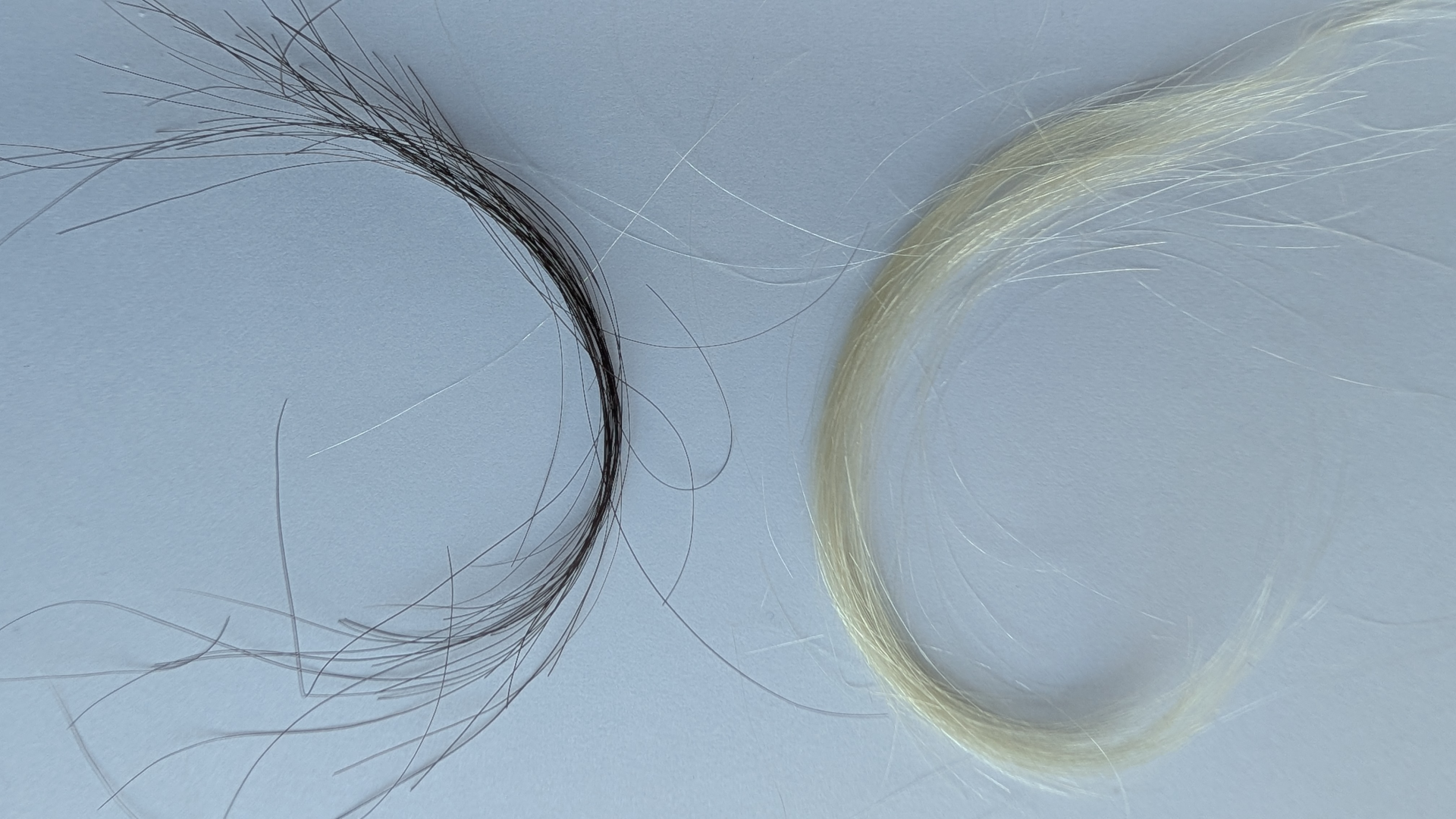
Preserved hair reveals just how bad lead exposure was in the 20th century
A new study reveals the dramatic decrease in lead exposure in the U.S. following the establishment of the Environmental Protection Agency 55 years ago.

NASA's Artemis II simulated launch is scheduled for tonight after Arctic weather forced the mission to be delayed. The first crewed Artemis mega moon rocket could still leave Earth as early as this weekend.

Will two rare supernovas finally tell us how fast the universe is expanding? Perhaps, but we'll have to wait for it for them to 'reappear'.

Astronomers have discovered how "forever young" stars stay blue and bright despite being almost as old as the universe.

These chemical oddities may explain why Earth seems to be deficient in certain elements — and could prove useful in catalysts and more.

After the asteroid smashed into Earth around 66 million years ago, it didn't take life that long to rebound, a new study finds.

Scientists discover a tipping point that took place in 2000, where El Niño’s effect on sea ice loss in Siberia was amplified.

The helmet has been a powerful symbol of Roman Britain since it was discovered over 200 years ago.

Aerial lidar is transforming how archaeologists map sites, but they should do it in tandem with Indigenous people.

An 11th-century monk saw the famous "Halley's comet" first as a child and later as an adult, new research finds.

A new study comparing 59 species of primates linked same-sex sexual behavior to scarce resources and more predators in socially complex species. The findings show diverse sexual behaviors are common — and likely beneficial in primates.

Scientists say grooves on a rock face overlooking the Adriatic Sea may have been made by sea turtles fleeing an earthquake.

Sharktober is real in Hawaii — and it's down to the reproductive pattern of predatory tiger sharks, an analysis of 30 years of data reveals.

An ancient and enormous organism called Prototaxites, initially found to be a type of fungus, may actually be an unknown branch of life, researchers say.

A new study suggests that lifespan might be 50% heritable — although for now, it's hard to know if the finding applies across diverse populations.

Nearly 790 people, primarily children, have been infected in South Carolina's ongoing measles outbreak, officials report.

Designed to assist rather than replace doctors, a new autonomous tool scans clinical notes to highlight patients who may need urgent follow-up for cognitive decline and potential dementia.

Liquid nitrogen can be used safely in food preparation — but one man's stomach burst after he threw back a cocktail that had been cooled with the substance.

Science questions, answered

Extraordinary images of our sublime universe

Unusual case reports from the medical literature

A window onto extraordinary landscapes on Earth

A glimpse into how people lived in the past

Incredible images of our planet from above

Virtual assistants mostly adopt 'female' personas, but all that does is exacerbate the notion that women are subservient.

Science news this week Jan. 31, 2026: Our weekly roundup of the latest science in the news, as well as a few fascinating articles to keep you entertained over the weekend.

The complex building blocks of life can form spontaneously in space, a new lab experiment shows.

The six-year Dark Energy Survey has released its full results, showing that two leading models of cosmology are equally valid — but both fail to explain one key observation.

Astronomers found evidence that dark matter and neutrinos may interact, hinting at a "fundamental breakthrough" that challenges our understanding of how the universe evolved.

Science crossword Test your knowledge on all things science with our weekly, free crossword puzzle!

Review A powerful, image stabilized binocular that provides exceptional reach and high-quality optics, but is let down slightly by its rubberized coating and non-waterproofness.
 Live Science Plus


Please login or signup to comment
Please wait...