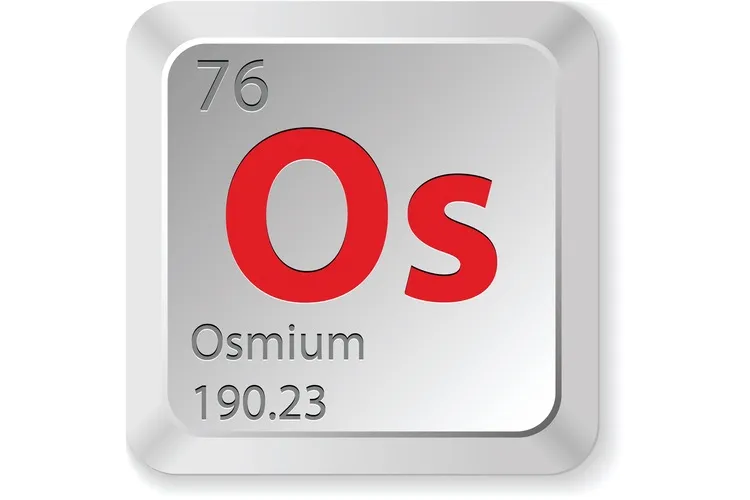
Atomic Number: 76 Atomic Symbol: Os Atomic Weight: 190.23 Melting Point: 5,491.4 F (3,033 C) Boiling Point: 9,053.6 F (5,012 C)
Word origin: Osmium comes from the Greek term osme, which means smell, scent, odor.
Discovery: British chemist Smithson Tennant discovered osmium in 1803 in the residue left when crude platinum was dissolved by aqua regia.
Latest Videos From
Properties of osmium
Osmium is one of the densest elements in the world. It is a lustrous, bluish white, hard metal and can be brittle even at a high temperature. Within the platinum group, osmium has the highest melting point and the lowest vapor pressure. Osmium tetroxide is a highly toxic powerful oxidizing agent with a strong odor. [See Periodic Table of the Elements]
Sources of osmium
Osmium is produced as a by-product of nickel refining. The element occurs in the mineral iridosule and in platinum-bearing river sands in the Urals, North America and South America. While there is little osmium in these products, it can be easily obtained from processed nickel ores.
Uses of osmium
Because of its density, osmium is often alloyed with other precious metals to make products such as instrument pivots, phonograph needles, and electrical contacts.When naturally combined with iridium, it is used in fountain pen tips. The tetroxide, obtained from the powdered or spongy form of the metal, can be used to detect fingerprints and stain fatty tissues for microscope slides.
(Source: Los Alamos National Laboratory)