 Live Science Plus





You are now subscribed
Your newsletter sign-up was successful
Want to add more newsletters?
Delivered Daily
Daily Newsletter
Sign up for the latest discoveries, groundbreaking research and fascinating breakthroughs that impact you and the wider world direct to your inbox.
Once a week
Life's Little Mysteries
Feed your curiosity with an exclusive mystery every week, solved with science and delivered direct to your inbox before it's seen anywhere else.
Once a week
How It Works
Sign up to our free science & technology newsletter for your weekly fix of fascinating articles, quick quizzes, amazing images, and more
Delivered daily
Space.com Newsletter
Breaking space news, the latest updates on rocket launches, skywatching events and more!
Once a month
Watch This Space
Sign up to our monthly entertainment newsletter to keep up with all our coverage of the latest sci-fi and space movies, tv shows, games and books.
Once a week
Night Sky This Week
Discover this week's must-see night sky events, moon phases, and stunning astrophotos. Sign up for our skywatching newsletter and explore the universe with us!
Join the club
Get full access to premium articles, exclusive features and a growing list of member rewards.
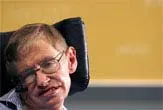
Even though famed physicist Stephen Hawking announced he doesn't believe in an afterlife and that heaven is a "fairy story for people afraid of the dark," that doesn't mean we'll stop believing, psychologists say.
The statement by Hawking to the Guardian newspaper reflects the beliefs of plenty of nonreligious people, but will likely get more attention, coming as it does from Hawking, who is famous for his work in theoretical physics. Hawking has already drawn fire from some religious leaders with his assertion in his book "The Grand Design" (Bantam 2010) that the universe did not need God to get started. [8 Shocking Things We Learned from Hawking's Book]
"I regard the brain as a computer which will stop working when its components fail," Hawking said Sunday in The Guardian. "There is no heaven or afterlife for broken down computers; that is a fairy story for people afraid of the dark."
Fairy story or not, a belief in heaven does seem to come with some benefits. Humans didn't evolve in an environment where an understanding of black holes or the origin of the universe would be helpful, said Daniel Kruger, an evolutionary psychologist at the University of Michigan.
"We're not designed at the level of theoretical physics," Kruger told LiveScience. "What really matters to us is what happens at the human scale, relationships to other people, things we experience in a lifetime."
Rewards and reminders
For that reason, the idea of heaven has a stronger mystique than that of the seven imperceptible dimensions of string theory. On a personal level, Kruger said, the idea of an afterlife offers some hope in a world where, historically, "life has been pretty harsh." Thoughts of heaven may also stave off fears of death, he said.
Studies have shown that a belief in life after death seems to play that handholding role, said Nathan Heflick, a doctoral student in psychology at the University of South Florida who has studied belief in the afterlife.
"The more people believe, the less death anxiety they tend to have," Heflick told LiveScience.
Reminding people of death also prompts them to want to believe in the afterlife more, Heflick said, even if they remain skeptical.
Societal glue
On a societal level, religious belief in the afterlife can be a powerful motivator to follow the rules, Kruger said.
"When you have an afterlife that is influenced by the actions that you take now, you basically see a system of rewards and punishments," he said. Those rewards and punishments can keep people in line, or, more charitably, provide a way for humans to codify and pass along moral laws.
A belief in the afterlife may also arise from the perception that we are more than our bodies. In a series of experiments, Heflick and his colleagues subtly reminded people of their bodies — by providing foot massages, for example — while asking them about their thoughts on the afterlife. People undergoing a physical experience reminding them of their bodies were less likely to say they believed in life after death, while those distanced from their bodies showed a slight uptick in belief.
People's perceptions of themselves, then, may influence their belief in what happens after death.
"If you think of your body as a machine, it's kind of hard to believe in life after death," Heflick said. "You're not going to be able to think of yourself as a spirit."
You can follow LiveScience senior writer Stephanie Pappas on Twitter @sipappas. Follow LiveScience for the latest in science news and discoveries on Twitter @livescience and on Facebook.

