















Pronghorn Adapt to New Animal Overpasses

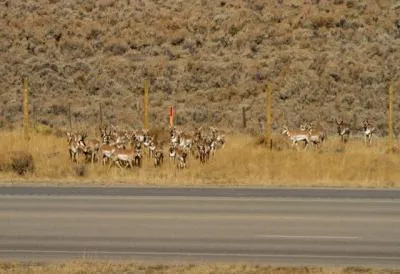
Each fall, thousands of pronghorn make an impressive migration southward across Wyoming, traveling 93 miles (150 km) to get to their wintering grounds in the Upper Green River Basin. The most dangerous part of this journey may not be predators or a lack of resources, but an all-too-familiar obstacle: traffic.
To help the pronghorn cross a major road that bisects their path, U.S. Highway 191, state officials in 2012 built two overpasses and six underpasses to accommodate the animals.
Scientists with the Wildlife Conservation Society (WCS) monitored this year's fall migration and declared a second season of success, reporting that this time around, the pronghorn showed no hesitation in using the crossings. [Quest for Survival: Incredible Animal Migrations]
Pronghorn are antelope-like creatures found only in North America. They are the fastest land animals on the continent, capable of reaching speeds greater than 53 mph (86 km/h) over short distances. In the early 19th century, they numbered an estimated 35 million. Today only 700,000 pronghorn remain and more than half of those live in Wyoming, where they have been making their annual migration for some 6,000 years.
Along a 13-mile (20 kilometers) stretch of U.S. Highway 191, the Wyoming Department of Transportation built eight safe wildlife passages as well as tall barrier fences to channel animals to these crossings, which were strategically placed based on five-years of GPS tracking data following the migration.
Last year, the pronghorn approached these new structures with skepticism and took several hours to cross. Many of the animals stopped at the new fencing, paced back and forth, in some cases passed back and forth over the overpass several times before they actually crossed for good, WCS officials said.
"What a difference a year makes," Jeff Burrell, WCS program coordinator for the northern Rockies, said in a statement. "While it was great to see pronghorn first using the overpass last year, it was clear that the fences and structures were confusing to them. This year, groups numbering from one to two hundred moved along a new route directly to, and over, the overpass with no delays, demonstrating their comfort with the overpass and the structure’s conservation value. The overpass not only reduces mortality but also allows the pronghorn to move with less energy and stress."
Get the world’s most fascinating discoveries delivered straight to your inbox.
Pronghorn are not the only animals that benefit from these overpasses and underpasses; they can also accommodate mule deer, moose, elk and livestock during seasonal drives.
And the arrangement is safer for people, too. Historically, there was a bottleneck of migrating pronghorn trying to cross the highway in one place — Trapper's Point —which created a perilous situation for drivers, according to the WCS.
Follow Megan Gannon on Twitter and Google+. Follow us @livescience, Facebook & Google+. Original article on LiveScience.
