














Ancient Massive Volcanic Eruption Still Mystifies

The largest volcanic event of the last 300 million years may not have been triggered by a meteor, researchers now say.
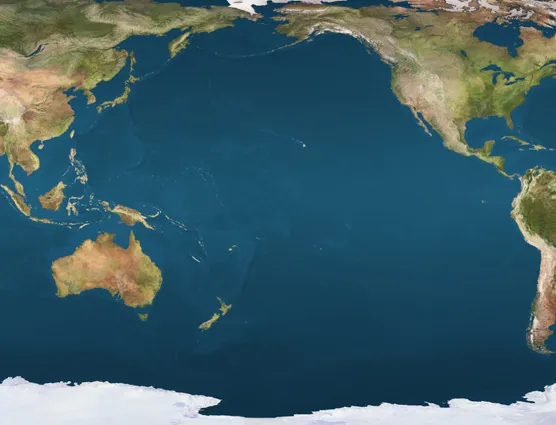
About 120 million years ago, as much as 1 percent of the Earth's surface may have been covered with volcanic eruptions. The origin of these massive 7-million-year-long eruptions in the Pacific Ocean, known as the Greater Ontong Java Event, has long been unclear, but some have suggested a cosmic impact as the trigger, smashing into the crust and causing lava to burst forth.
To see whether or not a meteor might have caused the Greater Ontong Java Event, scientists analyzed rocks from Gorgo a Cerbara in central Italy. This area was connected to the Pacific Ocean during the eruptions.
The researchers focused on platinum group elements, metals that include platinum, iridium, ruthenium, rhodium, palladium and osmium, which all have similar physical and chemical properties. Platinum group elements are far more abundant in meteors than in Earth's crust, and their presence can therefore serve as signals of an extraterrestrial collision — for instance, the spike of iridium seen around the time of the end of the Age of Dinosaurs suggests that a cosmic impact may have doomed that era.
The scientists analyzed how abundant these rocks were in platinum group elements. They also investigated how abundant they were in relation to each other — for instance, platinum and iridium are usually found at a 2:1 ratio with each other in extraterrestrial rocks, but on Earth, the ratio tends to be much higher.
Their findings suggest there is no support for a meteor impact as the cause of the Greater Ontong Java Event.
"The results so far indicate that this event was brought about by internal processes inside the Earth," researcher Marissa Tejada at the Japan Agency for Marine-Earth Science and Technology told LiveScience. Earth has seen many eruptions that are apparently caused solely by internal activity.
Get the world’s most fascinating discoveries delivered straight to your inbox.
Further work analyzing other rocks from this period, such as from the Pacific Ocean or North America, are needed to solve the mystery of this event's cause.
"Many models are proposed and they all need to be tested as more evidence becomes available in the future," Tejada said.
The scientists detailed their findings online today (Feb. 16) in the journal Scientific Reports.
