


-
 Why are humans the only species with a chin?
Potential explanations abound, yet recent research has shed new light on the question.
13 Commentshuman-evolution -
 Humans and Neanderthals interbred — but it was mostly male Neanderthals and female humans who coupled up, study finds
A preference for pairings between male Neanderthals and female Homo sapiens may answer the question of why there are "Neanderthal deserts" in human chromosomes.
neanderthals -
 'Absolute surprise': Homo erectus skulls found in China are almost 1.8 million years old — the oldest evidence of the ancient human relatives in East Asia
A new date for Homo erectus skulls found in central China provides new insight into how and when ancient human relatives reached eastern Asia.
5 Commentshuman-evolution -
 Research group claims preeclampsia doomed the Neanderthals, but experts say it's just a 'thought experiment'
Preeclampsia, a complication of pregnancy that involves high blood pressure, could have led to a decline in Neanderthals' fertility, a new study suggests.
6 Commentsneanderthals -
 What are ghost lineages, remnants of the past that still exist in our DNA today?
Ghost lineages reveal themselves through ancient genes that still exist in living beings today.
3 Commentshuman-evolution -
 Remote region in Greece has one of the most genetically distinct populations in Europe
A genetic analysis of the Deep Maniots living in Greece's southern Peloponnese region has revealed a close-knit, patriarchal community with roots in the Bronze Age.
6 Commentshuman-evolution -
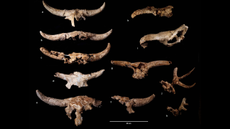 More than 43,000 years ago, Neanderthals spent centuries collecting animal skulls in a cave; but archaeologists aren't sure why
Neanderthals repeatedly returned to the cave to store horned animal skulls, revealing this cultural tradition was transmitted over time.
19 Commentsneanderthals -
 430,000-year-old wooden handheld tools from Greece are the oldest on record — and they predate modern humans
Archaeologists have found the oldest-known surviving examples of handheld wooden tools.
human-evolution -
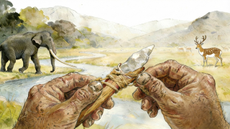 160,000-year-old sophisticated stone tools discovered in China may not have been made by Homo sapiens
Archaeologists have found the oldest known evidence of hafted tools in East Asia, and they challenge a previously held assumption about stone tool use.
4 Commentshuman-evolution


