

-
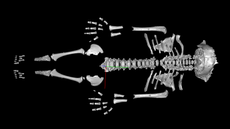 Neanderthal toddlers grew faster than modern humans, probably because of the harsh environment they evolved in
A new study of a Neanderthal toddler reveals that our closest evolutionary relatives' growth patterns differed from those of modern humans.
neanderthals -
 'Human evolution didn't slow down; we were just missing the signal': Large DNA study reveals natural selection led to more redheads and less male-pattern baldness
Over the past 10,000 years, evolution in West Eurasia has been selecting for light skin, red hair and resistance to HIV and leprosy in humans, according to a new study.
11 Commentshuman-evolution -
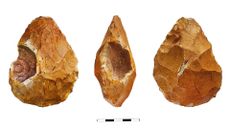 Homo erectus' tools include stunning geodes and fossils, possibly as a way to connect with the cosmos, study finds
Homo erectus may have deliberately selected rocks embedded with fossils and crystals to craft their hand axes — possibly to serve as mediators between humans and the cosmos.
17 Commentshuman-evolution -
 Human ancestors butchered and ate elephants 1.8 million years ago, helping to fuel their large brains
Opinion A professor of anthropology explores how early hominins ate prehistoric elephants to survive.
Opinion -
 'They could spend 4 or 5 hours per day underwater': How humans adapted to the most challenging environments
BOOK In the book "Adaptable," evolutionary anthropologist Herman Pontzer explores human biology and development, and how people have evolved to survive everywhere on Earth.
16 CommentsBOOK -
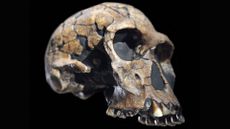 Homo habilis is the earliest named human. But is it even human?
Between 2 million and 3 million years ago, humans appeared in Africa — but identifying them in the fossil record is turning out to be surprisingly difficult.
4 Commentshuman-evolution -
 'Major disruption in Neanderthal history': 65,000 years ago, all Neanderthals in Europe died out except for one lineage
The last Neanderthals to survive in Europe came from a single lineage that survived the worst period of the ice age, ancient DNA reveals.
13 Commentsneanderthals -
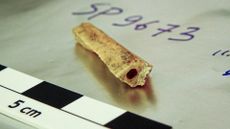 2 Neanderthals present at same Siberian cave 10,000 years apart were distant relatives, 110,000-year-old bone reveals
Researchers extracted DNA from a Neanderthal bone fragment found in Russia's Denisova Cave, and the genome is shedding light on how small and isolated their groups were.
neanderthals -
 18 million-year-old fossils of ape found in Africa, but in an unexpected place
The ancestor of apes was long thought to come from East Africa, but newly discovered fossils in Egypt may prompt a rethink.
4 Commentshuman-evolution


