


-
 Early Homo sapiens may have lived in rainforests, new clues suggest — and it could overturn our understanding of human evolution
The long-held idea that rainforests held a minor role in our species' evolution is changing — and our ability to adapt to these tropical areas may give insight about "what it means to be uniquely human."
13 Commentshuman-evolution -
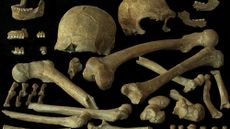 Some of the last surviving Neanderthals were remarkably diverse — suggesting inbreeding didn't doom them
Some Neanderthals living in northwestern Europe after 52,500 years ago were surprisingly diverse, suggesting that they didn't all go extinct due to inbreeding.
neanderthals -
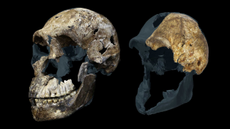 'A weird result from an already weird hominin': Archaeologists discover all Homo naledi skeletons found in South African cave are female
A cutting-edge analysis of the teeth from Homo naledi skeletons in a South African cave system found no males within the group. Experts are unsure what to make of the finding.
8 Commentshuman-evolution -
 Denisovan DNA influences the immune systems of modern Oceanians — but researchers aren't sure why
Genes inherited from the now-extinct Denisovans are actively playing a role in the immune system of some people from Oceania.
8 Commentshuman-evolution -
 How many generations of humans have there been?
Life's Little Mysteries Modern humans have been around 300,000 years. How many generations is that?
7 CommentsLife's Little Mysteries -
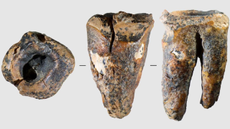 'Exceptional' drilled tooth reveals Neanderthals practiced dentistry in Siberia 60,000 years ago
A hole found in a 60,000-year-old Neanderthal tooth was likely made by a stone drill, making the discovery the oldest evidence of intentional dentistry to date.
4 Commentsneanderthals -
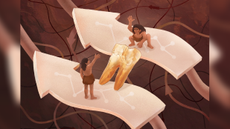 Homo erectus genetic material sequenced for the first time, and it shows 'deep genetic links' with modern humans
A new study of six Homo erectus individuals from China reveals one amino acid variant that distinguished this archaic human from all other human lineages and one that it passed on to modern humans via Denisovans.
5 Commentshuman-evolution -
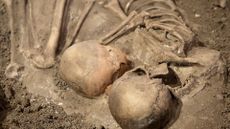 If humans are getting smarter, why are our brains shrinking?
Human brains have been shrinking since prehistoric times, some studies suggest. Whether this is true and why it has happened are debated.
11 Commentshuman-evolution -
 'We can no longer ignore diseases in the deep human past': Malaria influenced early humans' migrations across Africa, study suggests
Prehistoric humans in Africa may have avoided areas infested with malaria-spreading mosquitoes, a new study suggests.
human-evolution


