


-
 Gene that differs between humans and Neanderthals could shed light on the species' disappearance, mouse study suggests
A gene called ADSL, which helps synthesize DNA, differs between modern humans and our extinct human relatives. The findings could shed light on why Neanderthals vanished.
2 Commentsneanderthals -
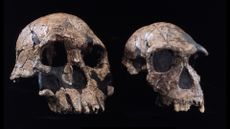 What was the first human species?
Modern humans emerged roughly 300,000 years ago, but our genus Homo is much older. So what's the oldest human species on record?
human-evolution -
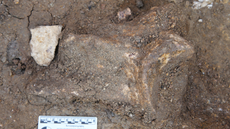 2.6 million-year-old stone tools reveal ancient human relatives were 'forward planning' 600,000 years earlier than thought
Hundreds of stone tools discovered in Kenya have revealed that human relatives traveled long distances to find raw material.
human-evolution -
 A braided stream, not a family tree: How new evidence upends our understanding of how humans evolved
Evidence is mounting that the evolution of our species is more convoluted than we imagined — more like a braided stream than a branching tree.
2 Commentshuman-evolution -
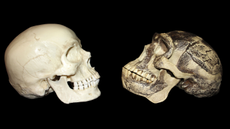 'It makes no sense to say there was only one origin of Homo sapiens': How the evolutionary record of Asia is complicating what we know about our species
As experts study the human fossil record of Asia, many have come to see it as telling a different story than what happened in Europe and Africa.
neanderthals -
 DNA has an expiration date. But proteins are revealing secrets about our ancient ancestors we never thought possible.
Analysis of ancient proteins may fill in the gaps of human evolution left by the decomposition of DNA.
human-evolution -
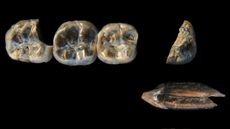 Never-before-seen cousin of Lucy might have lived at the same site as the oldest known human species, new study suggests
An unidentified early hominin fossil that might be a new species confirms that Australopithecus and Homo species lived in the same region of Africa in the same time frame.
3 Commentshuman-evolution -
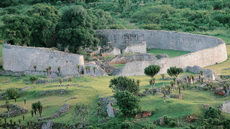 We know humans arose in Africa, but archaeology is only just uncovering secrets of the continent's early civilizations
Small settlements and the scourge of slavery left gaps in Africa's archaeological record. Yet sites and artifacts are revealing clues to the continent’s more recent history. An archaeologist explains the findings and threats to this heritage.
human-evolution -
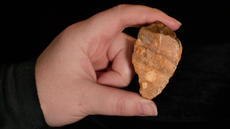 1.5 million-year-old stone tools from mystery human relative discovered in Indonesia — they reached the region before our species even existed
A handful of stone tools found on the Indonesian island of Sulawesi has pushed back the date that human relatives arrived in the region.
3 Commentshuman-evolution


