













What is the ionosphere? (And who is Steve?)

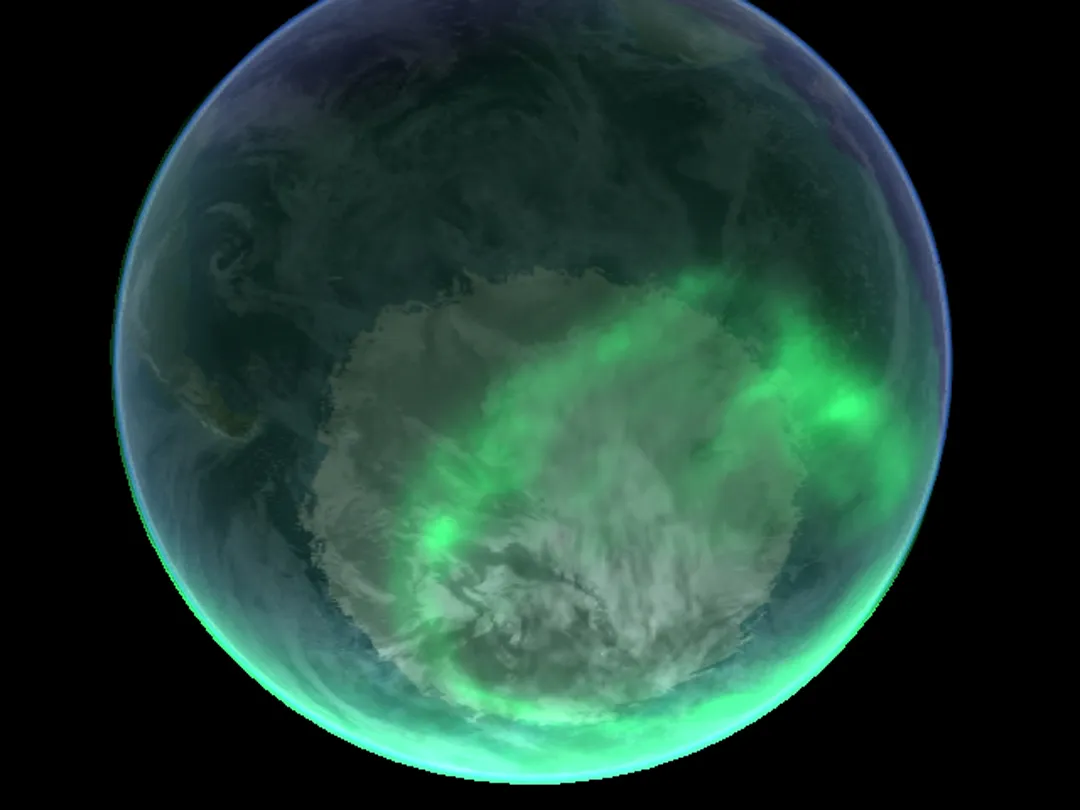
A dense layer of molecules and electrically charged particles, called the ionosphere, hangs in the Earth's upper atmosphere starting at about 35 miles (60 kilometers) above the planet's surface and stretching out beyond 620 miles (1,000 km). Solar radiation coming from above buffets particles suspended in the atmospheric layer. Radio signals from below bounce off the ionosphere back to instruments on the ground. Where the ionosphere overlaps with magnetic fields, the sky erupts in brilliant light displays that are incredible to behold.
Incredible Earth: $22.99 at Magazines Direct
The planet we live on is a remarkable place. But have you ever wondered how or why these things occur? How the Earth was made? How we predict the weather? How fossils form? What causes earthquakes or which animals glow in the dark? "Incredible Earth" reveals answers to these questions and more on a thrilling journey through everything you need to know about our world — and with gorgeous photography and insightful diagrams along the way!
Where is the ionosphere?
Several distinct layers make up Earth's atmosphere, including the mesosphere, which starts 31 miles (50 km) up, and the thermosphere, which starts at 53 miles (85 km) up. The ionosphere consists of three sections within the mesosphere and thermosphere, labeled the D, E and F layers, according to the UCAR Center for Science Education.
Extreme ultraviolet radiation and X-rays from the sun bombard these upper regions of the atmosphere, striking the atoms and molecules held within those layers. The powerful radiation dislodges negatively charged electrons from the particles, altering those particles' electrical charge. The resulting cloud of free electrons and charged particles, called ions, led to the name "ionosphere." The ionized gas, or plasma, mixes with the denser, neutral atmosphere.
The concentration of ions in the ionosphere varies with the amount of solar radiation bearing down on the Earth. The ionosphere grows dense with charged particles during the day, but that density subsides at night as charged particles recombine with displaced electrons. Entire layers of the ionosphere appear and disappear during this daily cycle, according to NASA. Solar radiation also fluctuates over an 11-year period, meaning the sun may put out more or less radiation depending on the year.
Explosive solar flares and gusts of solar wind stir up sudden changes in the ionosphere, teaming up with high-altitude winds and severe weather systems brewing on the Earth below.

Light up the skies
The scorching-hot surface of the sun expels streams of highly charged particles, and these streams are known as solar wind. According to NASA's Marshall Space Flight Center, solar wind flies through space at about 25 miles (40 km) per second. Upon reaching the Earth's magnetic field and the ionosphere below, solar winds set off a colorful chemical reaction in the night sky called an aurora.
When solar winds whip across Earth, the planet stays shielded behind its magnetic field, also known as the magnetosphere. Generated by churning molten iron in the Earth's core, the magnetosphere sends solar radiation racing toward either pole. There, the charged particles collide with chemicals swirling in the ionosphere, generating the spellbinding auroras.
Get the world’s most fascinating discoveries delivered straight to your inbox.
Scientists have found that the sun's own magnetic field squishes the Earth's weaker one, shifting auroras toward the night side of the planet, as reported by Popular Mechanics.
Near the Arctic and Antarctic circles, auroras streak across the sky every night, according to National Geographic. The colorful curtains of light, known as the aurora borealis and aurora australis, respectively, hang about 620 miles (1,000 km) above the Earth's surface. The auroras glow green-yellow when ions strike oxygen particles in the lower ionosphere. Reddish light often blooms along the auroras' edges, and purples and blues also appear in the nighttime sky, though this happens rarely.
"The cause of aurora is somewhat known, but it is not entirely resolved," said Toshi Nishimura, a geophysicist at Boston University. "For example, what causes a particular type of color of aurora, such as purple, is still a mystery."
Who is Steve?
Beyond auroras, the ionosphere also plays host to other impressive light shows.
In 2016, citizen scientists spotted a particularly eye-catching phenomena, which scientists struggled to explain, Live Science sister-site Space.com previously reported. Bright rivers of white and pinkish light flowed over Canada, which is farther south than most auroras appear. Occasionally, dashes of green joined the mix. The mysterious lights were named Steve in homage to the animated movie "Over the Hedge" and were later rebranded as the "Strong Thermal Emission Velocity Enhancement" — still STEVE for short.
"We've been studying the aurora for hundreds of years, and we couldn't, and still can't, explain what Steve is," said Gareth Perry, a space weather scientist at the New Jersey Institute of Technology. "It's interesting because its emissions and properties are unlike anything else we observe, at least with optics, in the ionosphere."
According to a 2019 study in the journal Geophysical Research Letters, the green streaks within STEVE may develop similarly to how traditional auroras form, as charged particles rain down upon the atmosphere. In STEVE, however, the river of light seems to glow when particles within the ionosphere collide and generate heat among themselves.

Communication and navigation
Though reactions in the ionosphere paint the sky with brilliant hues, they can also disrupt radio signals, interfere with navigational systems and sometimes cause widespread power blackouts.
The ionosphere reflects radio transmissions below 10 megahertz, allowing the military, airlines and scientists to link radar and communication systems over long distances. These systems work best when the ionosphere is smooth, like a mirror, but they can be disrupted by irregularities in the plasma. GPS transmissions pass through the ionosphere and therefore bear the same vulnerabilities.
"During large geomagnetic storms, or space weather events, currents [in the ionosphere] can induce other currents in the ground, electrical grids, pipelines, etc. and wreak havoc," Perry said. One such solar storm caused the famous Quebec blackout of 1989. "Thirty years later, our electrical systems are still vulnerable to such events."
Scientists study the ionosphere using radars, cameras, satellite-bound instruments and computer models to better understand the region's physical and chemical dynamics. Armed with this knowledge, they hope to better predict disruptions in the ionosphere and prevent problems that can cause on the ground below.
Additional resources:
- Check out a slideshow of fantastic auroras from National Geographic.
- Learn how GPS works with the Smithsonian National Air and Space Museum.
- Watch an animation of the Earth's magnetic field in action, from Nova and the Khan Academy.

Nicoletta Lanese is the health channel editor at Live Science and was previously a news editor and staff writer at the site. She is a recipient of the 2026 AHCJ International Health Study Fellowship, with a project focused on antibiotic stewardship practices in Japan and the U.S. They hold a graduate certificate in science communication from UC Santa Cruz and degrees in neuroscience and dance from the University of Florida. Beyond Live Science, Lanese's work has appeared in The Scientist, Science News, the Mercury News, Mongabay and Stanford Medicine Magazine, among other outlets. Based in NYC, she also remains involved in dance and performs in local choreographers' work.