













Earthquake Shakes Southern California

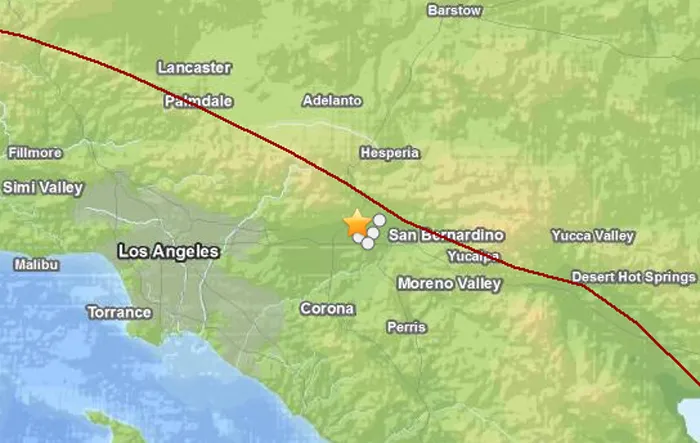
An earthquake of preliminary magnitude 4.4 struck southern California early today, according to the U.S. Geological Survey (USGS).
The earthquake's epicenter was 3 miles (5 km) north of Fontana in San Bernardino County. It originated 3.2 miles (5.2 km) deep and struck at 1:35 a.m. local time (9:35 UTC).
Residents reported light to moderate shaking in the area, as far away as Long Beach and Los Angeles, according to the USGS, but there were no immediate reports of damage.
Earthquakes of this size tend to be felt by people in the area but typically do not cause significant damage, other than possibly broken windows and falling dishes or the toppling of unstable objects. But the damage caused by any single event depends on the quake's depth, proximity to populated areas, building standards in the region, as well as the type of earthquake. The USGS frequently updates the magnitude of an event after more data is analyzed.
An earthquake's magnitude is a measure of the energy released at the source. It is just one predictor of the shaking that may ensue, which is affected by local and regional geology. Scientists know in a general sense what causes earthquakes but are unable to predict specific quakes.
This article will be updated if significant additional information becomes available. Find more earthquake news here.
Get the world’s most fascinating discoveries delivered straight to your inbox.

For the science geek in everyone, Live Science offers a fascinating window into the natural and technological world, delivering comprehensive and compelling news and analysis on everything from dinosaur discoveries, archaeological finds and amazing animals to health, innovation and wearable technology. We aim to empower and inspire our readers with the tools needed to understand the world and appreciate its everyday awe.