















How Your Brain Works on Autopilot

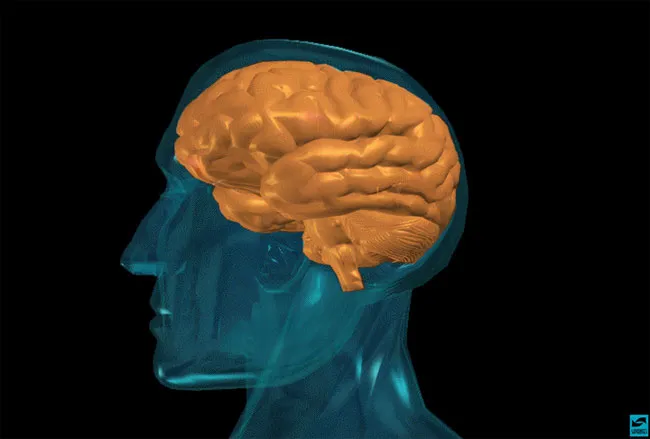
Anyone who's learned to ride a bike or touch type might have wondered how a task that is so arduous at first could be so seamlessly easy later. A new study reveals more about exactly what goes on in the brain as we form these habits, transitioning from intense concentration to autopilot.
The results, found in rats but thought to be analogous to humans, show that habitual learning, as it's called, involves two brain circuits — one used for movement and the other for higher, cognitive thinking.
As a task is learned, these circuits trade off in terms of their engagement. The movement circuit, which involves a part of the brain called the dorsolateral striatum, becomes more active, while the cognitive circuit, which involves a region called the dorsomedial striatum, takes a dip.
"If you imagine these two systems are competing, then at the end stages of training, activity in the dorsomedial striatum is fairly weak whereas activity in the dorsolateral striatum is fairly strong," said study researcher Catherine Thorn, at MIT's McGovern Institute for Brain Research. "And what we think that means is that the habit is taking over as training progresses," she told LiveScience.
Competing brain circuits
While scientists had previously hypothesized these brain circuits were involved in habitual learning, the current work is the first to record the activity of the brain cells, or neurons, as the habits were formed. It is also the first to show that these two loops are active simultaneously.
The fact that these two circuits work together could potentially mean that one circuit might be able to compensate for the other. This would be useful in instances where one circuit is damaged, such as in Parkinson's disease, where the dorsolateral striatum is affected.
Get the world’s most fascinating discoveries delivered straight to your inbox.
"If we can learn how to tilt the competition in one direction or the other, we might help bring new focus to existing therapies, and possibly aid in the development of new therapies," said lead researcher Ann Graybiel, also of MIT. However, the researchers emphasize these sorts of applications are a long way off.
And while rat brains are good models for studying this type of learning, studies on humans are needed before scientists can know if the results apply to us.
Rat habits
The researchers recorded the activity of thousands of neurons in the rats' brains as they learned how to find a food reward in a maze. When they reached a specific T-junction, the rats were signaled to turn either right or left by either a sound or touch cue. Over many trials, the rats learned to associate the signal with turning in the correct direction for their reward. Eventually, this became routine.
The two brain circuits showed very different patterns of activity as the rats were learning. The dorsolateral striatal neurons (linked to motion control) were most active at specific points of action within the maze, such as a start, stop, or turn. And their activity steadily increased as the rats' performance improved, and then remained fairly stable.
On the other hand, the dorsomedial neurons (involved in higher thinking) were most active when the rats had to make the "right or left" decision. The neuron activity in this region also declined once the rats got a handle on their task. Essentially, the thinking part of the brain wasn’t so necessary as the task became routine.
"The two systems are generally simultaneously engaged, and possibly competitive, but with extended training and repetition, as the habit takes over, the dorsolateral striatum becomes more strongly activated over the dorsomedial striatum," Thorn said.
Another hypothetical implication of the findings is that a better understanding of how these circuits interact might lead to ways to help people avoid or unlearn bad habits. "It's possible that if we could get a handle on the interaction between the two loops, we would be able to possibly suppress bad habits or encourage good ones," Thorn said.
The results will be published June 10 in the journal Neuron.
- Top 10 Things You Didn't Know About the Brain
- Top 10 Mysteries of the Mind
- 10 Ways to Keep Your Mind Sharp

Rachael is a Live Science contributor, and was a former channel editor and senior writer for Live Science between 2010 and 2022. She has a master's degree in journalism from New York University's Science, Health and Environmental Reporting Program. She also holds a B.S. in molecular biology and an M.S. in biology from the University of California, San Diego. Her work has appeared in Scienceline, The Washington Post and Scientific American.