













World Living on Ecological Debt

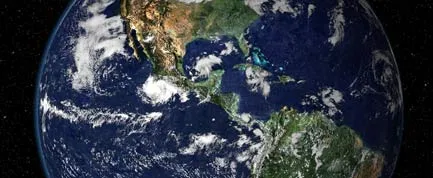
Each year, humans are living increasingly beyond their ecological means by stripping the planet's capacity to support the demands placed by the global population, scientists say.
To raise awareness of how fast we're depleting Earth's resources, one science- and research-based non-profit organization calculates the exact date that the global community starts running on ecological deficit each year.
"Overshoot day is what we calculate as the day that global human society has used up all of the resources" for that year, said Justin Kitzes, a scientist with the Global Footprint Network.
This year the overshoot day fell on Oct. 9, nearly two months earlier than when the organization calculated it for 1987 [chart].
"Every year now it keeps getting earlier," Kitzes told LiveScience. "This is earliest it's ever been. And what it shows is that we're in an overshoot of about 25 to 30 percent, which means that every year we use that much more than the Earth can provide for that year."
To calculate resource deficit, Kitzes and colleagues looked at how much productive space there is on Earth and compared it with the demands of humans each year. The demands include consumption of food and fiber products and resources needed for waste disposal.
"It turns out that there is about 24 billion acres of space that can produce things that are useful for humans," Kitzes said. "And then we say how many [acres] do we demand every year? When you compare the two you see that in this year, for example, we used up the equivalent capacity of one-and-a-quarter planets."
Get the world’s most fascinating discoveries delivered straight to your inbox.
The scientists believe that if our continued demands on Earth's resources continue in the same rate observed in the last 20 years, in 2050 we will be using double what the planet can provide per year on a long-term basis.
- Top 10 Ways to Destroy Earth
- Group Warns on Consumption of Earth's Resources
- Planet's Population Hit 6.5 Billion Saturday
- The Mysterious Origin and Supply of Oil
- Images: Earth As Art
