













Bees Can Predict Temperature in Flowers

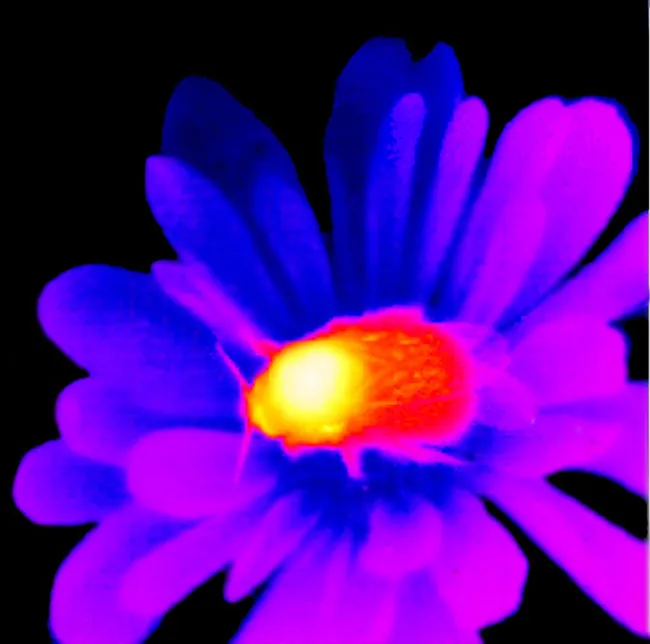
When deciding which flower to land on, bumblebees look for warmth. And they use flower color as an indicator of temperature, a new study finds.
Bumblebees are pollinators of crops and wildflowers and feed on their nectar and pollen.
Researchers have long thought the amount of nectar and pollen is what attracts a bee. But because bees have to invest energy to maintain body temperature, the warmth of a flower, identified by color, is another incentive, scientists report in the Aug. 3 issue of the journal Nature.
"What the bees appear to be doing is a bit like us drinking a hot drink on a cold day," said Lars Chittka of the University of Cambridge. "If you need to warm up, you can produce your own heat, at the expense of some of your energy reserves—or you can consume a warm drink, and save on investing your own energy.”
Chittka and his colleagues exposed bees to randomly positioned, similarly colored purple and pink artificial flowers containing the same amount of imitation nectar. At first, the purple flowers had the warmer nectars and 58 percent of the bees flocked to them.
The researchers then reversed the flower temperatures and saw that once again the majority of bees, almost 62 percent, chose the warmer, this time pink flowers. [Infrared image from study]
"The interesting thing is that bees don't just prefer the warmer drinks—they also learn to predict the flower temperature from the flower color," Chittka said.
Get the world’s most fascinating discoveries delivered straight to your inbox.
Flowers can warm themselves by producing their own heat or absorbing the heat from the sun. They do this because warmer flowers get better pollination.
"They have an interest in keeping the interest of the pollinators and are engaged in a competitive race," Chittka told LiveScience.
The bees then can affect how flower structures evolve to keep warm and therefore attract pollinators.
- Backyard Bugs: The Best of Your Images
- Human Affection Altered Evolution of Flowers
- Why Bees Fly With Landing Gear Down
- Birds and Bees Can't Keep Up
- All About Insects
