
 Live Science Plus


Tracking Japan's Tsunami Debris (Infographic)

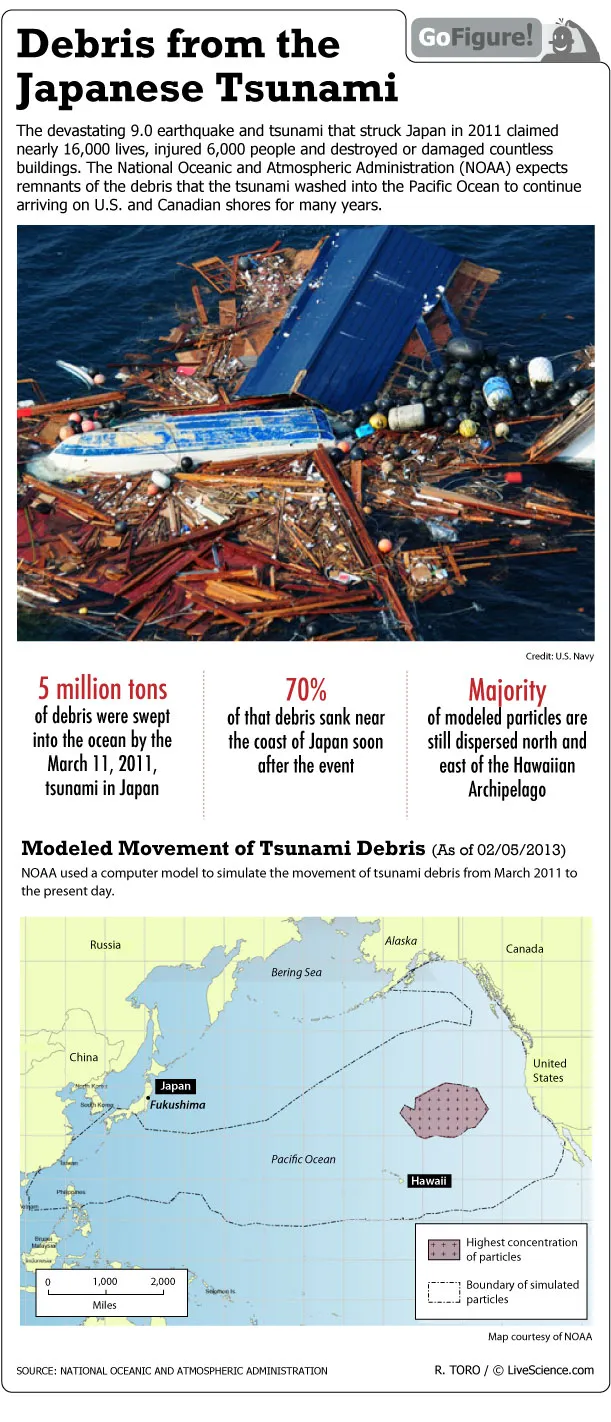
The devastating 9.0 earthquake and tsunami that struck Japan on March 11, 2011, claimed nearly 16,000 lives, injured 6,000 people, and destroyed or damaged countless buildings. As a result of the disaster, the National Oceanic and Atmospheric Administration (NOAA) expects remnants of the debris that the tsunami washed into the ocean to reach U.S. and Canadian shores over the next several years. The Japanese government estimated that the tsunami swept about 5 million tons of wreckage into the ocean. Seventy percent sank offshore, but no one knows how much of the remaining 1.5 million tons of debris is still floating in the Pacific Ocean. The debris, no longer in a mass, is scattered across an area of the North Pacific that is roughly three times the size of the continental United States. Computer models of the debris field show the outer edge of the debris is at the West Coast of the U.S. and Alaska, while the bulk of the debris is north of Hawaii, slowly moving east. Even with models and technology, predicting where debris will come ashore is difficult. Scientists believe that the debris will be widely dispersed and that beachgoers may notice only a gradual increase in debris on beaches.
- Image Gallery: Invasive Species
- Images: Japanese Tsunami Dock On Shore
- In Pictures: Japan Earthquake & Tsunami
Get the world’s most fascinating discoveries delivered straight to your inbox.
