













Anxious Mice Face Higher Cancer Risk

Anxious mice get more serious cancer than their calmer counterparts, according to a new study that could have implications for human cancer treatments.
The research revealed that mice with anxious "personalities" — meaning animals that were more hesitant to explore potentially dangerous areas — are prone to more invasive skin cancers than coolheaded rodents. The culprit may be the damage stress does to the immune system, which can sometimes fight off these types of cancers.
"It's bad enough that cancer diagnosis and treatment generates stress and anxiety, but this study shows that anxiety and stress can accelerate cancer progression, thus perpetuating a vicious cycle," study researcher Firdaus Dhabhar, a psychiatrist at the Stanford University School of Medicine, said in a statement.
"The goal is to ameliorate or eliminate the effects of anxiety and chronic stress, at least at the time of cancer diagnosis and during treatment," Dhabhar added.
Stress and the immune system
Dhabhar has long focused on the role of stress in the immune system. Short-term stress can actually boost the immune system, research has found, as if the body is gearing up for battle. But when stress is chronic, the immune system suffers. [11 Tips to Ease Stress]
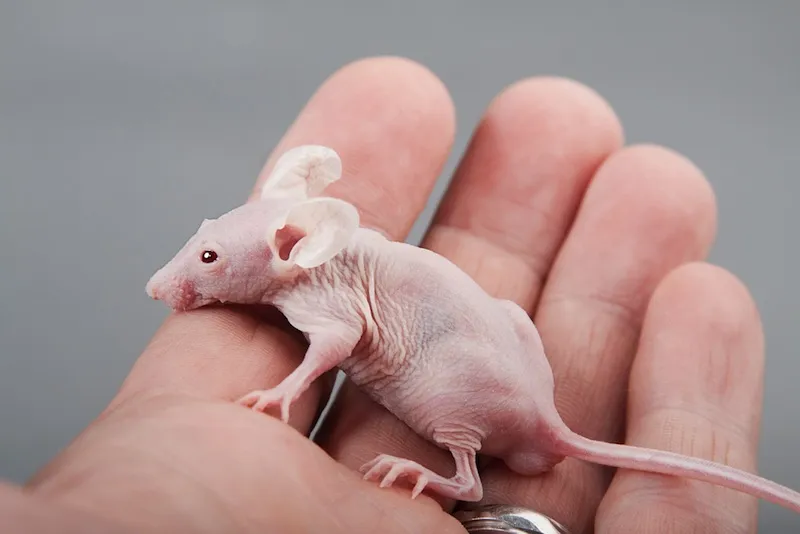
Stress affects everyone differently, so Dhabhar turned to mice to investigate how individual differences in stress response might influence the immune system. He and his colleagues used a breed of hairless mice that develops skin tumors in response to ultraviolet rays, much as humans develop skin cancer from exposure to the sun's UV light.
Get the world’s most fascinating discoveries delivered straight to your inbox.
First, the researchers tested the mice in a couple of scary scenarios, including an enclosure that was half-lighted, half in darkness. They gauged each mouse's stress-related personality by measuring how long they spent exploring the dark or otherwise "dangerous" areas in their enclosures. Next, they exposed each mouse to ultraviolet light three times a week for 10 weeks, enough to trigger tumors in all of the rodents.
Easing stress to treat cancer?
As the mice developed skin cancer over the next few months, Dhabhar and his colleagues tracked the progression of their tumors. They found that the high-anxiety mice developed more skin tumors. Not only that, but the tumors they developed were more invasive, the researchers report today (April 25) in the journal PLoS ONE.
The results revealed that the immune systems of the anxious mice were in relatively rough shape, too. These mice had fewer protective chemokines and cytokines, chemicals crucial to immune responses against tumors. Compared with their low-anxiety brethren, high-anxiety mice also had fewer immune cells in the bloodstream capable of infiltrating and destroying cancer cells.
"Surprisingly, the tumors of high-anxious mice also appeared to make larger amounts of a factor called CCL22. This factor brings in a special population of cells, called regulatory T cells, within and around tumor environment," Dhabhar told LiveScience. " Regulatory T cells are generally 'bad' for cancer because they are thought to suppress the protective immunity that could be directed against the tumor cells."
The researchers found higher levels of the stress hormone corticosterone in the high-anxiety rats, suggesting that this chronic stress response could be harming the body's immune response.
"Even though we hypothesized this before conducting our experiments, it was still surprising to observe that identifying a psychological trait, a tendency to be anxious — right at the beginning, before any experimental manipulation — was associated with increased tumor progression weeks and months later, and with biology factors that begin to explain mechanisms," Dhabhar said.
Further research will be needed to link stressed-out personalities and cancer in humans, Dhabhar said. He and his colleagues now plan to test whether anti-anxiety drugs or other stress-reducing methods can boost the effectiveness of cancer treatments.
You can follow LiveScience senior writer Stephanie Pappas on Twitter @sipappas. Follow LiveScience for the latest in science news and discoveries on Twitter @livescience and on Facebook.

Stephanie Pappas is a contributing writer for Live Science, covering topics ranging from geoscience to archaeology to the human brain and behavior. She was previously a senior writer for Live Science but is now a freelancer based in Denver, Colorado, and regularly contributes to Scientific American and The Monitor, the monthly magazine of the American Psychological Association. Stephanie received a bachelor's degree in psychology from the University of South Carolina and a graduate certificate in science communication from the University of California, Santa Cruz.