 Live Science Plus





You are now subscribed
Your newsletter sign-up was successful
Want to add more newsletters?

Delivered Daily
Daily Newsletter
Sign up for the latest discoveries, groundbreaking research and fascinating breakthroughs that impact you and the wider world direct to your inbox.

Once a week
Life's Little Mysteries
Feed your curiosity with an exclusive mystery every week, solved with science and delivered direct to your inbox before it's seen anywhere else.

Once a week
How It Works
Sign up to our free science & technology newsletter for your weekly fix of fascinating articles, quick quizzes, amazing images, and more

Delivered daily
Space.com Newsletter
Breaking space news, the latest updates on rocket launches, skywatching events and more!

Once a month
Watch This Space
Sign up to our monthly entertainment newsletter to keep up with all our coverage of the latest sci-fi and space movies, tv shows, games and books.

Once a week
Night Sky This Week
Discover this week's must-see night sky events, moon phases, and stunning astrophotos. Sign up for our skywatching newsletter and explore the universe with us!
Join the club
Get full access to premium articles, exclusive features and a growing list of member rewards.
The BP Deepwater Horizon disaster prompted some residents of affected parts of Louisiana and Florida to rethink their views on other environmental issues, surveys indicate.
About 25 percent of respondents said the spill had caused them to reconsider issues such as global warming or protecting wildlife. Among those most economically affected by the spill that proportion rose to 35 percent.
"When the spill happened in April of 2010, we thought this would be a very interesting time to go in and not only ask the standard questions we have been asking about environmental opinions, but to see and ask whether they were in fact changing as we watched," said study researcher Lawrence Hamilton, professor of sociology at the University of New Hampshire, in a video.
He and two colleagues explored the effects of the spill using telephone surveys of 2,023 residents in two Louisiana parishes and three Florida counties where oil washed ashore and where economies were affected by the spill, although in different ways, Hamilton said. Most interviews were conducted between July and September 2010.
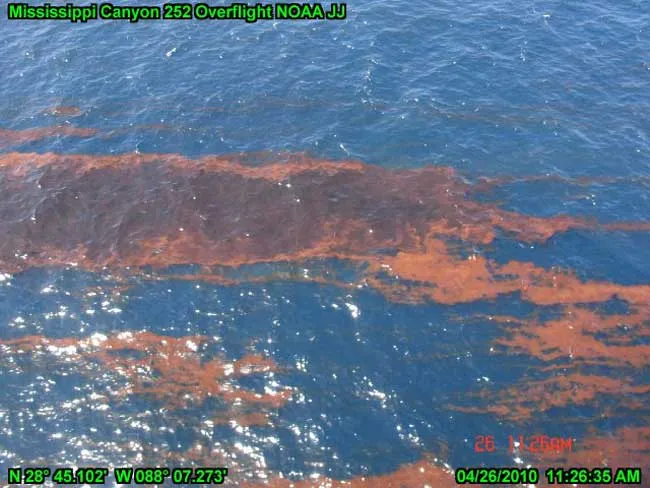
The disaster released an estimated 4.4 million barrels of oil into the Gulf of Mexico.
The survey revealed an interesting pattern of differences between respondents in Louisiana and Florida.
Louisiana residents were generally more likely to be affected by the spill and to say they had changed their views as a result. They also were more likely to say they had felt the effects of extreme weather and felt threatened by rising sea levels due to climate change.
But the greater exposure to environmental disasters did not translate into support for more environmental regulation. Louisianans were less likely than Floridians to favor a moratorium on deepwater drilling, increased use of alternative energy, or conservation of natural resources.
"It wasn't what we expected," Hamilton said.
But the difference makes more sense in the context of their economies; Louisiana relies on oil drilling, while Florida relies on tourism, which would be hurt by oil on the beaches.
"Beyond that you have a lot of culture, a lot of development, a lot of history taking two different tracks through the whole 20th century on how to use and develop and relate to the coast," he said.
The research was published online in the journal Social Science Quarterly on March 13.
You can follow LiveScience senior writer Wynne Parry on Twitter @Wynne_Parry. Follow LiveScience for the latest in science news and discoveries on Twitter @livescience and on Facebook.

