

-
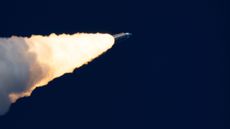 'We go for all of humanity': Artemis II rocket lifts off to the moon — look back at our live coverage
Live Blog The Artemis II crew have left Earth and are bound for the moon. Take a look back at our live blog's launch coverage from the days, hours and seconds until takeoff.
168 CommentsLive Blog -
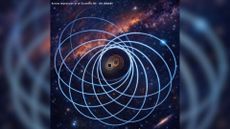 Universe-shaking collision of black hole and neutron star could upend our understanding of monster cosmic mergers
The catastrophic collision of a black hole and a neutron star sent ripples across the universe. New analysis of those ripples could upend a major theory about how these extreme pairs form.
black-holes -
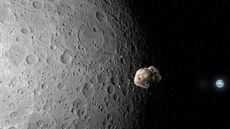 'City killer' asteroid will narrowly miss the moon, James Webb Telescope reveals
The "city killer" asteroid 2024 YR4 won't hit Earth or the moon when it whizzes by in 2032, the latest James Webb Space Telescope observations confirm.
2 Commentsasteroids -
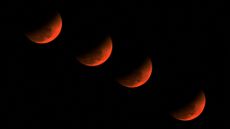 'Blood moon' total eclipse dazzles millions around the world (photos)
Here are the first images of the March 3 'blood moon' total lunar eclipse visible over North America, Australia, and eastern Asia.
the-moon -
 NASA announces sweeping overhaul of Artemis return to moon
A major shakeup to NASA's Artemis program will step rocket launches up to an annual basis, and discard a Boeing-designed upper stage.
space-exploration -
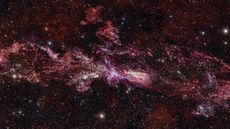 'Rare and enigmatic' structures found at the Milky Way's center in largest-ever map of its kind
Scientists using the ALMA telescope have created the most-detailed-ever map of the Milky Way's chaotic center. The observations could open a window to the ancient universe as it appeared shortly after the Big Bang.
2 Commentsastronomy -
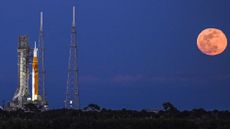 Artemis II update: NASA targets March 6 for launch of historic moon mission following successful 'wet dress rehearsal'
NASA is targeting March 6 as the earliest possible launch date for the Artemis II mission to the moon following a successful 'wet dress rehearsal' on Thursday.
2 Commentsspace-exploration -
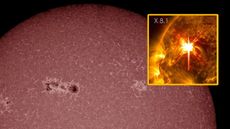 Auroras likely as most active sunspot in years turns toward Earth
The sunspot region 4366 fired off dozens of powerful solar flares in 24 hours, including the single strongest flare since 2024. Auroras are possible later this week.
the-sun -
 SETI scientists reveal 100 'signals of interest' from collapsed Arecibo Observatory
A crowd-sourced search for alien intelligence called SETI@Home is in its final stages, analyzing 100 'signals of interest' with the world's largest radio telescope.
10 Commentsextraterrestrial-life -
 NASA spacecraft takes milestone 100,000th image of Mars (photo)
NASA's Mars Reconnaissance Orbiter spacecraft has just taken its milestone 100,000th photo of the Red Planet using its high-definition camera. It reveals a dark region of moving sand dunes.
mars -
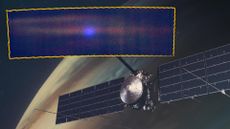 NASA eyes 3I/ATLAS with alien-hunting Clipper spacecraft in new image
NASA's alien-hunting Europa Clipper spacecraft took seven hours of ultraviolet observations of interstellar comet 3I/ATLAS while both objects zoom toward Jupiter.
comets -
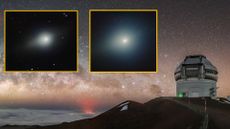 Comet 3I/ATLAS is getting greener and brighter as it approaches Earth
New images taken with the Gemini North telescope in Hawaii confirm that the interstellar comet 3I/ATLAS has gotten brighter and greener since its close flyby of the sun in October.
3 Commentscomets -
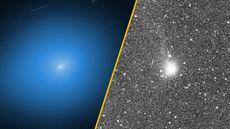 New 3I/ATLAS images show the comet getting active ahead of close encounter with Earth
NASA and ESA both shared new images of the interstellar comet 3I/ATLAS this week, as the agencies gear up for the mysterious object's closest approach to Earth on Dec. 19.
16 Commentscomets -
 When is the next full moon?
When does the next full moon rise? Find out exactly when to see the full moons of 2025, including the full 'Cold Moon' supermoon in December.
the-moon -
 That was the week in science: Soyuz launch pad seriously damaged | 'Holy Grail' of shipwrecks | Interstellar object dangers
Live blog Friday, Nov. 28, 2025: Your daily feed of the biggest discoveries and breakthroughs making headlines.
Live blog -
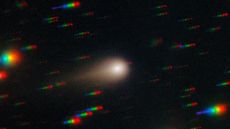 Watch live: New images of comet 3I/ATLAS revealed by NASA today (Nov. 19)
NASA will finally share long-awaited images of interstellar object 3I/ATLAS taken during the comet's close flyby of Mars. A live stream has been set for today (Nov. 19).
comets -
 'Severe' solar storm brings auroras as far south as Florida — and more are on the way tonight
The most powerful solar flare of 2025 has launched a ball of energy toward Earth that could trigger widespread auroras across the United States tonight.
2 Commentsthe-sun -
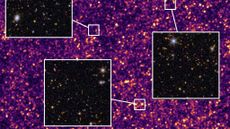 'Colder and deader from now on': Euclid telescope confirms the universe has already peaked in star formation
Astronomers using data from ESA's Euclid and Herschel space telescopes have confirmed that star formation has already peaked in the cosmos, and that the universe is bound to get steadily 'colder and deader' from here on.
8 Commentsastronomy -
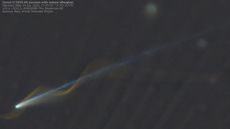 'Miracle' photo captures Comet Lemmon and meteor seemingly entwined over Earth
An astronomer in Italy caught a fortuitous image of the bright comet Lemmon seemingly entwined with the glowing trail of a "shooting star."
comets -
Interstellar object 3I/ATLAS is about to get very active — Space photo of the week
The interstellar comet 3I/ATLAS is barreling toward its closest point to the sun as perihelion looms on Oct. 29. How different will it look when it reappears on the other side?
3 Commentscomets -
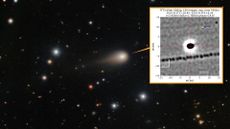 New images of interstellar object 3I/ATLAS show giant 'jet' shooting toward the sun
New telescope images show that the interstellar comet 3I/ATLAS is shooting a giant jet of gas and dust toward the sun. This is normal behavior for comets, an expert told Live Science.
9 Commentscomets -
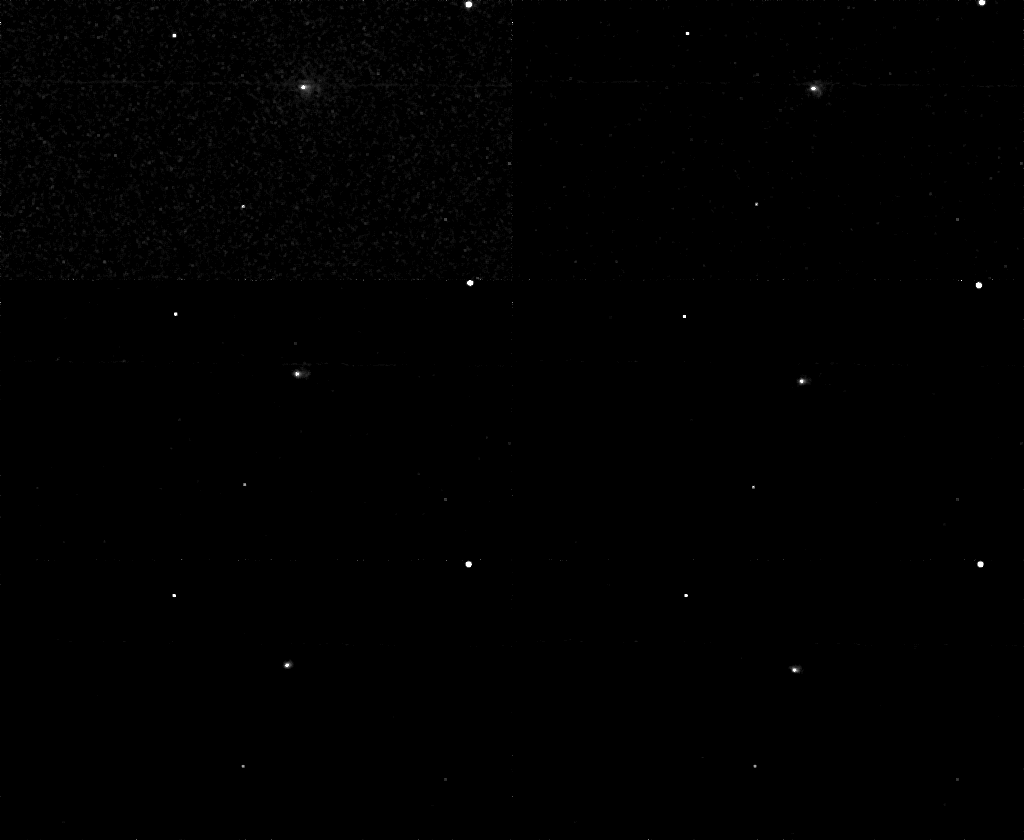 'Closest view' yet of interstellar comet 3I/ATLAS captured by Mars orbiter
The European Space Agency's ExoMars orbiter has captured the closest view yet of the interstellar comet 3I/ATLAS. The images reveal the comet's bright coma but show no signs of a tail.
comets -
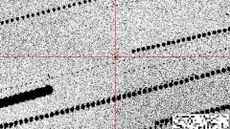 Sneaky asteroid zooms past Antarctica closer than a satellite — and astronomers didn't catch it until hours after
A small, giraffe-size asteroid called 2025 TF came closer to Earth than some satellites on Wednesday (Oct. 1), stunning astronomers who first spotted it hours later.
asteroids -
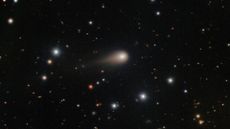 Interstellar comet 3I/ATLAS may come from the mysterious frontier of the early Milky Way, new study hints
The interstellar comet 3I/ATLAS does not come from our corner of the Milky Way, and may be a time capsule of the early galaxy, new research into its trajectory hints.
2 Commentscomets


