

-
 Will the James Webb telescope finally lead us to alien life?
Three years into its mission, the James Webb Space Telescope has advanced the search for alien life more than any machine before it. What will it find next?
extraterrestrial-life -
 How to stream Sunday's 'blood moon' total lunar eclipse
The final 'blood moon' total lunar eclipse of 2025 is coming this Sunday (Sept. 7-8). Here's where the celestial spectacle will be visible — and how to watch it if you're not in the path.
the-moon -
 'Butterfly Nebula' spreads its wings in dazzling new James Webb telescope image
In a dazzling new photo, the James Webb Space Telescope zooms in on the Butterfly Nebula — the dying gasps of one of the hottest stars in the sky, which could hold clues to Earth's origins.
astronomy -
 James Webb telescope pinpoints brightest FRB ever detected
Astronomers using the James Webb telescope alongside Canada's CHIME telescope have pinpointed the origin of one of the brightest blasts of radio energy ever detected in Earth's skies.
astronomy -
 Autumn equinox 2025: When does fall begin?
REFERENCE Equinoxes occur twice a year, with night and day being almost the exact same length all across the world. The next equinox is the September fall equinox, beginning on Sept. 22, 2025 in North America.
REFERENCE -
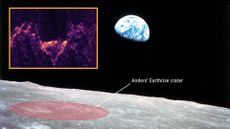 Scientists scan famous 'Earthrise' crater on mission to find alien life in our solar system
A large lunar crater featured in the iconic 'Earthrise' photo has just helped the European JUICE spacecraft hone its alien-hunting instruments during a once-in-a-lifetime flyby.
the-moon -
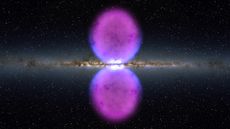 'Ice cube' clouds discovered at the galaxy's center shouldn't exist — and they hint at a recent black hole explosion
Twin orbs of superhot plasma at the Milky Way's center known as the "Fermi bubbles" contain inexplicable clouds of cold hydrogen, new research reveals. They could help scientists figure out when our galaxy's black hole last erupted.
2 Commentsastronomy -
 Vera C. Rubin Observatory: The groundbreaking mission to make a 10-year, time-lapse movie of the universe
Armed with the world's largest digital camera, the Vera C. Rubin Observatory in Chile will take night-sky images that revolutionize astronomy.
space-exploration -
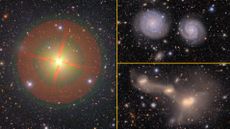 6 incredible objects hidden in Vera C. Rubin Observatory's mind-boggling first image
The Vera C. Rubin Observatory's first image release includes a 'staggering' view of 10 million galaxies in and around the Virgo Cluster. Here are six stunning sights hidden throughout the mind-boggling image.
astronomy -
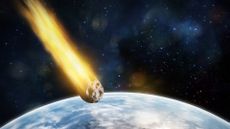 James Webb telescope ups the odds that 'city-killer' asteroid 2024 YR4 will hit the moon in 2032
The James Webb Space Telescope has taken another look at the potential "city-killer" asteroid 2024 YR4 and found its chances of hitting the moon in December 2032 have increased to 4.3%.
7 Commentsasteroids -
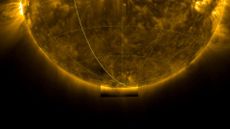 Bottom of the sun becomes visible to humans for the first time in history (photos)
For the first time, scientists have imaged the elusive south pole of the sun. The images captured by the Solar Orbiter spacecraft reveal our star's magnetic field is a powder keg ready to blow.
the-sun -
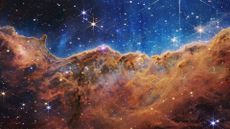 28 gorgeous nebula photos that capture the beauty of the universe
Nebulas — colorful clouds of expanding gas and dust — have long captivated stargazers with their beauty. Here are 28 of the most stunning nebulas in the universe.
space -
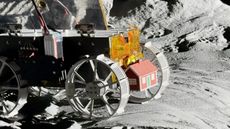 Japanese spacecraft goes dark during attempted moon landing, holding fate of European rover in question
The private Japanese spacecraft "Resilience" has seemingly been destroyed in a "hard landing" on the moon on Thursday. The lander was carrying what would have been the first European-built rover to explore the moon.
space-exploration -
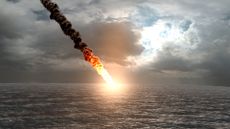 Doomed Soviet spacecraft Kosmos 482 could hit Earth tonight. Here's when.
The failed Soviet spacecraft Kosmos 482 could crash to Earth overnight tonight after more than 50 years in the wrong orbit. Here are the latest predictions on the exact time of reentry, and where it could land.
4 Commentsspace-exploration -
 Where will doomed Soviet spacecraft Kosmos 482 hit Earth? (Map)
Where will the failed Soviet spacecraft Kosmos 482 land when it crashes back to Earth in the coming week? Most major cities are in the potential crash zone — but the odds of a direct strike are extremely slim.
27 Commentsspace-exploration -
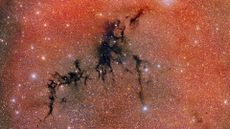 Scientists spot 'dark nebula' being torn apart by rowdy infant stars
The National Science Foundation's Dark Energy Camera reveals a stunning glimpse into the 'dark nebula' known as the Circinus West molecular cloud, a region of space that's so dense with gas that light can't escape it.
2 Commentsastronomy -
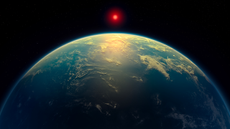 Did the James Webb telescope really discover aliens? The truth about K2-18b.
A study suggesting the exoplanet K2-18b shows potential signs of alien life has been met with skepticism from the scientific community. Here’s the truth about what the James Webb Space Telescope saw.
3 Commentsextraterrestrial-life -
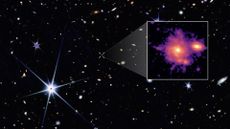 James Webb telescope spots Milky Way's long-lost 'twin' near the dawn of time
The James Webb Space Telescope has discovered Zhúlóng, a candidate for the most distant spiral galaxy in the universe. The perplexing Milky Way 'twin' dates to 1 billion years after the Big Bang, and appears too big to explain.
4 Commentsastronomy -
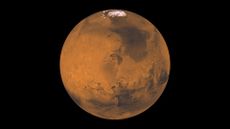 Mars: Facts about the Red Planet, its moons, and possibilities for life
Discover interesting facts about Mars, its moons, its atmosphere, and the possibilities of life.
mars -
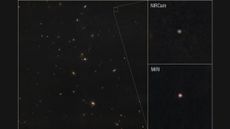 James Webb telescope takes emergency look at 'city-killer' asteroid 2024 YR4 ahead of close encounter in 2032
The James Webb Space Telescope has taken its first look at the near-Earth asteroid 2024 YR4 before a perilous close approach in 2032. The telescope confirmed Earth is safe, but there is a 3.8% chance that our moon may be in trouble.
11 Commentsasteroids -
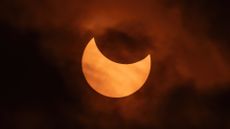 How to watch tomorrow's solar eclipse from anywhere on Earth
A rare sunrise solar eclipse will be visible from 13 U.S. states tomorrow (March 29), as well as locations in Canada and Europe. Here's how to watch for free online, no matter where you are.
the-sun -
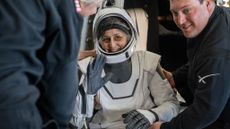 NASA astronauts Suni Williams and Butch Wilmore spent 286 days stuck in space — is that a new record?
NASA astronauts Butch Wilmore and Sunita Williams spent 286 consecutive days aboard the International Space Station after their Boeing Starliner spacecraft returned to Earth empty. Is their extended spaceflight record-setting?
space-exploration -
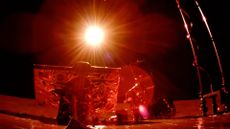 Watch: Spacecraft films 'diamond ring' solar eclipse from the surface of the moon as 'blood moon' looms over Earth
While millions of Earthlings watched the "blood moon" total lunar eclipse on March 13-14, the private Blue Ghost spacecraft caught an ultra-rare view of Earth blocking out the sun from the surface of the moon.
the-moon -
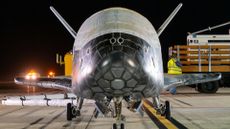 Top-secret X-37B space plane returns to Earth in dead of night after mysterious 434-day mission, US military reveals
The U.S. military's top-secret X-37B space plane has returned from a mysterious 434-day mission in orbit. The enigmatic mission 'broke new ground' for reusable space technology, according to the U.S. Space Force.
3 Commentsspace-exploration


