

-
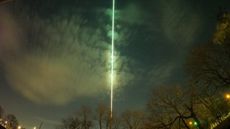 Eerie green fireball detected hours before smashing into Lake Ontario in the dead of night
A renegade meteor flared in Earth’s atmosphere in the wee hours of Nov. 19, creating a bright green fireball in the sky over the eastern US and Canada.
asteroids -
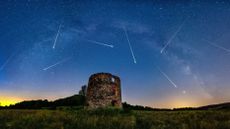 The Leonid meteor shower peaks this week. Here's how to watch.
Earth is about to pass through the debris trail left behind 30 years ago by comet Tempel-Tuttle. Here's how to catch the sky show.
space -
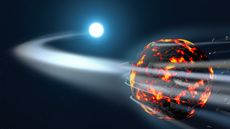 Crushed-up planets around dead stars could rewrite the history of the solar system
A new study of white dwarfs with "polluted" atmospheres is causing scientists to rethink how and when planets form.
planets -
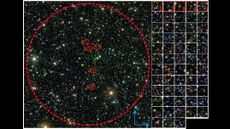 Scientists discover massive 'extragalactic structure' behind the Milky Way
An uncharted region of space known as the "zone of avoidance" lurks behind the Milky Way's center – and astronomers just found an enormous, multi-galaxy structure there.
space -
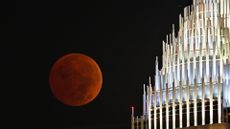 Gorgeous and ghostly photos of the Beaver blood moon total lunar eclipse
The total lunar eclipse that unfolded on Nov. 8 was the last one for the next three years, according to astronomers.
the-moon -
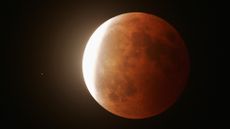 Last total lunar eclipse until 2025 rises on Tuesday, Nov. 8. Here's how to watch.
The moon will pass through the darkest part of Earth's shadow for nearly 90 minutes on Tuesday, but only viewers in part of the world will be able to see it.
the-moon -
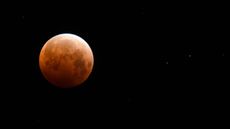 The 'Beaver Blood Moon' rises (and eclipses) on Nov. 8. Here’s how to watch.
November’s full moon, also known as the Beaver Moon, rises on Nov. 8 during a total lunar eclipse. Here’s how to watch.
the-moon -
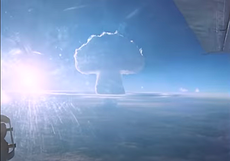 Russia declassifies footage of 'Tsar Bomba' — the most powerful nuclear bomb in history
In 1961, Russia detonated the Tsar Bomba, the most powerful nuke in history, over a remote Arctic island. New footage has been declassified and shared on YouTube.
human-behavior -
 Most UFOs are 'Chinese surveillance' drones and 'airborne clutter,' Pentagon officials reveal
The U.S. government has officially started to explain some of the most infamous UFO encounters of the last decade, with China and weather balloons as top offenders.
extraterrestrial-life -
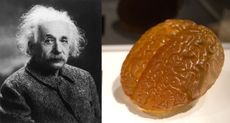 Where is Einstein's brain?
Following his death in 1955, Albert Einstein's brain was removed, cut into 240 pieces and slowly distributed to scientists around the world. But where is Einstein's brain now?
human-behavior -
 Air pressure makes Mount Everest 'shrink' by thousands of feet, new study finds
Seasonal changes in air pressure sometimes make Mount Everest's "perceived elevation" to shrink by thousands of feet, a new study finds.
geology -
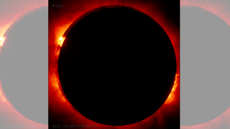 Watch a 'ring of fire' eclipse play out from space in epic new NASA footage
A partial solar eclipse on Oct. 25 looked like an epic ring of fire when viewed by NASA's Hinode satellite, new footage reveals.
space -
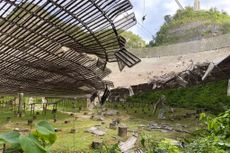 Collapsed Arecibo telescope offers near-Earth asteroid warning from beyond the grave
The famous Arecibo Observatory in Puerto Rico completely collapsed in 2020. Now, scientists going through its final observations offer a major new asteroid report.
asteroids -
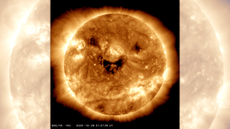 Adorable 'smiling' sun could batter Earth with geomagnetic storms this weekend
With three dark blotches popping up in the sun's atmosphere, our closest star seems to 'smile' even as it pelts our planet with charged-up solar wind.
the-sun -
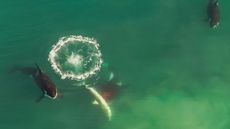 Grisly new footage shows orcas attacking a great white shark and eating its liver
Newly released video shows a gang of killer whales in South Africa attack and slaughter a great white shark.
orcas -
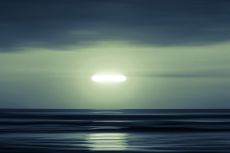 UFOs are finally getting the big NASA study they deserve
Following years of increased government interest in unidentified aerial phenomena (UAPs), NASA has officially launched a nine-month investigation into uncovering their mysteries.
extraterrestrial-life -
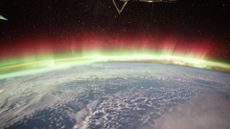 Massive 'proton aurora' blasted a 250-mile-wide hole in Earth's ozone layer
In June 2015, a little-known type of aurora cut a Grand-Canyon-size ozone hole in Earth's mesosphere. Scientists have finally assessed the damage.
space -
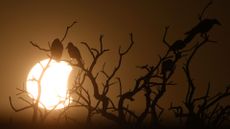 Stunning (and spooky) photos of the final solar eclipse of 2022
On Tuesday, Oct. 25, half the world saw the moon's shadow creep over the surface of the sun in the year's last partial solar eclipse.
space -
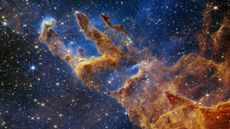 Stunning 'pillars of creation' shine like never before in new James Webb Telescope image
The towering pillars of creation, captured by the James Webb Telescope, are a nursery of newborn stars that’s been slowly destroying itself for millions of years.
space-exploration -
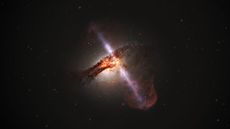 Energy jet traveling 7 times the speed of light appears to break the laws of physics
A jet of particles released by two colliding stars appears to be moving seven times faster than the speed of light — but astronomers blame a cosmic illusion known as superluminal motion.
astronomy -
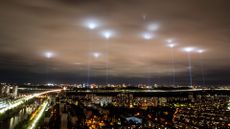 Are there really UFOs flying over Ukraine?
A recent report about pitch-black "phantom" UFOs in the skies over Ukraine has been discredited by the Ukrainian government and by Harvard astrophysicist Avi Loeb.
extraterrestrial-life -
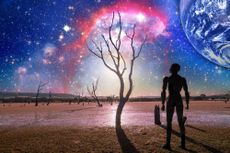 Aliens May Well Exist in a Parallel Universe, New Studies Find
Could alien life be hiding in the multiverse? New studies say, "sure!"
extraterrestrial-life -
 A Parasite Spread by Cat Poop Is Infecting (and Probably Killing) Whales in Canada
Fifteen of 34 dead beluga whales tested positive for a potentially lethal cat-poop parasite.
whales -
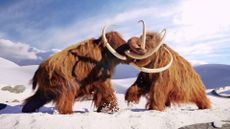 The CIA wants to bring woolly mammoths back from extinction
The CIA is the latest investor in Colossal Biosciences, a company that wants to bring woolly mammoths and Tasmanian tigers back from extinction using DNA editing.
mammoths


