













How the mystery origins of hairy little Yakutian horses were uncovered in Siberia's 'gateway to the underworld'
In 2018, a perfectly-preserved foal was pulled from the permafrost in Siberia. It's discovery, along with another horse from the Batagay crater, paved the way for scientists to solve the mystery of how Yakutian horses came to roam the landscape.


How, where, when and who domesticated the first horses is still a mystery — but one that is steadily being unraveled by scientists as more and more evidence reveals the expansion of the species alongside their human companions.
In this adapted excerpt from "Horses: A 4,000-Year Genetic Journey Across the World (Princeton University Press, 2025), author Ludovic Orlando, the director of the Center of Anthropobiology and Genomics of Toulouse, explores the genetic relationship between modern, cold-adapted Yakutian horses, and ancient specimens pulled from the "gateway to the underworld" tens of thousands of years after they died.
In Batagay, more than 370 miles (600 kilometers) north of Yakutsk, a rather impressive crater exists. That crater, known as the "gateway to hell," is the result of local climate effects, initiated by our own activities. The consequence of clearing the taiga forests in the 1960s was enough to begin the formation of a depression, today more than 320 feet (100 meters) deep and around 0.6 miles (1 km) long, and growing larger every year.
The locals also refer to the crater as the "gateway to the underworld," because with erosion its sides collapse and reveal the carcasses of animals from the past. One of those revenants appeared in the headlines in May 2018: a foal barely two months old that had remained frozen for more than 42,000 years, later dubbed the Lena horse.
In the close-ups of the animal's head and in particular of its nose, the detail of the hairs appeared so alive that one might have thought it was still breathing.
I didn't have the opportunity to work on that 42,000-year-old carcass, but I had access to another, which also came from the bowels of Batagay. Its DNA was so perfectly preserved that we really didn't have any trouble producing a high-quality genome sequence. The animal carried an X and a Y chromosome, so it was a male.
Radiocarbon dating told us that it had lived almost at the same time as the Botai horses, 5,200 years ago; it might have even crossed paths with them. However, on the genetic level it didn't share much with them, nor with the lineage of modern domestic horses, the DOM2, which didn't begin their unstoppable expansion throughout the world until a millennium later.
Get the world’s most fascinating discoveries delivered straight to your inbox.

A horse pulled from the Yakutia permafrost.
Instead, the animal's genome told us that it descended in a direct line from Equus lenensis, the famous Lena horse that has disappeared today. It represents the last of its kind whose genome we have sequenced — which doesn't, however, mean that it was the last of the survivors.
Adapting over millennia to the glacial cold of these latitudes, the Lena horse could very well have been able to continue to roam the Siberian permafrost for millennia after our specimen from Batagay closed his eyes for the last time.
Local legends have it that the horse we find today in Yakutia is the descendant of a population of wild horses that were domesticated on-site a very long time ago.
To settle the issue, we had to sequence the genome of horses living there today. Fortunately, my colleague Andrei Tikhonov, from the Russian Academy of Sciences, was able to send me the hair of some dozen animals before winter took over and seriously complicated the logistics of any scientific expedition in that region.
Yakutian horses are not bred in captivity; they are left in semi-freedom in the taiga and the tundra, where they wander before being gathered together once a year.
The Yakutian horse is small and stocky, with a long, thick coat. It also has the ability to accumulate fat in a record amount of time, in the short period of two months when plants can grow. And it has another exceptional asset: It is able to slow down its metabolism in the winter during the extreme cold, without having to hibernate.
Since it took several months before the package Tikhonov sent reached me, I had in the meantime been able to obtain archaeological specimens dating from the 19th century. They came from the digs that Éric Crubézy of the Paul-Sabatier University in Toulouse has been carrying out in that region almost every summer for around 15 years, and consisted of animal remains that had been placed as sacrificial offerings in human graves.

The Batagay crater in Siberia is the world's largest megaslump crater.
The analysis of the genomes was conclusive and put an end to the legends; none of the specimens analyzed had much in common with the specimen from Batagay. They all appeared to be full-fledged members of the lineage of the modern domestic horse, the DOM2, whose roots go back to the western steppe of Russia, 4,200 years ago.
Instead, the genetic information agreed with the history books, which attributed relatively recent origins to the Yakuts and their horses.
Most sources agree that a horse-riding people who occupied latitudes more to the south of Lake Baikal would have initiated a migration north starting in the 13th century A.D. Those migrants, who were fleeing the unstoppable surge of Genghis Khan's hordes at the time, would have settled not in virgin territory, but in a place that had been populated before them. They would have laid the ethnic foundations of the modern Yakut people and the cultural foundations of a civilization that Carole Ferret calls the "civilization of the horse."
In Yakutia, the horse is not just that national hero flying on the flag of the Republic of Sakha. It is not only that indispensable vehicle in a vast territory that seems to have no apparent geographical boundary. In Yakutia the horse is much more: they eat its meat and drink its milk; they recycle its hide to make clothing and its tendons to make ropes; it is celebrated as the subject of tales and songs. The animal is an integral part of the local way of life.
But if the Yakutian horse didn't descend from the horse of Batagay, was it nevertheless possible that it carried some of its genes?
The idea wasn't so ludicrous; close to 2% of the genome of people who live in Eurasia today descend from Neanderthals, with whom their ancestors mixed.
If the Lena horse had not yet died out in the 13th century, could it have mixed with the modern domesticated horses that the first Yakutian riders brought with them? Was it possible that these animals inherited their resistance to the extreme climate of the region from the horses they would encounter, which had lived tens of thousands of years before them on the same territory?
Our analyses refuted that scenario. The genetic text carried by contemporary Yakutian horses, like those of the 19th century, is not enriched with aspects that would be characteristic of the text carried by the Lena horses; we don't really find more of it in them than in any other modern domesticated horse elsewhere in the world, today or in the past.
Contemporary Yakutian horses owe their biological adaptations to the genetics of their ancestors from the 13th century and to nothing else.
We might then think that the Lena horse had perhaps already disappeared, since the blending seems never to have occurred. Even if our data confirmed that only a small number of modern domesticated horses had reached the latitudes of Yakutia to establish the current population there, it is still true that they collectively carried a pool of genetic mutations on which natural selection had carried out its work, fashioning the biology of the animal according to the demands of its environment.
The genetic changes thanks to which the Yakutian horse is so well adapted to its environment involve genes with very diverse biological effects, going from the development of hair and its density to the stocking of fat, and including the metabolism of sugars and the regulation of the biological clock that indicates to our cells the length of day and night.
It seems then that evolution did not provide the Yakutian horse with a supergene that would have endowed it with a single and unique superpower, but that evolution proceeded in the species through the coordinated adjustment of a set of quite varied functions.
The irony of history is that in this genetic diversity we found some genes that also contributed to fashioning the biology of other species coping with the same Siberian environment, such as the woolly mammoth and even our own species. Thousands of miles from the Tibetan Plateau, we once again came nose to nose with this now familiar phenomenon: evolutive convergence.
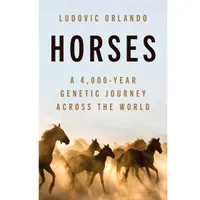
Horses: A 4,000-Year Genetic Journey Across the World
From one of today’s leading experts on ancient DNA, a sweeping genetic history that unravels the mystery of where horses were first domesticated.

Ludovic Orlando is a CNRS Silver Medal–winning research director and founding director of the Centre for Anthropobiology and Genomics of Toulouse at the University of Toulouse in France. His work has appeared in leading publications such as Nature, Science, and Cell. He is a recipient of the American Association for the Advancement of Science’s Newcomb Cleveland Prize.
You must confirm your public display name before commenting
Please logout and then login again, you will then be prompted to enter your display name.