














The Science of Timeouts: How to Make Them Work for Your Kids

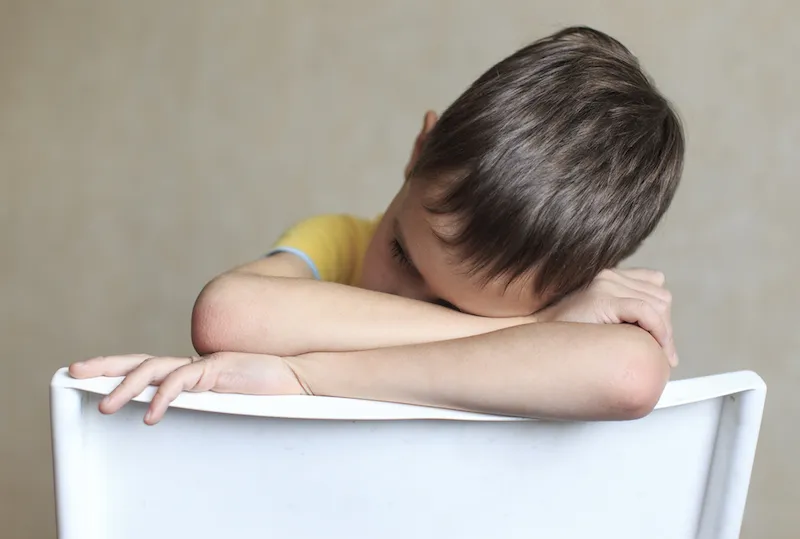
For centuries, spanking and other forms of corporal punishment were the main disciplinary tools of parents in America. In the 1960s, though, researchers began to turn their attention to a newfangled option: the timeout.
Sometimes controversial, the timeout is nevertheless now among the most mainstream disciplinary recommendations for children. The good news is that there's strong science supporting the timeout, as long as parents make a point of using it correctly — and focus on the positive, too.
"Timeout is a punishment procedure, so its only goal is to suppress a misbehavior," said Mark Roberts, a professor of clinical psychology at Idaho State University, who has researched timeout extensively. "Consequently, timeout is always part of a larger treatment package."
Timeout is in
There is virtually no disagreement among psychologists, psychiatrists and other child development professionals that sending kids into a timeout is head and shoulders above spanking as a disciplinary technique. Studying the long-term effects of discipline can be difficult, because kids aren't punished at random; those that are spanked may be more difficult to discipline than those that aren't, creating a chicken-and-egg problem. Nevertheless, researchers tackling the problem in different groups of kids from different angles have consistently found that spanking is likely to create more problems than it solves.
Although children who are spanked typically comply with parents in the short term, studies dating back to the 1960s find that they become increasingly aggressive in the long term. A 1990 study published in the book "Straight and Devious Pathways from Childhood to Adulthood" found that experiencing "power-assertive" punishments like spanking and hitting in youth was the strongest predictor of aggression and delinquency in adolescence, even more than living in a high-crime neighborhood or having a parent with sociopathic tendencies.
The good news for parents is that timeout gets results, said Ennio Cipani, a clinical psychologist in California and author of the book "Punishment on Trial," available free online. Most of the research on the basics of timeout dates to between the 1960s and the 1980s; the reason there has been fewer studies on timeout since then is that basically, the data was so consistent that journals got sick of publishing it. [9 Weird Ways Kids Can Get Hurt]
"For you to do another study that shows timeout works, [journals] say, 'We already have one of those,'" Cipani said.
Get the world’s most fascinating discoveries delivered straight to your inbox.
A 2010 review of 30 years of timeout research, published in the journal Education and Treatment of Children, concluded that timeouts are effective at both home and school and that it can work with both typically developing children and those with special needs.
Positive parenting?
As with all things parenting, though, timeout has its controversies. Some critics say that timeout is unnecessary and harsh, and positive parenting should do the trick without the need for punishment.

Perhaps the most divisive bomb thrown in this fight was a 2014 article in Time Magazine titled "Time-Outs Are Hurting Your Child." In the piece, UCLA psychiatrist Daniel Siegel and colleague Tina Payne Bryson cited research showing that social pain, like that caused by isolation, activates the same areas in the brain as physical pain. The research they cited, however, imaged the brains of college students who were excluded from playing a video game and was not focused on punishment or on any long-term effects of the experience of social pain.
In a follow-up, Siegel and Bryson clarified that the research on "appropriate" timeouts shows them to be effective, but they still argued that timeout in real-world practice is more often inappropriate — parents do it inconsistently and with hostility. The two have written a book on their discipline strategy, "No-Drama Discipline: The Whole-Brain Way to Calm the Chaos and Nurture Your Child."
Time out mistakes
At first, authors like Siegel seem far removed from researchers like Roberts and Cipani. A closer look, though, reveals less daylight between the schools of thought than it seems. Advocates of timeout agree that it's often misused. And they also push many of the positive parenting techniques advocated by researchers in the no-timeout camp.
"There are a number of mistakes that are made when using timeout, and probably one of the biggest ones is parents don't specify a behavior that timeout will be used for consistently and reliably," Cipani said.
So what does an appropriate timeout look like? First, researchers say, it must be part of an otherwise warm and loving parent-child relationship. Timeout is a term originally shortened from "timeout from positive reinforcement," meaning that kids are forced to take a break from something they enjoy. If a kid is being ignored or treated badly by the parent, there's no positive reinforcement to take a break from. [How to Do Timeout: 12 Tips from Science]
Praise for good behavior, awareness of a child's needs and teaching about social skills like sharing and turn-taking are crucial, Roberts said. Most children respond "wonderfully," he said, to the kind of parenting that the influential developmental psychologist Diane Baumrind characterized as "authoritative." Authoritative parents set firm boundaries for kids, but pair their expectations with warmth and responsiveness.
A 2012 review of 41 studies dating back to the 1970s supported this notion of generally engaging in positive parenting, and including a dash of negative reinforcement. Timeouts and quick, mild reprimands were consistently linked to compliance by children, while positive-only strategies led to mixed results, the researchers reported in Clinical Child and Family Psychology Review.
Likewise, a 1987 study of first- through third-graders in school found that a disciplinary strategy based on praise alone led to kids staying on-task 56 percent of the time, on average. A strategy that included the possibility of negative consequences for kids who got off-task led to kids staying on-task 80 percent of the time, on average. In fact, the child in the negative consequence group who spent the greatest amount of time off-task still stayed on-task 72 percent of the time — better than the best kid in the praise-only group, who stayed on-task 67 percent of the time.

The next rule of thumb for timeout is that it should be used very specifically. Timeouts are for kids ages 2 to 6, Roberts said. Older children are better served by consequences such as removal of privileges. Timeouts shouldn't be used willy-nilly, Cipani said. He recommends parents pick one or two behaviors — say, hitting and disobeying direct requests — and make very clear to children what behaviors will result in a timeout.
"Many parents are haphazard users of timeout," Cipani said. "It's kind of like, 'When I get really pissed off, that's when I use it.'"
Doing timeout right
Overuse of timeouts can be detrimental. In one study, parenting researcher Robert Larzelere of the University of Oklahoma asked mothers to describe recent times when their toddlers had misbehaved and how they handled those experiences; they followed up with the parents after two months and again after 16 months.
The researchers found that when a toddler is whining or begging, the best strategy for a quick de-escalation is to find some way to compromise, if possible — and the good news is that judicious use of compromise didn't "spoil" the child or increase misbehavior in the long run. If compromise isn't possible, some children can be placated (and taught) with a simple explanation of why wearing a swimsuit to the park on a snowy day, for example, isn't the best idea.
Toddlers are "learning to express their newfound independence, but they're learning they have to do it in ways that are acceptable to the parent," Larzelere told Live Science.
However, when a kid escalates to outright defiance of the rules — things like hitting, running away or doing the opposite of the parent's orders — reasoning and negotiating becomes the counterproductive option. Compromise can win good behavior in these kids in the short term, Larzelere said, but research has shown that rewarding aggression by giving in when a child is being oppositional worsens the child's behavior over the next several months. That's where timeout became the best option.
"The oppositional children needed single warnings and timeouts," Larzelere said. He pointed out that a child's temperament is key to whether a situation will require timeout.
"The contribution of my research is that different strategies work for different little folks," he said.
Parenting books differ in regards to the specifics of timeout: Should the child go to a specific chair or a certain room, for the length of his or her stay, or whether a kid has to be calm or can come out of a timeout still crying or carrying on. Some of these parameters have research to back them up and others don't. One common piece of parenting advice, the "1 minute of timeout for every year of the kid's age" rule, is not backed up by research. Effectiveness of timeout by duration is hard to study, Roberts said, but anywhere between 2 and 5 minutes is plenty.
General guidelines for timeout will work for most children, Roberts said, but struggling parents should not go it alone. Some kids will need a more personalized program.
"If your child intensely resists and repetitively resists your efforts to use a chair timeout or a room timeout, see a professional," Roberts said. "The danger is the child will intensify and you'll end up doing something you regret."
Original article on Live Science.

Stephanie Pappas is a contributing writer for Live Science, covering topics ranging from geoscience to archaeology to the human brain and behavior. She was previously a senior writer for Live Science but is now a freelancer based in Denver, Colorado, and regularly contributes to Scientific American and The Monitor, the monthly magazine of the American Psychological Association. Stephanie received a bachelor's degree in psychology from the University of South Carolina and a graduate certificate in science communication from the University of California, Santa Cruz.