













Does Testosterone Improve Men's Sex Lives?

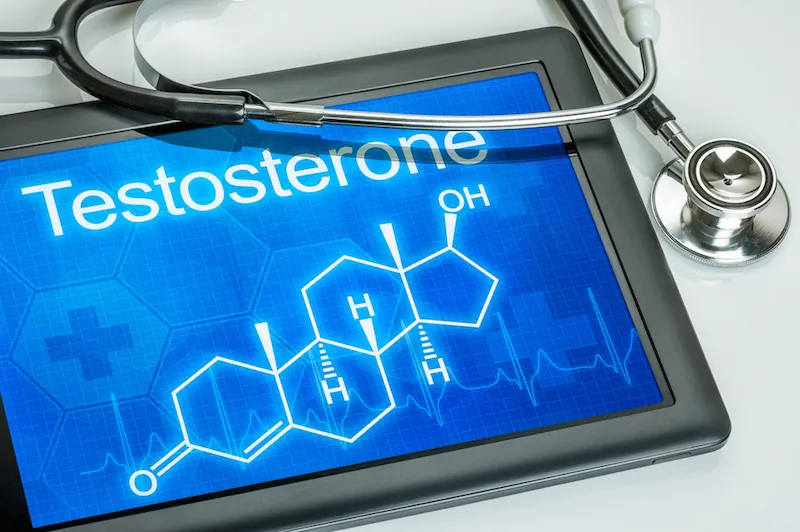
Testosterone may not rev up men's sex lives as much as they expect it to: Older men with slightly low testosterone levels did not experience improvement in their desire or intimacy after they took testosterone supplements, according to a new study.
In the study, about 150 men age 60 and older were given daily testosterone supplements, and another 150 took a placebo. The men's testosterone level at the study's start was a little over 300 nanograms per deciliter, on average, which is on the lower end of the normal range for men.
Three years later, there were no differences between the two groups in how the men rated their level of sexual desire, erectile function and partner intimacy.
Although men in the testosterone group did report a slight improvement in their satisfaction with intercourse, the effect was small and could have been due to chance, the researchers said.
The findings agree with previous research that found that men with testosterone levels at the lower end of the normal range don't see improvements in sexual function after taking testosterone supplements. [5 Myths About the Male Body]
Dr. Elizabeth Kavaler, a urology specialist at Lenox Hill Hospital in New York City who was not involved in the research, said that testosterone supplements may have a benefit for men whose testosterone level is lower than that of the men in the study — between 150 and 300 nanograms per deciliter. But "beyond that, it's not going to help," she said.
Although some men may have the perception that testosterone supplements will make them stronger or more virile, "giving a guy testosterone is not the fountain of youth," Kavaler told Live Science.
Get the world’s most fascinating discoveries delivered straight to your inbox.
The men in the study did not necessarily have symptoms of low libido, so doctors would not expect the men's libidos to improve in these cases, Kavaler said.
It's important to note that sexual function was not the main focus of the study, which limits the scientific robustness of the findings.. Rather, the study was aimed at determining whether testosterone supplements affect the progression of atherosclerosis — the thickening and hardening of arterial walls.
Although there has been some concern among health professionals that testosterone therapy might increase men's risk of heart disease, the study found no difference between the groups in measures of atherosclerosis progression.
Still, the findings are not the final world on the safety of testosterone supplementation. The study did not include enough people to detect whether there were significant differences in heart problems between the groups, the researchers said.
A separate study designed to focus on sexual function would provide stronger evidence of whether testosterone supplements affect men's sex lives.
The study, conducted by researchers at Harvard Medical School, is published in the Aug. 11 issue of the Journal of the American Medical Association.
Follow Rachael Rettner @RachaelRettner. Follow Live Science @livescience, Facebook & Google+. Original article on Live Science.

Rachael is a Live Science contributor, and was a former channel editor and senior writer for Live Science between 2010 and 2022. She has a master's degree in journalism from New York University's Science, Health and Environmental Reporting Program. She also holds a B.S. in molecular biology and an M.S. in biology from the University of California, San Diego. Her work has appeared in Scienceline, The Washington Post and Scientific American.