













Zoo Elephants' Big Threat: Too Much Junk in the Trunk

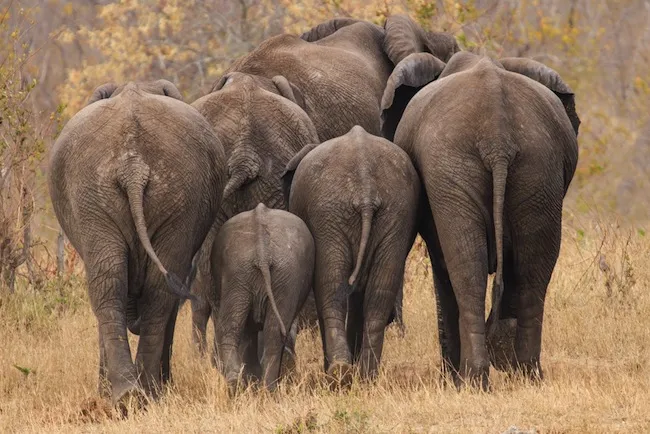
African elephants in captivity are packing on the pounds, and experts warn that the rise in obesity is contributing to infertility, which could be detrimental to the survival of the species in zoos.
To get a handle on the problem, one group of researchers in Alabama is looking for a better way to measure body fat on the already huge animals.
Just like humans, elephants with excess fat are more likely to develop heart disease, arthritis and infertility, Daniella Chusyd, a graduate student at the University of Alabama at Birmingham, said in a statement. Previous studies have shown an alarming number of African elephants in zoos have irregular or no ovarian cycles. [Elephants Images: The Biggest Land Animal]
Elephants in the wild are threatened by habitat loss and poaching, the illegal ivory trade that continues despite international efforts to shut it down. Zoos may be one of the few remaining ways to protect the species.
The Lincoln Park Zoo in Chicago issued a report in 2011 predicting that if the abnormal ovarian cycles and resulting low birthrates continue, then African elephants could disappear from zoos in the next 50 years. Zoos in the United States need to average about six births per year to maintain the population, but the current birthrate is only about three births per year. Obesity is suspected to be a major part of the problem.
But elephants are so large that it's difficult for zookeepers to tell the difference between a healthy weight animal and an obese one. Zookeepers can weigh elephants, but there is no good method to determine whether most of their body weight is from muscle or from fat. Kari Morfeld, an endocrinologist at the Wildlife Conservation Research Center at the Lincoln Children's Zoo in Lincoln, Nebraska, recently came up with a unique way for determining the difference: comparing butt sizes.
Morfeld used a series of photos to rank elephants based on how much fat is around the backbone and hips. She used a scale of 1 to 5, with one being the skinniest elephants and 5 being the fattest. Most elephants in the wild are 2s, but Morfeld found that about 40 percent of zoo elephants are 5s. Her research was detailed in April in the journal PLOS ONE.
Get the world’s most fascinating discoveries delivered straight to your inbox.
However, estimating obesity from images alone is very subjective, Chusyd and her colleagues said.
Chusyd instead plans to measure obesity in a more precise way. Starting in the fall, she will collect blood samples from elephants in zoos across the country and compare the amount of lean tissue to fat tissue. She hopes the results of the study will have important implications for zoos and animal care.
"It may be that zoos will need to rethink how they house and feed elephants to reduce the incidence of overweight [animals]," Chusyd said in a statement. "And not just elephants, as we hypothesize that a relationship between obesity, inflammation and infertility is present in many large mammals, including other imperiled African animals such as the rhinoceros and the gorilla."
Follow Kelly Dickerson on Twitter. Follow us @livescience, Facebook & Google+. Original article on Live Science.
