













Vegetable Fat May Help Prostate Cancer Patients Live Longer

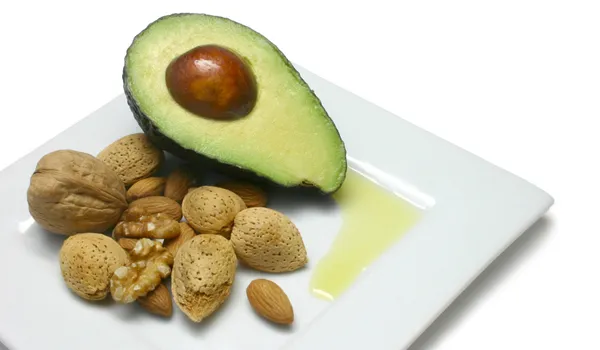
For men with prostate cancer, consuming vegetable fats — like those found in olive oils, nuts and avocados — instead of animal fats or carbohydrates may bring a longer life, according to new research.
In the study, prostate cancer patients who substituted 10 percent of their daily calories from carbohydrates with vegetable fat were 29 percent less likely to die from prostate cancer over an eight-year period. They were also 26 percent less likely to die of other causes.
And an extra serving (1 ounce) of nuts per day was linked with an 11 percent lower risk of death from any cause, the researchers said.
The study is one of the first to examine the effect of fat consumption on prostate cancer survival in men already diagnosed with the disease.
"Our findings support counseling men with prostate cancer to follow a heart-healthy diet, in which carbohydrate calories are replaced with unsaturated oils and nuts," the researchers write today (June 10) in the journal JAMA Internal Medicine.
However, the study only found an association and cannot prove a cause-and-effect link between vegetable fat consumption and survival. While the researchers took into account many factors that could influence patients' risk of death — such as medical treatments, body mass index, and smoking and exercise habits — there may be other factors that explain the link, including the timing of cancer treatments and the way the animal fat was cooked.
Future studies should explore the benefit of vegetable fat consumption for men with prostate cancer, the researchers said.
Get the world’s most fascinating discoveries delivered straight to your inbox.
The study looked at 4,577 men diagnosed between 1986 and 2010 with prostate cancer that had not spread to other parts of the body. Participants answered questions about their diet every 4 years, and were followed for an average of 8.4 years.
During the study, a total of 1,064 men died. Thirty-one percent died from cardiovascular disease, 21 percent from prostate cancer and about 21 percent from other cancers.
In an editorial accompanying the study, Dr. Stephen Freedland, of the Duke University Medical Center in Durham, N.C., writes that obesity is the only controllable factor known to be reliably linked with death from prostate cancer.
"Thus, avoiding obesity is essential," Freedland said. The new study suggests substituting healthy fats for unhealthy foods may be one way to do this, he said.
However, further research is needed to determine whether the link is due to lower consumption of "bad" foods or increased consumption of "good" foods, Freedland said.
Follow Rachael Rettner @RachaelRettner. Follow LiveScience @livescience, Facebook & Google+. Original article on LiveScience.com.

Rachael is a Live Science contributor, and was a former channel editor and senior writer for Live Science between 2010 and 2022. She has a master's degree in journalism from New York University's Science, Health and Environmental Reporting Program. She also holds a B.S. in molecular biology and an M.S. in biology from the University of California, San Diego. Her work has appeared in Scienceline, The Washington Post and Scientific American.