Secret Found: What Makes Food Look Tasty

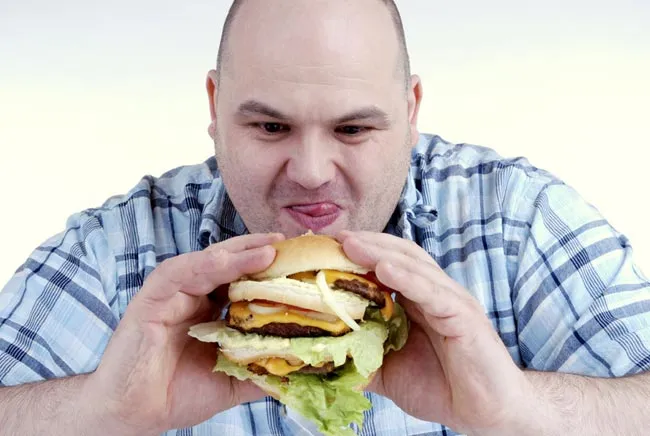
A hormone that makes people eat more works by causing food to look tastier.
This natural molecule, named ghrelin, actually improves perception and memory when it comes to food.
"When you go to the supermarket hungry, every food looks better," said researcher Alain Dagher, a neurologist at McGill University in Montreal. "Now, we've found that it is ghrelin that acts on the brain to make food more appealing."
This hormone is secreted in the gut. Scientists already knew that ghrelin levels rise and fall before and after meals, suggesting that it causes hunger and encourages eating. Prior studies had also shown ghrelin seemed to have widespread effects on the brain as well.
Mmm!
To find out more about what effects this hormone had on the brain, 20 volunteers were scanned as they looked at images of either food or scenery. Twelve participants received ghrelin injections, while the others were told they were given the hormone but were not.
After infusions of ghrelin, the brains of volunteers responded more strongly to pictures of food. They actually got better at recognizing these images. "People actually see them better," Dagher said.
Get the world’s most fascinating discoveries delivered straight to your inbox.
The hormone also influenced memory. "People remembered the food pictures better when ghrelin was high," Dagher added.
This hormonal response makes sense for our species as a whole — it could help starving people eat food they might not otherwise consider appetizing. In times of plenty, however, ghrelin could help contribute to obesity and related diseases.
"Obesity must be understood as a brain disease," Dagher told LiveScience. "Obese people eat too much, and this is likely due largely to excess hunger."
Therapies that disrupt these effects of ghrelin could help fight obesity, the researchers conjectured. However, such treatments might come with unwanted side effects on mood, since they would target the brain's pleasure centers, Dagher said.
"Many drug companies are currently developing ghrelin-blocking drugs as obesity treatments," Dagher said. "However, we show that ghrelin acts on brain areas involved in emotion and motivation. A drug that suppresses this brain system runs the risk of causing depressed mood. There is a risk of side effects."
Addicted
The parts of the brain linked to ghrelin are also those involved in drug addiction.
"One theory is that addictive drugs act on brain systems designed to control food intake," Dagher said. "Our brains didn’t evolve to make us vulnerable to addictive drugs."
Neuroscientist and psychologist Dana Small at the John B. Pierce Laboratory affiliated with Yale University, who did not participate in this study, said these findings suggest it might make sense "to use what we know about drug addiction to understand and treat obesity."
It may be reasonable to think "of high-calorie food as having addictive potential," he added. "If food can be thought of as 'addictive,' this supports doing things like banning fast food shops from schools, or advertising junk food to children. Note that public policy aimed at tobacco was really spurred by the science showing that nicotine was addictive."
Dagher and his colleagues detailed their findings in the May issue of the journal Cell Metabolism.