Devices made of living cells promise to one day improve drug screening, virus detection and the growing of artificial tissue.
First scientists have to overcome a significant hurdle. Some cell surfaces, like blood cells, are nature's version of Teflon. Their slippery nature makes it impossible to hook them up with non-biological material.
But put a piece of DNA on its surface, and a cell looses its slick, scientists have discovered.
Latest Videos From
"We figured out a way to get living cells to attach where and when we want them to," said study lead author Ravi Chandra, a chemist at the University of California at Berkeley.
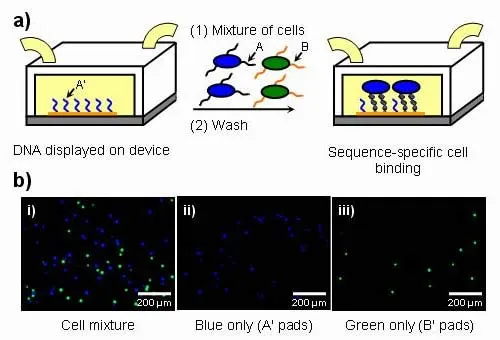
Normally, DNA lives inside a cell's nucleus. The Berkeley team created a chemical reaction to link a strand of DNA onto a cell's surface. They could then dictate where the cell would stick by putting a complementary piece of DNA, essentially a recognition partner, at the designated site.
Only cells with the DNA that matched the complementary DNA stayed put.
The research is detailed in the latest issue of the international chemistry journal Angewandte Chemie.
"Now we'll see if we can harness some of the cells' power by incorporating them into a device," Chandra told LiveScience.
A device or chip with living cells on it might someday be useful for the military, homeland security, or people who study immune diseases.
Say a postal worker finds white powder spilling out of an envelope. To determine whether the white powder was anthrax or just some crumbled piece of sidewalk chalk, a scientist could use a cell chip. Carefully placed immune cells would be stuck on the chip. Our immune cells are programmed to recognize specific carriers of disease and initiate an immune system response.
The specific cells on the chip could recognize anthrax, and their response to the white powder would signal to scientists whether or not it was harmful.
The cell chip is in our future, Chandra said. The question is how soon. "These are not science fiction applications."

 Live Science Plus