













New Noninvasive Imager Detects Deadly Melanoma Early

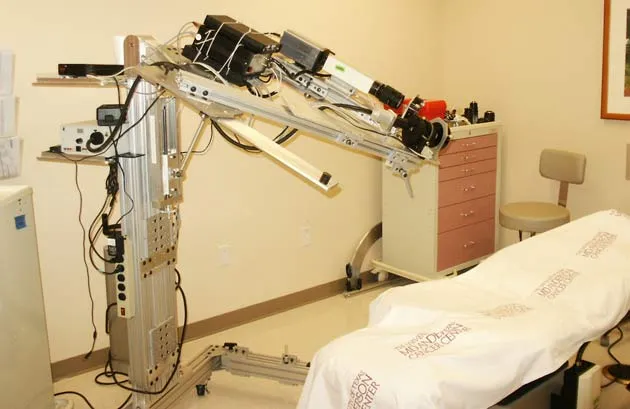
Researchers have developed a non-invasive technique for early detection of skin cancer.
The procedure uses different colors of light and assorted alignments of the electric field of each light segment to create unique images that can identify suspect skin growths called nevi.
"We are able to generate processed images that reveal the subsurface characteristics of the nevus," said developer Justin Baba of Oak Ridge National Laboratory. "It is our hope that these images will enable an accurate determination of whether the nevus is cancerous or benign."
Melanoma, a form of cancer that develops in the skin—is the most common type of cancer. According to the American Cancer Society estimates, the number of new melanoma cases topped 59,000 in 2005 and accounted for more than 7,000 deaths in the United States.
"The good news is that with early diagnosis, there is nearly a 100 percent cure rate for skin-melanoma," Baba told LiveScience. "Therefore, a non-invasive diagnostic tool that can be used to rapidly diagnose skin cancers, particularly skin-melanoma, would help reduce the mortality associated with this disease."
Traditional techniques for diagnosing melanoma involve intense physical exams and often include tissue biopsies. But a prototype version of the non-contact instrument developed by Baba and used in a small clinical trial are encouraging.
The new imaging approach combines several modes into one instrument and measures different aspects of the skin, for combined greater accuracy, Baba said. His team hopes to further develop and miniaturize the instrument. This will help them implement a larger clinical study prior to any possible commercial use.
Get the world’s most fascinating discoveries delivered straight to your inbox.
- Gold Probes Could Reveal Cancer in Your Body
- Microbe and Machine Merged to Create First 'Cellborg'
- Cancer Takes Over Top Spot as Killer of Americans Under 85
- High-tech Probes Sneak Inside Your Cells
