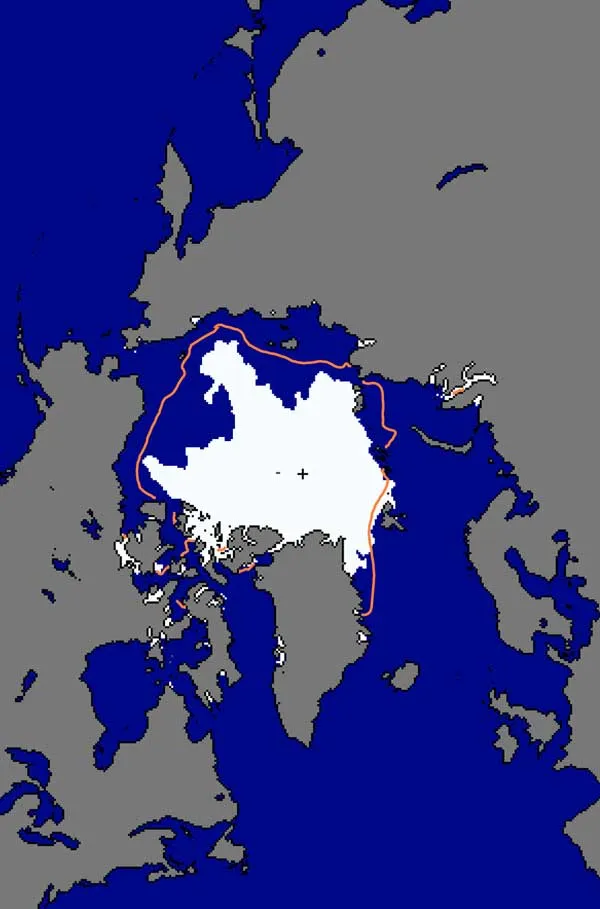
Arctic sea ice coverage appears to have dropped to its lowest extent for the year as of last week, the National Snow and Ice Data Center (NSIDC) announced today (Sept. 15). Levels are the third-lowest recorded since 1979, when data were first taken, continuing the long-term trend of decreasing summer ice, according to the report.
Satellite data revealed just 1.84 million square miles (4.76 million square kilometers) of ice blanketing the Arctic Sea as of Sept. 10. Only the years 2007 and 2008 exhibited lower levels of sea ice over the past 31 years.
Arctic sea ice reflects sunlight and keeps the polar region cool, moderating global climate conditions. Sea ice has been melting more in recent years as global average temperatures rise. Less ice means that more open ocean is exposed to sunlight, absorbing it and further warming the polar regions.
Latest Videos FromLive Science
This is only the third time in the satellite record that ice extent has fallen below 1.93 million square miles (5 million square kilometers), and all those occurrences have been within the past four years.
The record lows come despite a late start for the melt season this year and, according to the NSIDC data, this year will mark the fastest melt season on record if today's reported ice levels are truly the season's minimum.
The NSIDC will release more conclusive data in October.
This article was provided by OurAmazingPlanet, a sister site to LiveScience.