













Explorers Discover Huge Cave and New Poison Frogs
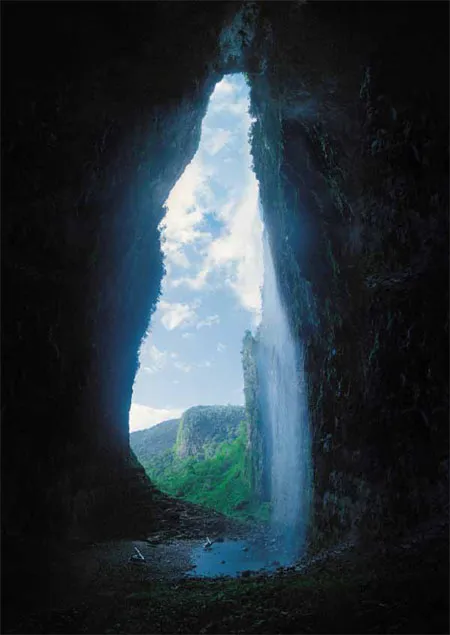
A cave so huge helicopters can fly into it has just been discovered deep in the hills of a South American jungle paradise.
Actually, "Cueva del Fantasma"—Spanish for "Cave of the Ghost"—is so vast that two helicopters can comfortably fly into it and land next to a towering waterfall.
It was found in the slopes of Aprada tepui in southern Venezuela, one of the most inaccessible and unexplored regions of the world. The area, known as the Venezuelan Guayana, is one of the most biologically rich, geologically ancient and unspoiled parts of the world.
This is the first geographic report and photographic evidence of such an immense cave. However, researchers say, it isn’t really a cave, but a huge, collapsed, steep gorge.
As a bonus, researchers also discovered a new dendrobatid frog species, Colostethus breweri, named for the frog’s identifier, Charles Brewer-Carías. Dendrobatid frogs make up the group of amphibians commonly known as "poison dart" frogs.
This is the second report recently to describe a newfound paradise of sorts containing previously unknown animal species.
Scientists distinguished C. breweri from its close relatives by its particular skin pattern, absence of fringes on fingers, moderate toe webbing, tongue characteristics, and yellow and orange coloration on its undersides. It is described as a fast-moving frog that lives along creeks and in quiet pools along small streams along the slopes near the cave.
Get the world’s most fascinating discoveries delivered straight to your inbox.
This is the eighteenth described species of Colostethus discovered in Venezuelan Guayana.
This discovery, not widely reported, was detailed in the Jan. 17 issue of the journal Zootaxa.
- Top 10 Deadliest Animals
- Isolated Jungle Yields Dozens of New Species
- 27 Unknown Creatures Found in California Caves
- Secret Weapons: Defense Tactics of Small Creatures