













Lifting Weights? No Need to Go Heavy

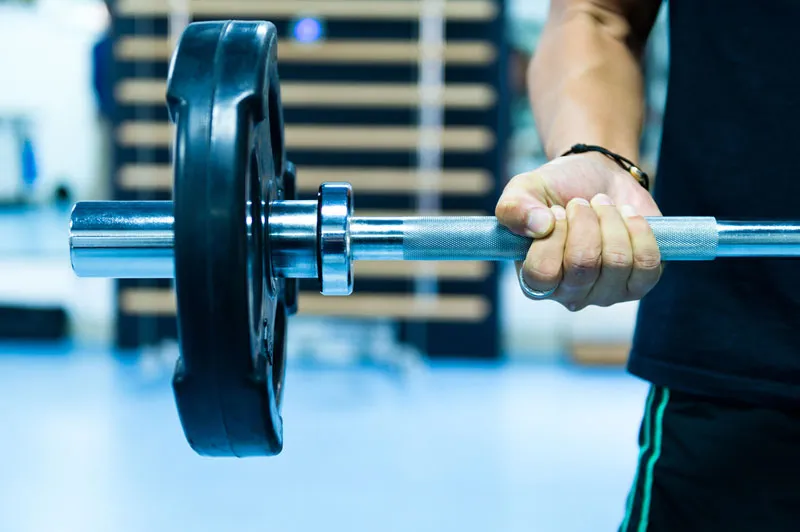
You don't need to feel wimpy for lifting little weight at the gym: A new study finds that lifting light weights is just as effective as lifting heavy ones for building muscle.
The key is to lift the weights more times (meaning a greater number of repetitions) so that your muscles get just as tired as they would with heavier weights, the researchers said.
"Fatigue is the great equalizer here," study researcher Stuart Phillips, a professor of kinesiology at McMaster University in Ontario, Canada, said in a statement. "Lift to the point of exhaustion, and it doesn't matter whether the weights are heavy or light."
The study involved 49 experienced weight lifters who were divided into two groups. One group lifted lighter weights (between 30 and 50 percent of the maximum weight the individuals could lift), for 20 to 25 repetitions per set (each set was repeated three times). The other group lifted heavier weights (between 75 and 90 percent of the maximum weight the people could lift) for eight to 12 repetitions per set. This strength-training workout was performed four days a week, for 12 weeks. [Everything You Need to Know About Strength Exercise]
At the end of the study, participants gave samples of muscle tissue and had their bodies scanned so researchers could look for changes in muscle fiber size and muscle mass, which are important measures of strength.
The two groups showed similar improvements in the amount of lean muscle mass in their bodies and the size of their muscle fibers, the study found. The groups also showed similar improvements on tests of muscle strength.
Although elite athletes may be unlikely to change their workout regimens based on the new findings, the study may have implications for average Joes who want to increase strength, the researchers said.
Get the world’s most fascinating discoveries delivered straight to your inbox.
"For the 'mere mortal' who wants to get stronger, we've shown that you can take a break from lifting heavy weights and not compromise any gains," Phillips said. "It's also a new choice, which could appeal to the masses and get people to take up something they should be doing for their health."
The findings add to those of a previous study by the same group of researchers, which found that lifting lighter weights was just as effective as lifting heavier weights for building muscle in men who were not experienced weight lifters.
The new study was published online May 12 in the Journal of Applied Physiology.
Original article on Live Science.

Rachael is a Live Science contributor, and was a former channel editor and senior writer for Live Science between 2010 and 2022. She has a master's degree in journalism from New York University's Science, Health and Environmental Reporting Program. She also holds a B.S. in molecular biology and an M.S. in biology from the University of California, San Diego. Her work has appeared in Scienceline, The Washington Post and Scientific American.