


Scholars and Sci-Fi Authors to Debate Future of Humanity

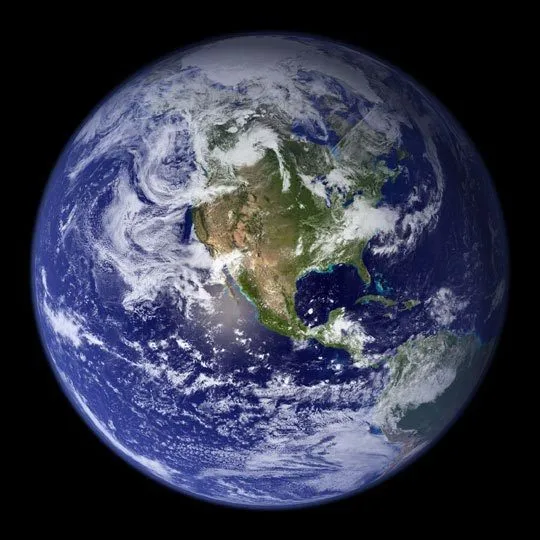
Technology has the potential to end humanity, or to save it. Which will it be?
A group of scientists, humanists and science-fiction authors will debate the longevity of the human civilization at a free public symposium today (Sept. 12) at the Library of Congress's John W. Kluge Center in Washington, D.C.
"We’ve reached the stage in Earth’s evolution where humans are now a major agent of planetary change," David Grinspoon, the chair of astrobiology at the Kluge Center, said in a statement. "Will these abilities threaten our survival as a species, or even threaten the Earth as a whole, or will we come to live comfortably with these new powers and use them to avoid, rather than hasten, disaster?" said Grinspoon, who will lead the day's talks.

The event will kick off with introductory remarks by Mary Voytek, senior scientist for astrobiology at NASA, and Carolyn Brown, director of the Office of Scholarly Programs at the Library of Congress. [Super-Intelligent Machines: 7 Robotic Futures]
The first panel discussion will address what remains of nature and how humanity can save it. Environmental journalist David Biello will chat with materials scientist Odile Madden of the Smithsonian's Museum Conservation Institute and paleoanthropologist Rick Potts of the National Museum of Natural History.
Next up, sci-fi author Kim Stanley Robinson will explore the future in the literary and scientific imagination, with English professor Ursula Heise of UCLA and astronomer and science historian Steven Dick, the 2014 NASA/Library of Congress chair of astrobiology.
In the afternoon, scientists and sci-fi authors will address world-altering technologies that could affect climate or biological evolution, or prevent future disasters. Astronomer Seth Shostak of the Search for Extraterrestrial Intelligence (SETI) Institutein Mountain View, Calif., will sit down with science writer and New York Times blogger Andrew Revkin, atmospheric scientist Ken Caldeira of the Carnegie Institution for Science and planetary climatologist Jacob Haqq-Misra of the virtual research Institute Blue Marble Space, to muse about whether humans can form a healthy, long-term relationship with technology and the biosphere.
Get the world’s most fascinating discoveries delivered straight to your inbox.
A concluding discussion with all the panelists and the audience will wrap up the day's events.
If interested in attending, the talks will begin at 8:30 a.m. ET in room 119 of the Library's Thomas Jefferson Building at 10 First St. S.E., Washington, D.C.
Follow Tanya Lewis on Twitter and Google+. Follow us @livescience, Facebook & Google+. Original article on LiveScience.
