 Live Science Plus





You are now subscribed
Your newsletter sign-up was successful
Want to add more newsletters?

Delivered Daily
Daily Newsletter
Sign up for the latest discoveries, groundbreaking research and fascinating breakthroughs that impact you and the wider world direct to your inbox.
Once a week
Life's Little Mysteries
Feed your curiosity with an exclusive mystery every week, solved with science and delivered direct to your inbox before it's seen anywhere else.
Once a week
How It Works
Sign up to our free science & technology newsletter for your weekly fix of fascinating articles, quick quizzes, amazing images, and more
Delivered daily
Space.com Newsletter
Breaking space news, the latest updates on rocket launches, skywatching events and more!
Once a month
Watch This Space
Sign up to our monthly entertainment newsletter to keep up with all our coverage of the latest sci-fi and space movies, tv shows, games and books.
Once a week
Night Sky This Week
Discover this week's must-see night sky events, moon phases, and stunning astrophotos. Sign up for our skywatching newsletter and explore the universe with us!
Join the club
Get full access to premium articles, exclusive features and a growing list of member rewards.
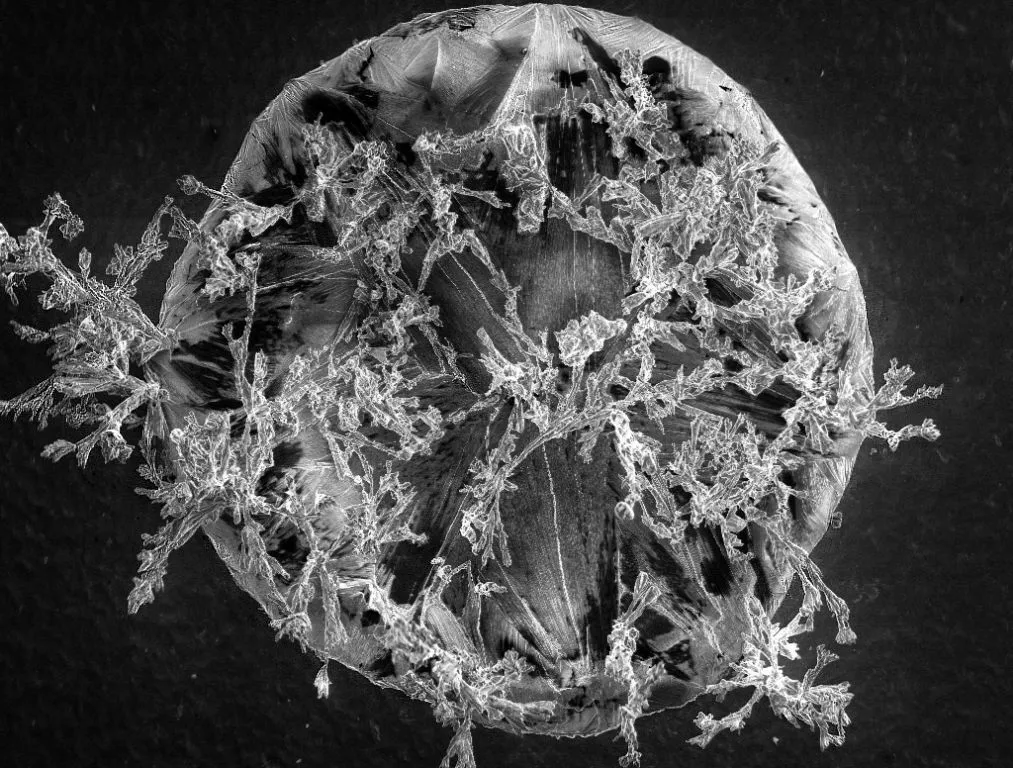
A close-up look at a grain of salt, a blue glacier against a pink sky and a map of sea-turtle tracks are among the winners of the 2012 Research as Art competition.
The competition, organized by Swansea University in Wales, is open to all Swansea researchers in any field who have a cool image to share. This year's entries included more than 100 images, from which judges picked 15 winners.
"This tiny grain of salt, with a diameter of only 2 millimeters, has recrystallized from an aqueous solution in different phases to create its unique and unusual appearance," Rosier said in a statement. "The importance of this research leads to the safer design and operation of aircraft engines."

Though Rosier's winning image is in stark black-and-white, other scientific photographers played with color. Tavi Murray, a glaciologist at Swansea University, was recognized for his jaw-dropping photograph of Arctic icebergs against a pink sky. Rami Malki of the university's Marine Renewable Research Group made it to the top 15 for his dreamy blue image of the flow of water around a tidal-stream turbine. And biologist Rebecca Scott won for her map of ocean currents upon which baby sea turtles drift.
"Research is more than the hard facts that make it into the papers and journals — the Research as Art competition reveals the day-to-day human experience that lies beneath the results," contest judge Flora Graham, the deputy editor of NewScientist.com, said in a statement.
The art of science is becoming increasingly popular, with multiple competitions for scientists to display their creative side. Every year, for example, Princeton University holds an Art of Science exhibition, featuring everything from models of Earth's magnetic field to images of nanocrystals. And the winners of camera-maker Nikon's annual Small World competition can enjoy widespread admiration of their macro photographs of the very tiny.
The Swansea image competition is "an opportunity for researchers to engage, inform and inspire people," contest organizer Richard Johnson, a lecturer in engineering, said in a statement. "Researchers have a responsibility to make their research accessible … and the thirst from the public is certainly there!"
Follow Stephanie Pappas on Twitter @sipappas or LiveScience @livescience. We're also on Facebook & Google+.

