













Did a Copying Mistake Build Man's Brain?

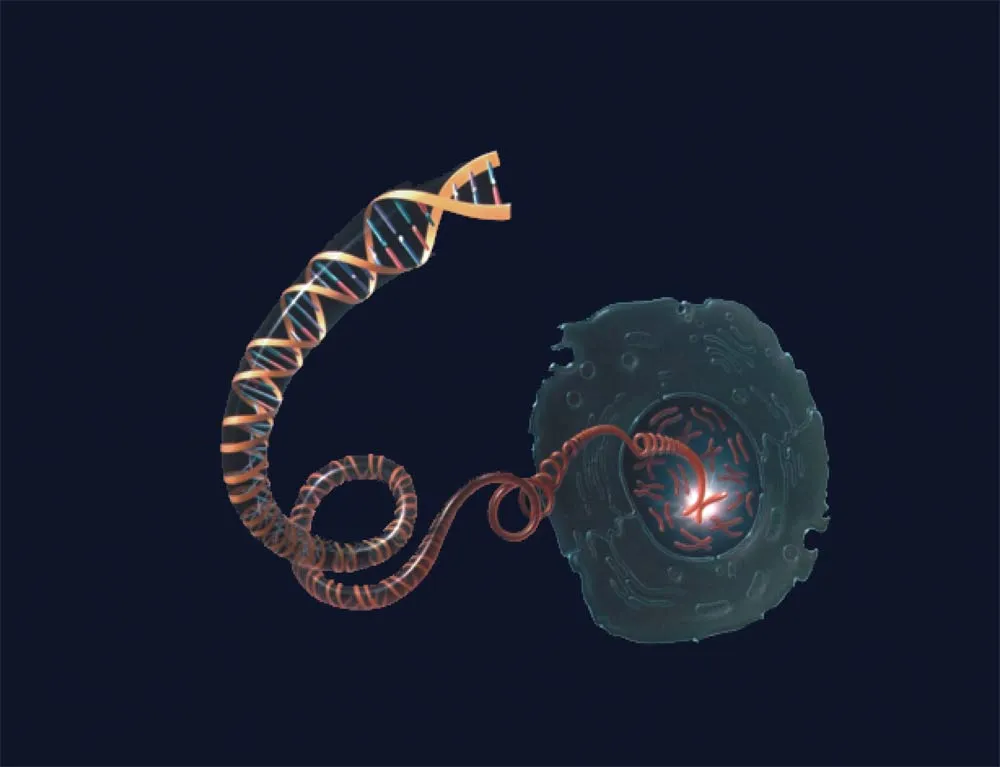
A copying error appears to be responsible for critical features of the human brain that distinguish us from our closest primate kin, new research finds.
When tested out in mice, researchers found this "error" caused the rodents' brain cells to move into place faster and enabled more connections between brain cells.
When any cell divides, it first copies its entire genome. During this process, it can make errors. The cell usually fixes errors in the DNA. But when they aren't fixed, they become permanent changes called mutations, which are sometimes hurtful and sometimes helpful, though usually innocuous.
One type of error is duplication, when the DNA-copying machinery accidentally copies a section of the genome twice. The second copy can be changed in future copies — gaining mutations or losing parts.
The researchers scanned the human genome for these duplications, and found that many of them seem to play a role in the developing brain. [10 Fun Facts About the Brain]
"There are approximately 30 genes that were selectively duplicated in humans," study researcher Franck Polleux, of The Scripps Research Institute in La Jolla, Calif., said in a statement. "These are some of our most recent genomic innovations."
An extra copy of a gene gives evolution something to work with: Like modeling clay, this gene isn't essential like the original copy, so changes can be made to it without damaging the resulting organism.
Get the world’s most fascinating discoveries delivered straight to your inbox.
The researchers studied one specific gene, called SRGAP2, which they think has been duplicated at least twice during the course of human evolution, first about 3.5 million years ago and then again about 2.5 million years ago.
The second, more recent, duplication seems to be incomplete, with only part of the gene being duplicated. The researchers think this partially duplicated gene is able to interfere with the actions of the original, ancestral copy of SRGAP2. When the researchers added the partially duplicated gene copy to the mouse genome (mice don’t normally have it) it seemed to speed the migration of brain cells during development, which makes brain organization more efficient.
These cells that expressed the incomplete duplication of SRGAP2 also had more "spines" — knoblike extensions on the cell surface that connect with other brain cells, which make them look more like human brain cells.
Interestingly, the incomplete copy of the gene seems to have showed up just as the extinct hominin Australopithecus made room for the genus Homo, which led to modern humans. That's also when the brains of our ancestors began to expand and when dramatic changes in cognitive abilities are likely to have emerged.
"We may have been looking at the wrong types of mutations to explain human and great ape differences," study researcher Evan Eichler, of the University of Washington, said in a statement. "These episodic and large duplication events could have allowed for radical — potentially Earth-shattering — changes in brain development and brain function."
The study was published in the May 11 issue of the journal Cell.
You can follow LiveScience staff writer Jennifer Welsh on Twitter, on Google+ or on Facebook. Follow LiveScience for the latest in science news and discoveries on Twitter and on Facebook.

Jennifer Welsh is a Connecticut-based science writer and editor and a regular contributor to Live Science. She also has several years of bench work in cancer research and anti-viral drug discovery under her belt. She has previously written for Science News, VerywellHealth, The Scientist, Discover Magazine, WIRED Science, and Business Insider.