













9-Month-Olds Show Racial Bias When Looking at Faces

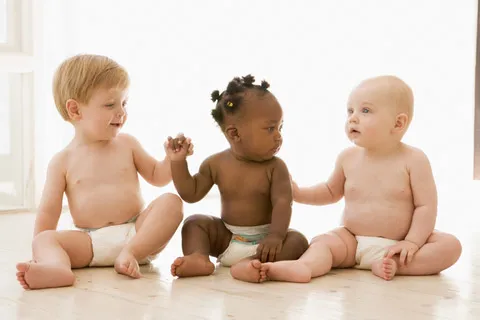
Adults have more difficulty recognizing faces that belong to people of another race, and this deficit appears to start early.
New research indicates that by the time they are 9 months old, babies are better able to recognize faces and emotional expressions of people who belong to the group they interact with most, than they are those of people who belong to another race.
Babies don't start out this way; younger infants appear equally able to tell people apart, regardless of race.
"These results suggest that biases in face recognition and perception begin in preverbal infants, well before concepts about race are formed. It is important for us to understand the nature of these biases in order to reduce or eliminate [the biases]," said study researcher Lisa Scott, a psychologist at the University of Massachusetts, Amherst, in a statement. [3-Year-Olds Fancy Own Ethnic Group]
In the study, 48 Caucasian infants were given the task of differentiating between faces of their own race and faces that belonged to another, unfamiliar, race. In another experiment, sensors placed on the babies' heads detected brain activity when the babies saw images of faces of Caucasian or African-American races expressing emotions that either matched or did not match sounds they heard, such as laughing and crying.
While 5-month-olds were equally able to distinguish faces from different races, 9-month-olds fared better with their own race. Likewise, brain-activity measurements showed the 9-month-olds processed emotional expressions among Caucasian faces differently than those of African-American faces, while the 5-month-olds did not.
Specifically, a shift was seen between 5 months and 9 months of age, whereby processing of facial emotions moved from the front of the brain to regions in the back of the brain in the older age group, the researchers found. This brain shift will help scientists understand just how the brain develops with regard to their experiences with different races during the first year of life, Scott and colleagues report in a study published in the May issue of the journal Developmental Science.
Get the world’s most fascinating discoveries delivered straight to your inbox.
You can follow LiveScience writer Wynne Parry on Twitter @Wynne_Parry. Follow LiveScience for the latest in science news and discoveries on Twitter @livescience and on Facebook.
