 Live Science Plus






Entire Month's Worth of Tornadoes Strike in One Day
You are now subscribed
Your newsletter sign-up was successful
Want to add more newsletters?

Delivered Daily
Daily Newsletter
Sign up for the latest discoveries, groundbreaking research and fascinating breakthroughs that impact you and the wider world direct to your inbox.

Once a week
Life's Little Mysteries
Feed your curiosity with an exclusive mystery every week, solved with science and delivered direct to your inbox before it's seen anywhere else.

Once a week
How It Works
Sign up to our free science & technology newsletter for your weekly fix of fascinating articles, quick quizzes, amazing images, and more
Delivered daily
Space.com Newsletter
Breaking space news, the latest updates on rocket launches, skywatching events and more!

Once a month
Watch This Space
Sign up to our monthly entertainment newsletter to keep up with all our coverage of the latest sci-fi and space movies, tv shows, games and books.

Once a week
Night Sky This Week
Discover this week's must-see night sky events, moon phases, and stunning astrophotos. Sign up for our skywatching newsletter and explore the universe with us!
Join the club
Get full access to premium articles, exclusive features and a growing list of member rewards.
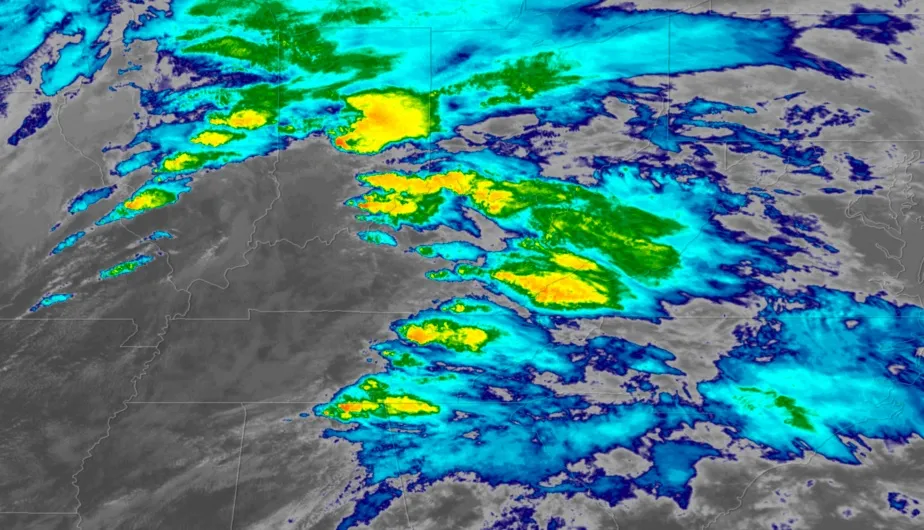
In what may be the biggest daily tornado outbreak on record for March, an entire month's worth of twisters struck in a single day.
The nation's Storm Prediction Center received 81 reports of tornadoes yesterday (March 2), according to data filtered to remove duplicate reports of tornadoes. For the entire month of March, the 10-year average number of tornadoes is 87, according to the Weather Channel's severe weather expert Greg Forbes.The National Weather Service's storm survey teams have not yet confirmed the tornado reports, so these numbers could change. But if the numbers hold, the outbreak could go down as the largest single-day outbreak in March history.
At least 33 people died during yesterday's severe weather, according to news reports. In Kentucky, at least 17 people died. A suspected EF-4 twister, the second highest strength on the tornado damage scale, hit Indiana, where at least 14 died.
The overnight outbreak came just after other storms had raked the Midwest earlier in the week. A deadly tornado outbreak on Leap Day roared through Kansas, Nebraska, Illinois, Indiana, Missouri, Kentucky and Tennessee. The severestorms killed at least 12 people and included an EF-4 twister in Harrisburg, Ill., a rarity for February.Many areas hit earlier in the week, such as West Liberty, Ky., saw round two yesterday. Some other areas, including Huntsville, Ala., were also hit nearly 10 months ago during the April 27 outbreak, the largest tornado outbreak in recorded history (tornado recordkeeping began in 1950).
In 2006, the biggest March outbreak saw 105 tornadoes from March 9 to 13. March 12 of that outbreak saw 62 confirmed tornadoes. Yesterday's outbreak could top that total.
While the main tornado season runs from spring to early summer, this year's early outbreaks show that tornadoes can form under a variety of conditions and strike during fall and winter, too. This year's mild winter and warm start to meteorological spring has upped the risk of dangerous storms.
Also behind this week's twisters is a low-dipping jet stream, which is bringing cold air from Canada to mix with the warm, moist air from the Gulf of Mexico. Where these two differing air masses meet is often an area of severe weather, hail, winds and even tornadoes.
The outbreak is not finished. Already today one tornado has been reported in southwest Georgia as severe weather continues to move across south Georgia and north Florida, including parts of the panhandle.
You can follow OurAmazingPlanet staff writer Brett Israel on Twitter: @btisrael. Follow OurAmazingPlanet for the latest in Earth science and exploration news on Twitter @OAPlanet and on Facebook.
