














Oasis of Tiny Life Discovered Beneath Desert

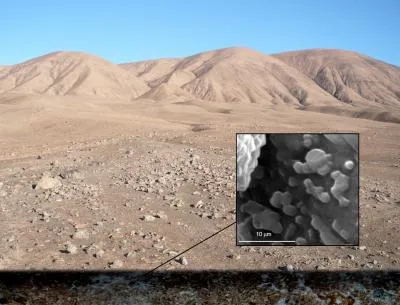
A test run for a biological detector intended for Mars has found salt-loving microbes living just below the surface of the Atacama Desert in North Chile.
Scientists from Spain and Chile used an instrument called SOLID (Signs of Life Detector), which they developed for Mars missions, to detect the microbial life in the desert. Atacama subsoils are thought to be a good stand-in for areas on the Red Planet.
The soil between 6.6 and 9.8 feet (2 and 3 meters) below the surface of the desert contained a "microbial oasis," Victor Parro, a researcher from the Spanish Center of Astrobiology and the study's coordinator, said in a statement.
By analyzing less than 0.02 ounces (0.5 grams) of sample material they collected, the team found bacteria, other single-celled microbes called archaea, as well as biological material, including DNA, which forms the instruction code for life. [Amazing Photos: The Little Things in Life]
The ground they sampled was rich in rock salt, also known as halite, and other compounds that are highly hygroscopic, meaning they absorb water. On the surface of the salt crystals, minutely thin films of liquid form from the limited moisture in the air by a process called deliquescence. These appear to provide water for the microbes, according to the team.
Similar water-absorbing salts, and possibly deliquescence, have been discovered on Mars, they point out. The performance of the life-detecting sensor, called LDChip, within SOLID demonstrates its potential for use in planetary exploration, particularly on Mars, they write recently in the journal Astrobiology.
You can follow LiveScience senior writer Wynne Parry on Twitter @Wynne_Parry. Follow LiveScience for the latest in science news and discoveries on Twitter @livescience and on Facebook.
Get the world’s most fascinating discoveries delivered straight to your inbox.
