













Nuking a Hurricane Would Probably Just Create a Slightly Bigger, Radioactive Hurricane
Has Trump been reading old Live Science articles about nuking hurricanes? And if not, should he be?

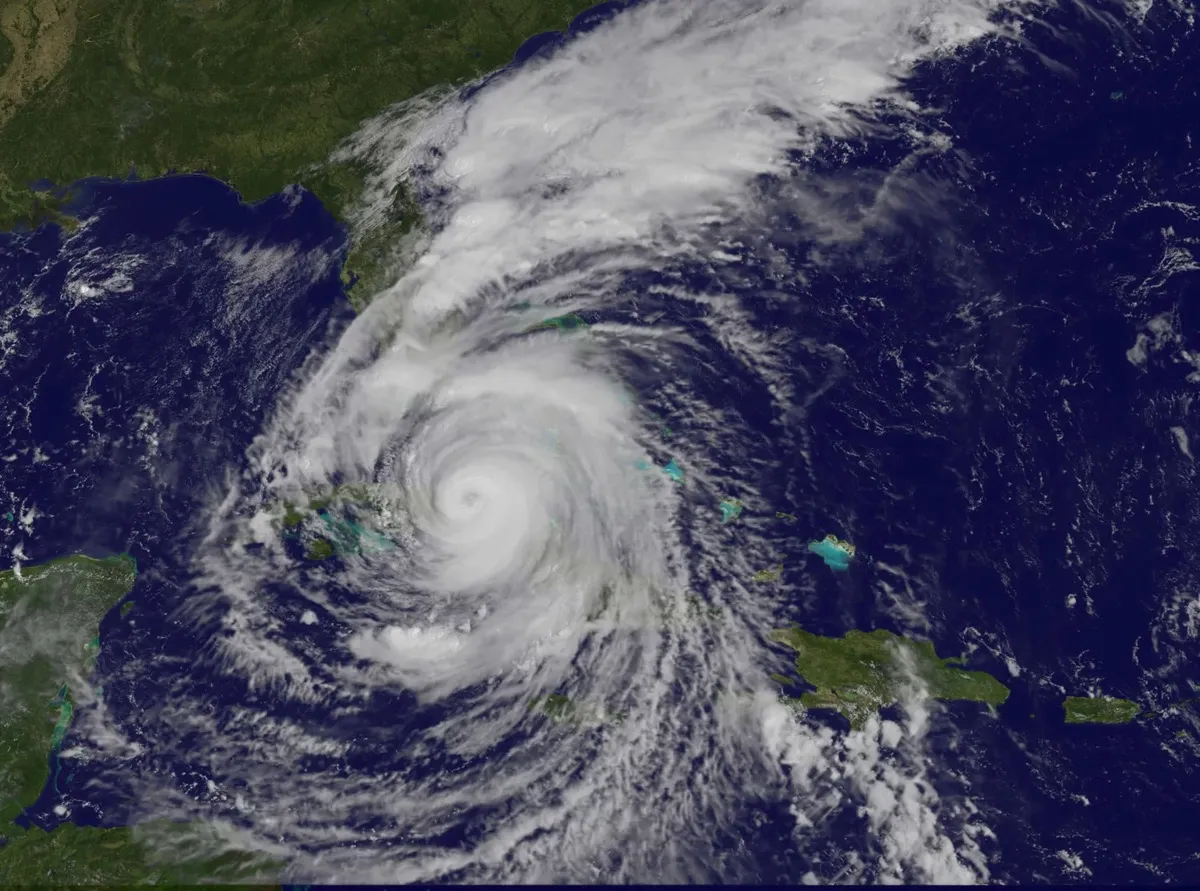
President Donald Trump wants to nuke hurricanes into submission before they reach the Atlantic coastline, according to a bizarre article published yesterday (Aug. 25) on Axios. "Why can't we do that?" he reportedly asked. This raises an important question: Has Trump been reading old Live Science articles? And if not, should he be?
Live Science answered this very question in a 2012 article.
"The theory goes that the energy released by a nuclear bomb detonated just above and ahead of the eye of a storm would heat the cooler air there, disrupting the storm's convection current," Rachel Kaufman wrote at the time. "Unfortunately, this idea, which has been around in some form since the 1960s, wouldn't work."
The problem is the energy involved, Kaufman reported, citing writing by Chris Landsea, a former National Oceanic and Atmospheric Administration research meteorologist.
Related: Hurricane Season 2019: How Long It Lasts and What to Expect
A hurricane is essentially a powerful, super-efficient country-size engine for pulling heat out of the ocean and releasing it into the atmosphere. As a hurricane's low-pressure system moves over warm water, that water evaporates and then condenses as droplets in the atmosphere. As the water condenses, it releases the heat it's carrying into the surrounding air. About 1% of that heat energy gets converted into wind; the rest sticks around as ambient warmth, according to the article.
A hurricane can release 50 terawatts of heat energy at any given moment — a significantly greater output than the entire power system, and comparable to a 10-megaton nuclear bomb detonating every 20 minutes. Trying to stop a hurricane with a nuke would be "about as effective as trying to stop a speeding Buick with a feather," Kaufman wrote, and might even add energy to the storm.
Get the world’s most fascinating discoveries delivered straight to your inbox.
Stopping a smaller tropical depression with a nuke might be more realistic, but there are just too many of them and no good way to tell which will develop into powerful, landfalling hurricanes.
"Finally, whether the bomb would have a minor positive effect, a negative effect, or none at all on the storm's convection cycle, one thing is for sure: It would create a radioactive hurricane, which would be even worse than a normal one. The fallout would ride Trade Winds to land — arguably a worse outcome than a landfalling hurricane," Kaufman wrote.
The best way to avoid the destruction of a hurricane, remains a boring one: prepare. In case that's the route you want to go, how to prepare for a hurricane.
- Hurricanes from Above: Images of Nature's Biggest Storms
- Photos: Hurricane Michael Toppled Over Trees and Uprooted 19th Century Artifacts
- Inside Irma's Eye: Hurricane Hunters Capture Jaw-Dropping Photos
Originally published on Live Science.
