













What is a gene drive?
Reference article: Facts about gene drives.

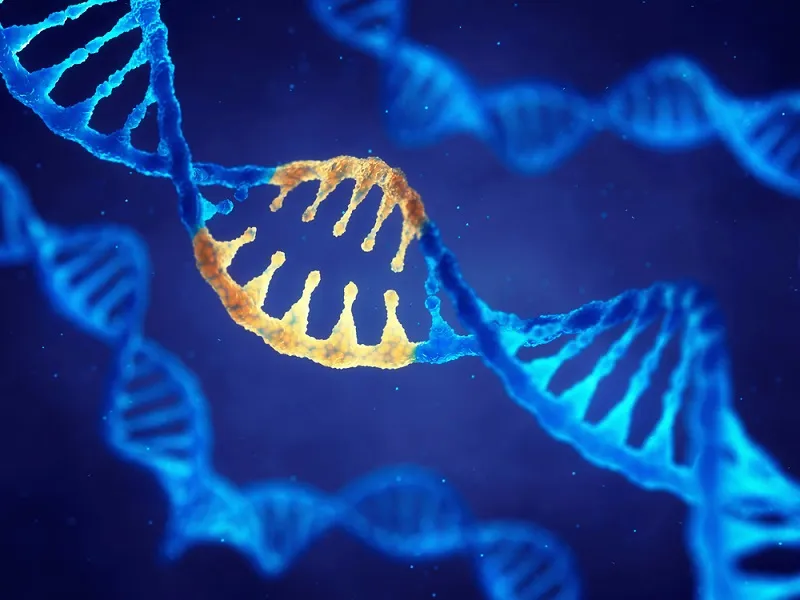
A gene drive is a type of genetic engineering technique that modifies genes so that they don’t follow the typical rules of heredity. Gene drives dramatically increase the likelihood that a particular suite of genes will be passed onto the next generation, allowing the genes to rapidly spread through a population and override natural selection. Thanks to CRISPR-Cas9, the gene editing technology harnessed from bacteria, gene drives are becoming easier for researchers to build.
With gene drive technology "you can modify evolutionary trajectory. You can cause extinction," said Andrea Crisanti, a geneticist at Imperial College London. This could be an effective way to eradicate nuisance species, such as malaria-causing mosquitoes. But scientists are still working to determine the potential broader ecological and environmental impacts of using gene drives to eliminate an entire species.
How do gene drives work?
A gene drive consists of three key components: the gene that you want to spread; the Cas9 enzyme that can cut DNA; and CRISPR, a prommable DNA sequence that identifies where the enzyme should cut. The genetic material that encodes for those three elements gets inserted into an animal’s DNA, in place of the naturally occurring gene you want to replace in both chromosomes.
The power of the gene drive is that it disrupts the laws of heredity, Crisanti said. In normal heredity, there is a 50% chance that any particular gene will be passed from parent to offspring. Gene drive technology turns a 50% chance into a nearly 100% guarantee.
When an animal carrying the gene drive package mates with an animal that does not, their offspring gets one copy of DNA from either parent: a natural version and a gene drive version. When the sperm meets the egg and the chromosomes from the different parents line up for the first time, CRISPR in the gene drive DNA is activated. It recognizes the copy of the natural gene in the opposite chromosome, and directs the DNA-cutting Cas9 enzyme to cut out the natural copy before embryonic development begins.
Related: Prokaryotic vs. eukaryotic cells: What's the difference?
Once the natural gene is damaged, the cell's special repair machinery is triggered. The repair machinery restores the missing DNA, but it uses the unbroken chromosome, which is the one carrying the gene drive, as its template. So when the repair is finished, both chromosomes carry a copy of the gene drive. From that point on, two copies of the gene drive will be in every cell and the animal will pass the gene drive on to the next generation.
Get the world’s most fascinating discoveries delivered straight to your inbox.
And so the process continues. Every time the drive is passed on, CRISPR cuts the natural version of the gene, cell repair machinery intervenes and one copy of the gene drive becomes two. In just a few generations the new gene becomes ubiquitous in the population, sometimes totally replacing the naturally occurring gene.
Gene-drive mosquitoes
In 2018, Crisanti and his colleagues published a study in the journal Nature Biotechnology describing how gene drive technology could cause population collapse of Anopheles gambiae, the mosquito species that causes malaria. The group built a gene drive that would change a sex-related gene and disrupt female fertility. The gene drive with the damaged female fertility gene spread through 100% of the test population in as little as seven generations. The species could not mate and the population collapsed. Some researchers believe this may be the approach that finally wipes out malaria — a brutal disease responsible for causing 280 million illnesses and 405,000 deaths globally in 2018, according to the World Health Organization.
Related: 10 amazing things scientists just did with CRISPR
The gene drive approach is a uniquely affordable and sustainable way to eradicate malaria-causing mosquitoes, Cristanti said. Other approaches like insecticide and environmental management are effective but extremely expensive, and far beyond the economic capabilities of many countries, he said. "Gene drive allows the spreading of a genetic trait in a population from few individuals, addressing the problem of sustainability at its root."
But wiping out an entire species is a big deal, and implementing a gene drive in nature is not an easy decision.
Are gene drives dangerous?
Scientists are working to predict what the elimination of a nuisance species might mean for the rest of the ecosystem.
Eradicating malaria-causing mosquitoes using a gene drive seems likely to be a minimally-impactful plan. "So far, ecological tests show that the ecosystem doesn't collapse," when one species of mosquito is eliminated, said Fred Gould, an evolutionary biologist at North Carolina State University.
The ecological effects of other gene drive projects are more challenging to discern. For example, conservationists and geneticists are working on a gene drive that could eliminate invasive island rodents — a noble effort, considering that invasive island rodents have been linked to the extinction of 75 native species, according to 2016 a study published in the journal Proceedings of the National Academy of Science.
But eradicating rodents with a gene drive comes with potentially bigger ecological risks than the eradication of a mosquito. If gene drive rodents ever escaped the island and made it back to the rodents' natural habitat, like North America, the drive could eliminate mice and rats where they are a critical part of the ecosystem. The rodents' absence could lead to ecosystem collapse.
Related: Here's what we know about CRISPR safety
For that reason, Gould and his colleagues have been working on a strategy that would only target mice living on islands. Geographically distinct populations often carry the same variant of a gene, or allele, specific to their local population. If scientists can identify an allele specific to the population they want to eradicate, then they can create a gene drive specific to that population. The drive would spread only to individuals carrying that specific allele; it wouldn't work in individuals without that specific allele. The researchers described this method in a 2019 study published in the journal Scientific Reports.
In addition, several scientists are studying potential remediation plans, or strategies for removing the gene drive from the environment in the event of undesired results. For example, Crisanti and his colleagues published a study in 2017 in the journal Plos Genetics describing how genetic mutations that are resistant to the gene drive could persist and eliminate the gene drive in just a few generations. The gene-drive resistant mutation would need to be avoided for the gene drive to persist, or it could be a way to eliminate an undesired gene drive.
Although the concept of using a gene drive to protect human health and restore ecological balance is promising, research on the tool's implications and effectiveness has a ways to go.
Additional resources:
- Keep up with the latest news about CRISPR on Live Science's CRISPR News page.
- Watch this short video describing how a gene drive works from the Wyss Institute at Harvard University.
- Here's another short video that describes potential ways to safeguard a gene drive, also from the Wyss Institute at Harvard University.

Donavyn Coffey is a Kentucky-based health and environment journalist reporting on healthcare, food systems and anything you can CRISPR. Her work has appeared in Scientific American, Wired UK, Popular Science and Youth Today, among others. Donavyn was a Fulbright Fellow to Denmark where she studied molecular nutrition and food policy. She holds a bachelor's degree in biotechnology from the University of Kentucky and master's degrees in food technology from Aarhus University and journalism from New York University.