















Why giant moa — a bird that once towered over humans — are even harder to de-extinct than dire wolves
Colossal Biosciences has announced a partnership to resurrect giant flightless birds called moa. But the company's recent dire wolf project was controversial, and moa are an even more ambitious target for de-extinction.


A biotech company that claims to have brought dire wolves back from extinction has announced plans to resurrect giant extinct birds called moa. However, experts say that dire wolves were never truly resurrected, and that moa will be even harder to de-extinct.
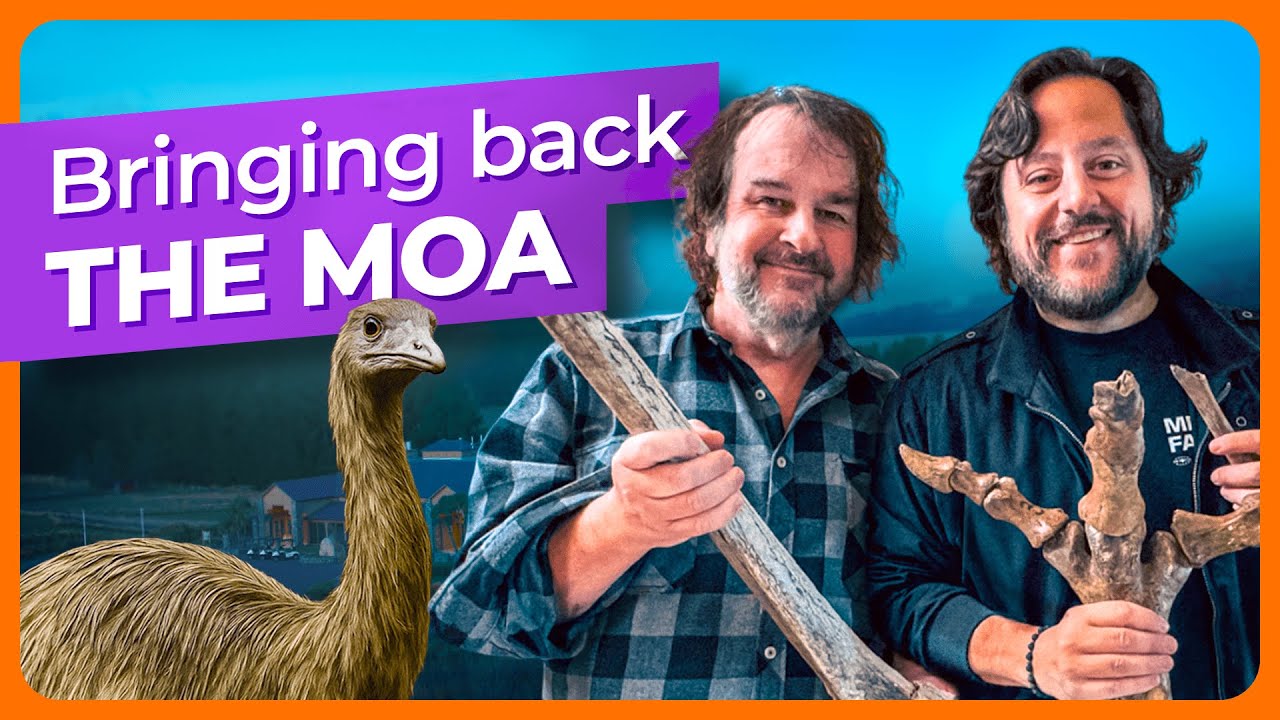
Earlier this month, Texas-based Colossal Biosciences said it had teamed up with filmmaker Sir Peter Jackson and Indigenous partners to bring back the 12-foot-tall (3.6 meter) South Island giant moa (Dinornis robustus) and other moa species. These flightless birds roamed New Zealand until they were hunted to extinction by early Māori settlers around 600 years ago.
The new project will be coordinated by the Ngāi Tahu Research Centre, a joint venture between the main Māori tribe (iwi) on the South Island of New Zealand and the University of Canterbury in Christchurch. It's a multifaceted project that aims to combine traditional Māori knowledge, wildlife conservation and genetic engineering-driven de-extinction.
However, the project has already come under fire. Critics have highlighted that some Māori iwi oppose de-extinction, while several scientists have argued that genetically modifying living animals can't bring back lost species. The scientific criticism is similar to the commentary after Colossal unveiled its "dire wolves" — a species that went extinct more than 10,000 years ago.
Colossal's "dire wolves" are genetically modified gray wolves (Canis lupus) with 20 gene edits. The company claims they are dire wolves (Aenocyon dirus) because they have some observable traits identified in the dire wolf genome, such as increased size and a white coat. However, genetically, they're still mostly gray wolves. The same will be true for the living animal Colossal modifies for the moa project — but for moa, it's even more complicated.
Related: T. rex researchers eviscerate 'misleading' dinosaur leather announcement
Moa's closest living relatives are a group of South American birds called tinamous. The largest tinamou species is smaller than most domestic chickens, so is minuscule compared to South Island giant moa. Australia's emus (Dromaius novaehollandiae) are the next closest relative, but while these large flightless birds are physically more similar to giant moa, they're still not as big, growing to an average of 5.7 feet (1.75 m) tall. Both of these living relatives also separated from moa a long time ago.
Get the world’s most fascinating discoveries delivered straight to your inbox.
"The common ancestor of the moa and tinamou lived 58 million years ago, while the common ancestor of moa and emu lived 65 million years ago," Nic Rawlence, director of the Otago Palaeogenetics Lab at the University of Otago in New Zealand and a critic of the moa plan, told Live Science in an email. "That’s a lot of evolutionary time."
To put that in context, dire wolves only split from modern wolf-like canids — the group that includes gray wolves — around 5.7 million years ago (or even more recently at 4.5 million years ago, according to a recent preprint involving some of Colossal's scientists). That means moa had a lot more time to evolve unique traits.


Rawlence explained that moa and their closest living relatives descended from a group of small flying birds called lithornids. These animals lived around the world and gave rise to different groups that independently lost the ability to fly. As Rawlence puts it, these flightless birds were "filling the job vacancies in the ecosystem left by the extinction of the dinosaurs."
Moa and emu lost flight through a process called convergent evolution, whereby different organisms evolve similar traits. That means, according to Rawlence, that the physiological and developmental mechanisms behind their body plans evolved independently, potentially via different genetic routes, which poses a challenge when it comes to bringing moa back.
"Genetically engineering specific genes in an emu to match a moa could have dire developmental consequences given this independent and convergent evolutionary history," Rawlence said.
Live Science asked Colossal whether there were any health risks associated with genetically engineering living animals to be more like extinct animals. Colossal’s chief science officer, Beth Shapiro, told Live Science that the company was certified by the American Humane Society and that animal welfare was a priority in their work.
"We thoroughly evaluate health risks of any proposed edit before selecting them for our final list of edits," Shapiro said in an email.
Colossal's moa de-extinction plan
Before Colossal begins creating its modern-day moa, the company aims to sequence and rebuild the genomes of all nine extinct moa species, while also sequencing high-quality genomes of their closest living relatives. This will allow Colossal to identify the changes that led to the moa's unique traits, including their large body size and lack of wings, according to Colossal's website.
The researchers will then use primordial germ cells, the precursors of sperm or egg cells, from living species to "build a surrogate bird" and make genetic changes to create birds with moa traits. The company needs both male and female surrogates to carry the sperm and egg of their "moa," to then produce the genetically modified offspring.
Colossal's website states that emus' larger size makes them a more suitable surrogate than tinamous. However, details on this part of the process are limited. Shapiro told Live Science that they were "still in the process of selecting the surrogate species for moa de-extinction."
Emus lay large green eggs, around 5 inches (12 cm) long and 3.5 inches (9 cm) wide. Still, that's nothing compared to a South Island giant moa egg, which were 9.5 inches (24 cm) by 7 inches (17.8 cm).
RELATED STORIES
"A South Island giant moa egg will not fit inside an emu surrogate, so Colossal will have to develop artificial surrogate egg technology," Rawlence said.
Colossal briefly mentioned artificial eggs during its moa announcement, but didn't provide details on this part of the process. Live Science asked Colossal whether they could explain how Colossal will hatch a South Island giant moa.
"Our exogenous development team is exploring different strategies for artificial egg incubation, which will have application both for moa de-extinction and bird conservation work," Shapiro said in an email.

Patrick Pester is the trending news writer at Live Science. His work has appeared on other science websites, such as BBC Science Focus and Scientific American. Patrick retrained as a journalist after spending his early career working in zoos and wildlife conservation. He was awarded the Master's Excellence Scholarship to study at Cardiff University where he completed a master's degree in international journalism. He also has a second master's degree in biodiversity, evolution and conservation in action from Middlesex University London. When he isn't writing news, Patrick investigates the sale of human remains.
You must confirm your public display name before commenting
Please logout and then login again, you will then be prompted to enter your display name.